Data was the new oil, until the oil caught fire | TechCrunch

We’ve been hearing how “data is the new oil” for more than a decade now, and in certain sectors, it’s a maxim that has more than panned out. From marketing and logistics to finance and product, decision-making is now dominated by data at all levels of most big private orgs (and if it isn’t, I’d be getting a résumé put together, stat).

So it might be a something of a surprise to learn that data, which could transform how we respond to the increasingly deadly disasters that regularly plague us, has been all but absent from much of emergency response this past decade. Far from being a geyser of digital oil, disaster response agencies and private organizations alike have for years tried to swell the scope and scale of the data being inputted into disaster response, with relatively meager results.

Read More

35 Years Later, Studies Show a Silver Lining From Chernobyl | WIRED

ON THIS DAY in 1986, workers ran a safety test at the Chernobyl Nuclear Power Plant in northern Ukraine. But the test went awry, starting a fire in a reactor and leading to one of the largest nuclear disasters in history. Smoke from the fire and a second explosion launched radioactive elements into the atmosphere, scattering them over the surrounding fields and towns. Now, 35 years later, scientists are still uncovering the extent of the damage and starting to answer questions about the long-term legacy of radiation exposure on power plant workers, the people in the nearby community, and even their family members born years later.

In two papers published Thursday in Science, an international team of researchers took on two very different but important questions. The first paper tracked the effects of radiation on the children of people who were exposed and found that there were no transgenerational mutations that were passed down from those parents. The second focused on thyroid cancer caused by radiation exposure and examined how radiation acts on DNA to cause the growth of cancerous tumors.

Read More

President Joe Biden Gave His First Address to Congress. Here Are the Four Takeaways You Need to Know. | Entrepreneur

President Joe Biden announced a $1.8 trillion plan on Wednesday to help low- and middle-income families. In his first address to Congress, Biden spoke about his American Families Plan that will be funded by taxing America’s richest.

Biden believes that his plan is needed to make a “once in a generation investment in our families and children.” Here are the four takeaways from his speech to a joint session of Congress, according to the Wall Street Journal’s executive Washington editor Gerald Seib.

Read More

How To Engage Your Clients | Getentrepreneurial.com

For the last 20-plus years, email has become the standard form of communication for reaching out to clients. Ask any marketer for the last 10 years in particular, and they’ll say one of the top things a business should focus on is building their (email) list.

Snail mail is just too slow, and this increasingly-fast paced world makes a classic phone call unrealistic – what, are you going to call each person individually on your list? Or worse, are you going to have an automated bot interrupt their day with a phone call that is devoid of actual communication?

But now, email too is reaching a ceiling. Is your email going to their SPAM folder? Is it going to their “junk” email address that they use to sign up for all the mailing lists? Is it getting lost between an advertisement from their favorite clothing store and a digital copy of their phone bill?

Read More

Artist draws attention to the single-use plastic crisis | Inhabitat

New York City is famously a center for culture and creativity in the U.S. But even in a city that’s filled with so much to see and do, one art exhibit is standing out among the crowd. Artist Dionnys Matos is using art to draw attention to sustainability and why it matters so much, what it means for the Earth and how it can be used as an influence to create beautiful things.

Matos recycles and reuses items like foam bowls, plastic cups, bubble wrap and packaging materials in his art. His work focuses on what single-use objects really mean and the impact they have.

One work, titled “Wave”, is a four-panel mural created with bubble wrap that was injected with acrylic. According to Matos, this work showcases how our oceans are being overtaken by plastic. In this piece, the sea is getting its revenge.

Read More

Samsung takes on Apple’s MacBook Pro with its Galaxy Book Pro laptops | Mashable

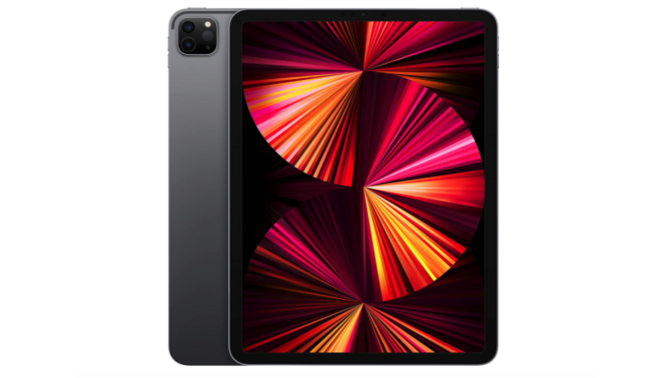
Ever wish you could fold your MacBook Pro in half and use it as a tablet? Well, you’ll never get that from an Apple product, but perhaps I can interest you in the next best thing: Samsung’s Galaxy Book Pro laptops.

The new devices announced at Samsung’s Galaxy Unpacked event on Wednesday, come in two models: the Galaxy Book Pro and the Galaxy Book Pro 360. (The “360” simply means you can flip that model’s screen back and use it as a tablet.) Both laptop models will be available in 13.3- and 15.6-inch sizes.

The Galaxy Book Pro, which starts at $1,000 for the 13-inch and $1,100 for the 15-inch, features a 1920 x 1080 AMOLED display, built-in 720p HD camera, AKG speakers (with support for Dolby Atmos), dual-array mics, and a fingerprint sensor on the power key. It’ll be available in either mystic blue or mystic silver.

Read More

Google parent Alphabet sees revenue jump 34% to $55.3 billion in the first quarter | CNN

Alphabet kicked off a big week for tech earnings as the industry starts to look ahead to a post-pandemic economy by reporting a characteristically strong start to 2021.

Google’s parent company reported revenues of $55.3 billion for the first three months of the year — a 34% jump from the same period last year — and made close to $18 billion in profit, comfortably blowing past analyst estimates. It also announced a $50 billion stock buyback.

The company’s stock jumped nearly 4% in after-hours trading on Tuesday.

Read More

Can a night owl turn into an early bird? | Live Science

Some people wake up before the sun peeks above the horizon, go for a run and eat a hearty breakfast, all before many others roll out of bed. Waking up that early might sound exhausting to late risers, but can a night owl become an early bird?

It is possible to make the switch, but it’s not easy, said Michelle Drerup, director of behavioral sleep medicine at the Cleveland Clinic. “A true night owl doesn’t really feel great first thing when they wake up, especially when they’re starting to shift this.”

A person’s tendency to be a night owl, early bird or some place in between is known as their chronotype. Depending on their chronotype, people are likely to be more awake and alert during certain times of the day and sleepier during others.

Read More

Why You Should Stop Working Long Hours (And How To Stop It) | Life Hack

Have you ever wondered about the effect of long working hours on your health, wealth, relationships, and overall well-being? It’s no surprise that hard work has been idolized as something that gets you all the success you could ever want. Unfortunately, what most of society thinks about the idea of “hard work” are long working hours.

Our upbringing has thought us that long working hours show dedication, commitment, and perseverance. But when the need to work starts to interfere with health, personal happiness, and social functioning, it becomes a weight around our necks.

It’s understandable that when famous successful people brag about working long hours, we follow their lead. We believe that it will do it for us as well. When someone like Elon Must, the CEO of Tesla Motors and founder of SpaceX, proudly announces that 100 hours a week highly improves the odds of success, one might think that that’s the definite way to success.

Read More