YouTube warns creators it will start to demonetize low-quality kids’ videos next month | TechCrunch

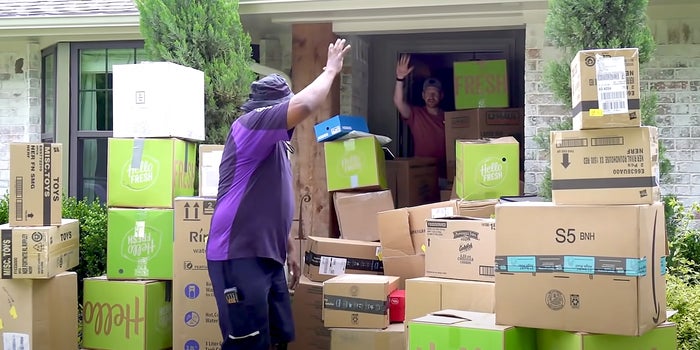
YouTube says it will soon begin to demonetize some of the channels on its platform that market themselves as “made for kids” if the content they produce is low-quality, encourages negative behavior or attitudes, or is heavily commercial. The company had previously warned this sort of content would no longer be eligible for inclusion in its dedicated YouTube Kids app, but starting next month YouTube will also begin to enforce new monetization policies as well, which may impact the creators’ eligibility for or possible removal from the YouTube Partner Program.

YouTube first announced its plans to increase its protections for minors in August, saying that some of the updates would directly address upcoming regulations, while others were going beyond what would be required by law. At the time, YouTube said it would shift the default settings on videos for users ages 13 to 17 to private, would enable “take a break” and bedtime reminders for minors, would stop leveraging “interests” data for targeting teens and kids with ads, and more.

Read More

This Week in Apps: Google Play slashes commissions, Apple sued over scammy apps, YouTube launches a TikTok clone in the US | TechCrunch

Welcome back to This Week in Apps, the weekly TechCrunch series that recaps the latest in mobile OS news, mobile applications and the overall app economy.

The app industry is as hot as ever, with a record 218 billion downloads and $143 billion in global consumer spend in 2020.

Consumers last year also spent 3.5 trillion minutes using apps on Android devices alone. And in the U.S., app usage surged ahead of the time spent watching live TV. Currently, the average American watches 3.7 hours of live TV per day, but now spends four hours per day on their mobile devices.

Read More

Why popular YouTubers are building their own sites | BBC News

Whether he’s showing off astronomically expensive computer gaming hardware or dumpster-diving for the cheapest PC builds possible, Linus Sebastian’s videos always strike a chord, and have made him one of the most popular tech personalities on YouTube.

But Google-owned YouTube gets most episodes of Linus Tech Tips a week late.

Now, they debut on his own site called Floatplane, which attracts a much smaller crowd.

“Google has been very, very good to me,” Linus says. “But it’s a lot of eggs in one basket.”

Read More

YouTube and WhatsApp inch closer to half a billion users in India | TechCrunch

WhatsApp has enjoyed unrivaled reach in India for years. By mid-2019, the Facebook-owned app had amassed over 400 million users in the country. Its closest app rival at the time was YouTube, which, according to the company’s own statement and data from mobile insight firm App Annie, had about 260 million users in India then.

Things have changed dramatically since.

In the month of December, YouTube had 425 million monthly active users on Android phones and tablets in India, according to App Annie, the data of which an industry executive shared with TechCrunch. In comparison, WhatsApp had 422 million monthly active users on Android in India last month.

Read More

How to Manage (and Monitor) Your Reputation on Social Media | Entrepreneur

Facebook, Twitter, Instagram, Youtube; it’s tough to do business these days without having at least a fledgling presence on these and other social media sites. Although the purest definition of social media is “a technology platform that connects people,” it can also be a valuable advertising platform that gives a company a way to directly engage its fans on a wide scale.

Social media from a marketing and PR perspective should be used to hold a conversation with the public, and brands should be leveraging their experts to engage, pursue and control that conversation. This is how the most successful brands engage, listen and interact with their customers across a variety of platforms. The unsuccessful ones forget this, which makes them appear stale or distant at times — and sometimes even the source of anger as “greedy corporate giants,” because mismanaged social media is the perfect recipe for a bad reputation

Read More

Growing Sales On Youtube | Getentrepreneurial.com

One-third of internet users say they purchased a product because of YouTube.

You’d think brands would be YouTube experts. They’re not. Kids are doing a better job.

Literally.

There are 8-year-olds generating billions (with a B) of views with no paid advertising. There isn’t a single brand among the top 100 YouTube channels.

What is that brands are doing wrong? How can brands be successful on YouTube? There are three things to obsess over in order to grow a YouTube channel:

Focus on a single topic and content series

Optimize and refine your content

Ask people to subscribe

Read More

Growing Sales On Youtube | Getentrepreneurial.com

One-third of internet users say they purchased a product because of YouTube.

You’d think brands would be YouTube experts. They’re not. Kids are doing a better job.

Literally.

There are 8-year-olds generating billions (with a B) of views with no paid advertising. There isn’t a single brand among the top 100 YouTube channels.

What is that brands are doing wrong? How can brands be successful on YouTube? There are three things to obsess over in order to grow a YouTube channel:

Read More

YouTube TV is Still Worth It Despite the Price Increase | Digital Trends

On Tuesday, YouTube announced that YouTube TV, one of the most popular options for streaming live TV, would be getting a price hike to $65 a month, up from $50.

The increase was met with angry tweets from customers and led to some questioning why YouTube TV is even necessary considering there are more affordable options, like Sling, FuboTV and Hulu with live options that all come in for less than YouTube TV now does.

I’m planning on sticking with YouTube TV, despite the rate hike, because it’s simply the best live TV streaming service around. Here’s why:

Read More

How Create Music Group Became Inc.’s No. 1 California Company: Proof You Can Profit From YouTube | Inc.com

By the mid-2010s, big-name artists like Taylor Swift and Paul McCartney were railing against YouTube: The site was home to loads of unauthorized uploads of their songs and even the authorized versions paid paltry royalty sums. It was an even harder battle to fight for the much less famous–and less lawyered-up–musicians in the industry. So a lot of them simply put music on YouTube for free and focused on other ways to make money.

It was that “middle class” of artists that Jonathan Strauss and Alexandre Williams had in mind in 2015 when they founded Create Music Group, a platform designed to help musicians monetize their music on YouTube. Their pitch was simple and convincing: It consisted of an Excel sheet that showed all the instances in which a particular rising star’s music had been uploaded without her consent. Also in the doc was a royalty figure–not massive, but for some in the thousands–the musician would be able to collect per month if she signed up with Create.

Read More

Iowa Misinformation Spreads Online, Despite New Policies | WIRED

Since 2016, social media sites including Facebook, Twitter, and YouTube have vowed to crack down on misinformation related to elections. Monday, they faced their first big test, when delayed results from the Iowa Democratic caucus gave rise to partisan infighting, rampant misinformation, and conspiracy theories. Unsurprisingly, things didn’t exactly go according to plan. Twitter struggled to contain viral electoral misinformation and unfounded accusations of vote rigging from Trump allies, while Facebook grappled with disinformation.

Read More