College Majors With the Lowest Unemployment Rates: Report | Entrepreneur

Majoring in nutrition, art history, or philosophy could set you up for more employment success than majoring in a STEM (science, technology, engineering, math) field like chemistry or physics.

The Federal Reserve Bank of New York tracked the unemployment rate for recent college graduates ages 22 to 27 and found that it hit 5.5% in February, above the 2.6% rate experienced by college graduates of all ages.

The bank published data that month showing that some college majors were more affected by unemployment than others. According to the bank, the college majors with the lowest unemployment rates for the calendar year 2023 were nutrition sciences, construction services, and animal/plant sciences. Each of these majors had unemployment rates of 1% or lower among college graduates ages 22 to 27.
Read More

Fed Decision: Officials Hold Rates Steady, Signal First Cut Is Nearer | Bloomberg

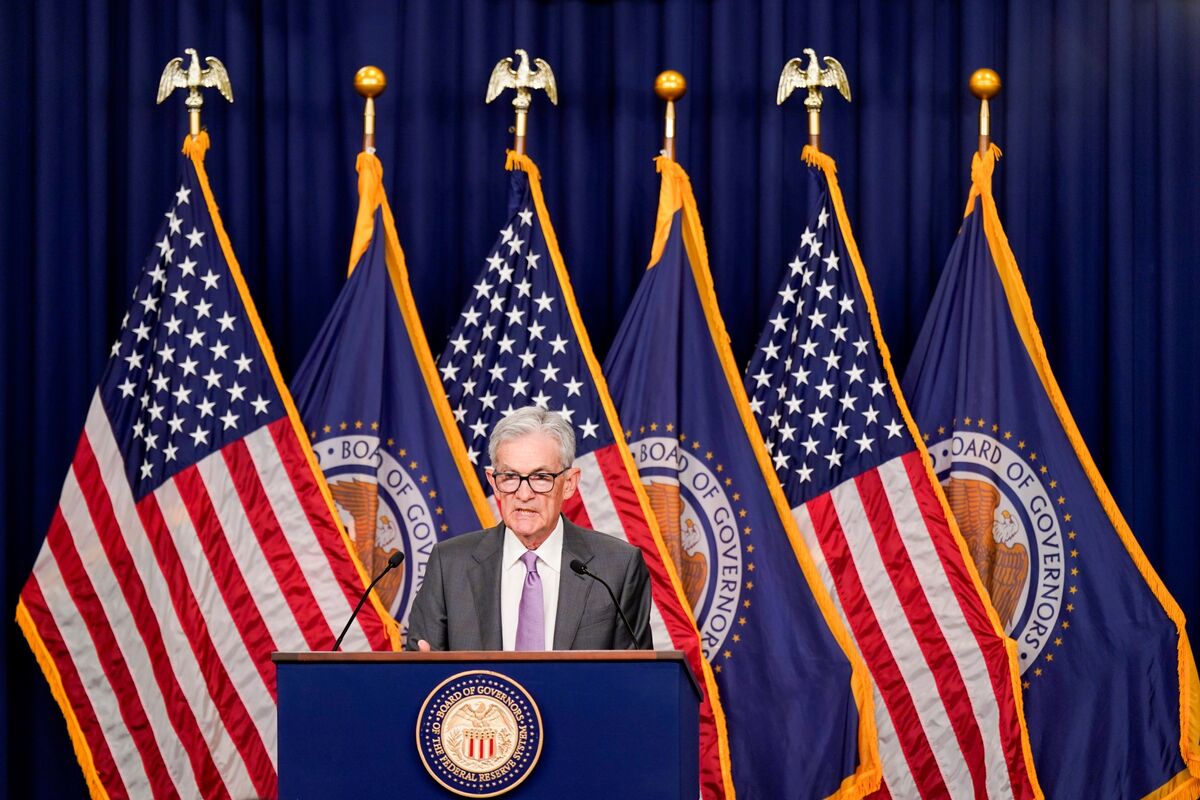
Federal Reserve Chair Jerome Powell said an interest-rate cut could come as soon as September after the US central bank voted to leave its benchmark at the highest level in more than two decades.

“The question will be whether the totality of the data, the evolving outlook, and the balance of risks are consistent with rising confidence on inflation and maintaining a solid labor market,”

Powell told reporters Wednesday. “If that test is met, a reduction in our policy rate could be on the table as soon as the next meeting in September.”

His comments followed a Federal Open Market Committee decision to leave the federal funds rate in a range of 5.25% to 5.5%, a level they have maintained since last July.

Read More

The Fed is terrified Americans could get used to high inflation. It may already be happening | CNN Business

A worrisome sign for the Federal Reserve is starting to emerge.

The Fed keeps a close eye on several risks that could make its job of taming inflation even more difficult, such as red-hot consumer demand keeping some upward pressure on prices and the possible effects of geopolitical tensions in the Middle East on oil prices.

But the US central bank also pays close attention to whether Americans still have faith inflation will eventually return to normal. That faith seems to be eroding.

The University of Michigan’s latest consumer survey released Friday showed that Americans’ long-run inflation expectations rose to 3.2% this month, the highest level since 2011.

Read More

The S&P 500 broke out above a key level. Now what? | CNN Business

The S&P 500 index on Friday closed at its highest level in almost a year. But that doesn’t mean that stocks are poised for a bull run just yet.

The broad-based index on May 26 closed above the 4,200 level for the first time since August 2022, when the market began to sell off and fell sharply to last year’s low of about 3,577 in October.

The S&P 500 ended last week up 1.8% at about 4,282, marking its best weekly gain since late March.

So, what caused the broad-based index to finally breach its level of resistance? The gains were powered by three key updates that investors cheered:

Read More

Buckle up: The Fed is about to get tough on inflation | CNN

Last month, the Federal Reserve raised interest rates for the first time since December 2018. Now there are growing expectations that the central bank is about to dramatically step up the size and pace of its rate hikes in order to put a brake on surging consumer prices.

St. Louis Federal Reserve president James Bullard, one of the more hawkish members among the Fed’s regional bank chiefs, reiterated at an event Monday that the Fed needs to “expeditiously” raise rates in order to tamp down inflation. (Inflation hawks typically push for higher rates while so-called doves favor lower rates to stimulate growth.) Bullard suggested the Fed could raise rates by as much as 75 basis points.

Fed chair Jerome Powell has started to sound a lot more hawkish in recent weeks, but he may not want to move as aggressively as Bullard would like. But it’s clear that rates are likely to start climbing a lot higher soon.

Read More

Buckle up: The Fed is about to get tough on inflation | CNN

Last month, the Federal Reserve raised interest rates for the first time since December 2018. Now there are growing expectations that the central bank is about to dramatically step up the size and pace of its rate hikes in order to put a brake on surging consumer prices.

St. Louis Federal Reserve president James Bullard, one of the more hawkish members among the Fed’s regional bank chiefs, reiterated at an event Monday that the Fed needs to “expeditiously” raise rates in order to tamp down inflation. (Inflation hawks typically push for higher rates while so-called doves favor lower rates to stimulate growth.) Bullard suggested the Fed could raise rates by as much as 75 basis points.

Read More

Final nail in coffin for Federal Reserve, central bank independence | Business Insider

One of the central tenets of the Federal Reserve and most central banks throughout the developed world in the modern era has been their ability to stay above the political fray.

With a few notable — and fairly disastrous — exceptions, the Fed has acted without fear of political retribution from the executive branch, although the chair still has to testify to Congress and the president periodically.

The assumption of independence, however, has come under fire in recent months. After President-elect Donald Trump floated the conspiracy theory that the Fed was intentionally manipulating interest rates to help President Barack Obama and Hillary Clinton, a hostile congressional questioning of Board Chair Janet Yellen in September, and the possibility of Trump packing the Board of Governors with sympathetic members, it no longer is a given that the Fed will be able to maintain its freedom going forward.

Read More

Broken Fences | Bruce Krasting / Zero Hedge

When I (and others) book a job three months in advance, the contractor can hire more workers knowing when checks will be coming in. My visibility creates the contractors visibility. The predictability of revenue creates the opportunity for economic expansion and job creation.

The Federal Reserve is operating monetary policy using a simple formula:

Lower interest rates across all maturities ALWAYS increases economic growth.

My personal example proves this formula to be flawed. I think the formula is more complicated:

Lowering interest rates across all maturities has both positive and negative consequences. As interest rates approach zero, (with the prospect that they will remain so for years to come) the negative consequences outweigh any benefits.

The idea that lower interest rates are hurting savers is an old one. The question is, “How significant are the negative consequences of low interest rates?” The multi-decade efforts in Japan to reflate an economy with low interest rates is a shining example of policy that has not worked.

Read this article, you will have, in nutshell, exactly our economic situation. Read at least some of the comments. If you filter out the hyperbole of a few, the comments form a kind of crystal ball, with some sobering predictions.

Required Reading: How To Fake An Economic Recovery | Niethercorp Press

‘You can take the blue pill and wake up in your bed and believe whatever you want. Or you can take the red pill and see how far down the rabbit hole goes…’ That line from ‘The Matrix’ applies to this piece by Giordano Bruno. If you’re having a tough time wondering how the stock market can go up while people are losing jobs and homes, this will give you something to hang your hat on.

WARNING: You can’t unlearn this information.

This may be a highly distasteful proposition, but just for a moment, I want you to sit back, and imagine that you are a member of the corporate banking elite. You are a walking talking disease ridden power mad pustule who naively believes himself intellectually superior to the vast majority of humanity and above the inherent laws of conscience, honor, and general good taste. You are a villain in the purest sense, in that you not only do great harm to the world, you actually SEEK to do great harm to the world, if only to benefit yourself and your exclusive circle of “friends”; a clan of degenerate blood thirsty sociopaths with delusions of omnipotence that stalk the night like Armani wearing Chupacabra exsanguinating the joy from poor unsuspecting cultures. You are capable of anything, and sadly, you take “pride” in this fact…

Read Article


.

Another jobless recovery? | Greg McBride, CFA – Bankrate.com

Another jobless recovery?

Wednesday, July 22
Posted 11 a.m. Eastern

Fed Chairman Ben Bernanke’s appearance before the House Financial Services Committee yesterday lacked any unexpected revelations. One point in his prepared remarks did catch my attention, however.

“Although the unemployment rate is projected to peak at the end of this year, the projected declines in 2010 and 2011 would still leave unemployment well above FOMC participants’ views of the longer-run sustainable rate.”

Reading between the lines, Bernanke seems to suggest we’re in for another jobless recovery. My own opinion is that it will be the mother of all jobless recoveries. Sure hope I’m wrong.

Regarding the economy: On July 31, the initial estimate of second quarter economic output, affectionately known as Gross Domestic Product, or GDP, will be released. There is a possibility that the economy, either based on initial estimates or subsequent revisions, will eke out some growth.

Now, let’s not get too far out over our skis but be cautious about interpreting this if it should come to pass. Here’s why: Any growth posted by the U.S. economy will largely be due to a shrinking trade deficit, as imports (what we buy) have fallen much faster than exports (what we sell). So bottom line, any growth in the U.S. economy during the second quarter is more testament to the resilience of foreign consumers than it is American consumers.

For more of Greg McBride’s posts, go to: Fed Blog: Making sense of the Federal Reserve.