Five science ‘facts’ we learnt at school that are plain wrong | The Conversation

Let’s start with a quiz…

  1. How many senses do you have?
  2. Which of the following are magnetic: a tomato, you, paperclips?
  3. What are the primary colours of pigments and paints?
  4. What region of the tongue is responsible for sensing bitter tastes?
  5. What are the states of matter?

If you answered five; paperclips; red, yellow and blue; the back of the tongue; and gas, liquid and solid, then you would have got full marks in any school exam. But you would have been wrong.

Read More.

How to Respond to Customers Who Want Your Work for Free | All business

Do you want to sell your products or your work for free? I’m sure you don’t. But it happens all the time. Customers want what you have to sell and pay you nothing for it. What should you do when customers want your work for free?

Be ready with a response. This recently happened to a client of mine. My client prepares very well for prospect meetings. He uses some expensive business analytic tools to generate reports about their business. Prospects are very impressed to learn the breadth of his knowledge about their business.

Read More.

Generation X: America’s neglected ‘middle child’ | Pew Research Center

Generation X has a gripe with pulse takers, zeitgeist keepers and population counters. We keep squeezing them out of the frame.

This overlooked generation currently ranges in age from 34 to 49, which may be one reason they’re so often missing from stories about demographic, social and political change. They’re smack in the middle innings of life, which tend to be short on drama and scant of theme.

But there are other explanations that have nothing to do with their stage of the life cycle.

Gen Xers are bookended by two much larger generations – the Baby Boomers ahead and the Millennials behind – that are strikingly different from one another. And in most of the ways we take stock of generations – their racial and ethnic makeup; their political, social and religious values; their economic and educational circumstances; their technology usage – Gen Xers are a low-slung, straight-line bridge between two noisy behemoths.

Read More.

How Old Is Too Old to Start a Business? The Answer May Surprise You. Infographic | Entrepreneur

Yes, Mark Zuckerberg started Facebook at 19. But Charles Flint launched IBM at 61.

While Hollywood may love the story of the college kid who starts a billion-dollar business out of his dorm room, that’s only one story. For many, life as an entrepreneur begins much later.

Consider: Legendary wedding-dress designer Vera Wang didn’t start designing clothes until she was 39. Home decorating goddess and business czar Martha Stewart didn’t get into home decorating until she was 35. And San Francisco-based angel investor and founder of business incubator 500 Startups Dave McClure didn’t invest in a single startup until he was 40. That’s all according to a pair of infographics, embedded below, created by startup organization Funders and Founders.

When it comes to launching a business, what a person may lack in youthful energy comes back multiplied in experience. Reid Hoffman started the ultra-popular career networking site LinkedIn when he was 36; Sam Walton started Wal-Mart when he was 44; and Joseph Campbell started Campbell Soup when he was 52.

Have a look at the two infographics below. Be inspired. And stop counting the grey hairs on your head.

See Infographic.

5 apps to streamline tedious tasks | Mashable

With a constant influx of new technologies to market, it can be tough to keep up with trends. Instead of spending months speculating what new features will appear, it’s worthwhile to consider how best to make the available products work for you.

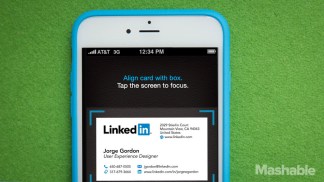
We tracked down a slew of apps to streamline the tedious tasks in your life, from printing photos to adding a new contact to your phone. These recommended hacks will shave hours off your chore list — hours that can be well spent being far more productive.

Read More.

Walmart Makes Big Fat Online Mistake and Then It Gets Worse | Inc.com

walmart_39269Big online marketing mistakes seem all the rage these days. In late August, Spanish clothing and accessories retailer Zara got into hot water over what appeared to be a yellow Jewish star on a kid’s striped pajama top that looked like prison gear. Then there was Urban Outfitters with the Kent State sweatshirt that sported what looked like bullet holes and blood stains.

When confronted with evidence of what angered people, at least they managed to cleanly remove the offending items. It doesn’t make things all better, but it’s an important first step. If only Walmart had learned that lesson.

The company has just gone through a one-day rollercoaster with marketing stomachs likely still heaving. It all started with Walmart’s Halloween costume. Someone noticed a different subsection on the company’s website: Fat Girl Costumes, as the blog Jezebel reported.

And that started the very-bad-not-so-good day for Walmart’s marketing department. Even as the story was hitting online media and complaints were landing in the company’s social networking accounts–the term “fat girl costumes” apparently hit the top 10 of Twitter trends–things moved slowed at Walmart. Jezebel noted that by 11:15 a.m. eastern, there was still a fat girl costumes section, although there were no items in it.

Read More.

How to Disengage From Your Smartphone Without Disengaging From the Office | Inc.com

email-productivity_37716

Ding. It’s your smartphone alerting you of a new message–probably a message from the office, and you don’t want to touch that. But what if it’s something else? You can’t resist. And when you find out that it is from the office, you feel compelled to respond.

Sounds like a normal weeknight, or even weekend? Dr. Jennifer J. Deal has a cure. The senior research scientist at the Center for Creative Leadership discussed why this is a problem, both for individuals and businesses, in a Wall Street Journal column. She also wrote about potential technology antidotes, which we outline here:

The problem – For employees, it makes perfect sense. “The smartphone makes it seductively simple to answer emails immediately, at all hours,” Deal writes. “And because it’s so easy, people start to worry if they don’t respond to notes quickly all the time.”

But it’s a problem for organizations, too. Bosses exploit it, because why not? “In short, smartphones have gone a long way toward making work a race to the bottom,” she explains. “People’s lives are more tied to work than ever, employee time has been devalued because it’s no longer finite, and inefficiencies have spread uncontrollably throughout organizations.”

Read More.

How the Swash Got Laughed Out of the Room — and Into Your Home It Hopes | Bloomberg

The new product pitched to Whirlpool Corp. WHR executive Marc Bitzer three years ago wasn’t all that new. Whirlpool had tried to sell two previous versions of the device, which was designed to clean clothes that didn’t need much cleaning. Both flopped.

So, when about 20 designers and technicians came to Bitzer in July 2011 to propose yet another iteration of the same gadget, he was prepared to nix it.

“I was lukewarm, very honestly, because I had seen excitement before,” recalls Bitzer, who oversees North America, Europe, Africa, and the Middle East for the home appliance giant.

Within two hours, Bitzer was a cheerleader for something called a Swash. He was converted by devotees who’d traveled from the Cincinnati headquarters of Procter & Gamble Co.

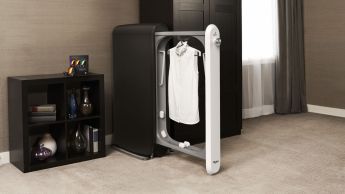
Three months ago, Swashes developed jointly by Whirlpool and P&G started showing up in select Bloomingdale’s stores and Delta airport lounges. Salespeople explained how the Swash, a four-foot-high, steel-and-plastic box shaped like a radiator, could in just 10 minutes unrumple a cocktail dress or whisk cigar stench from a sport jacket, almost as if they’d gone through a wash cycle or a trip to the dry cleaner.

Online ads and videos said the Swash would cut dry cleaning bills in half by letting people re-wear dress shirts, sequined dresses, wool sweaters, and other clothes they’d normally toss in a hamper after one wearing or, in the case of $300 designer jeans, never wash at all.

Read More.

Freelancers, Here’s How To Negotiate Raises With Clients | Forbes

Asking for a raise is never easy.

Requesting one when you’re a freelancer is downright scary — the client could immediately stop working with you and turn to your less expensive competition.

As I outlined in the first part of this series, how you set your rates should be determined by your expenses, expertise and how you want to spend the one fixed variable in this whole process: your time.

After I outlined the various ways you can use to determine how much to charge a potential client or what rates you’re willing — and unwilling to accept — let’s take a look at how you can increase your fees.

1. Track your time.

Time management expert Laura Vanderkam, who has often provided wonderful advice for my stories, says that you should know how much time your activities take. Having learned this from her while writing an article a while back, I have been following this advice religiously, to my great benefit.

Read More.