Whole Foods Is Losing Its ‘Whole Paycheck’ Reputation | time.com/money

Whole Foods is winning over customers based on the pitch that high food standards don’t necessarily have to come with high price tags.

In Whole Foods’ fourth-quarter results released on Wednesday, investors found out that total sales increased 9% year over year, while comparable-store sales inched up 3.1%—”in line with its expectations, but marking its worst growth rate in over four years,” the Wall Street Journal noted.

Nonetheless, investors were plenty pleased with the direction the company is going, sending Whole Foods shares up more than 10% early Thursday.

Investments aside, what’s most interesting for everyday shoppers about the results—and about Whole Foods’ plans going forward—is that the supermarket often dubbed “Whole Paycheck” for its high-end and high-priced selection is experiencing success in a broad initiative to lower prices.


Read More.

Study Shows Americans Believe Anything They’re Shown in a Chart | Businessweek

chartAmericans, those healthy, often oblivious consumers of marketing, are perfectly happy to agree with whatever you tell them, as long as there’s a chart accompanying your statement, says new research and charts.

People were more likely to believe a description of a drug’s benefits when it was accompanied by a graph that added no new information, according to a study by Cornell University researchers published this month in the journal Public Understanding of Science.

Read More.

One Fugg Luggage for All Sizes | Coolbusinessideas.com

Meet Fugu Luggage: the only suitcase that has the ability to adjust from the maximum carry-on size to the maximum check-in size. It also has features like a built in laptop case and foldable shelves to make travel as easy as possible for today’s traveler.  Its two shock-absorbent side walls inflate through utilizing either the built-in electric pump, breathing into a collapsible tube, or by attaching an external pump. Live on Kickstarter now.

See more cool business ideas.

Ampy Is A Wearable Spare Battery That Charges As You Move | TechCrunch

It was surely only a matter of time before someone thought to capitalize on the current trend for wearables with a battery designed to charge via kinetic energy. And so meet Ampy: a spare battery pack, currently bidding for crowdfunds on Kickstarter, that straps to your person and, its makers claim, charges up from human movement, such as walking, running and cycling. So instead of just quantifying the number of steps you’ve taken you could convert those steps into stored charge in a lithium-ion battery pack to help juice up your mobile devices via USB.

It’s a nice-sounding idea in theory — if you don’t mind the thought of strapping a rather chunky battery pack onto your person and running around the streets — but, as with all crowdfunding projects, it pays to be a little sceptical of how effective it will prove in practice. And indeed whether it will make it to market at all. Hardware is always hard.

Read More.

Wall Street firm pushes for student loan forgiveness | Money Cnn

One Wall Street firm has an idea that’s raising eyebrows: forgive some student debt for first-time homebuyers.

It’s too early to say exactly how the stimulus measure BlackRock BLK suggested would work, but it would take Congressional action because the federal government administers the majority of student debt.

The move could be a creative way to ease student debt, which has quickly become a $1.2 trillion Achilles heel in the American economy.

Millennials aren’t buying many homes. Mounting student debt may be part of the problem. “Fiscal policy initiatives targeted at young workers with high levels of student indebtedness might, perhaps surprisingly to some, have an outsize impact in supporting the housing recovery and financial markets,” Rick Rieder, co-head of Americas Fixed Income at BlackRock, wrote in a recent commentary.

Read More.

How Old Is Too Old to Start a Business? The Answer May Surprise You. Infographic | Entrepreneur

Yes, Mark Zuckerberg started Facebook at 19. But Charles Flint launched IBM at 61.

While Hollywood may love the story of the college kid who starts a billion-dollar business out of his dorm room, that’s only one story. For many, life as an entrepreneur begins much later.

Consider: Legendary wedding-dress designer Vera Wang didn’t start designing clothes until she was 39. Home decorating goddess and business czar Martha Stewart didn’t get into home decorating until she was 35. And San Francisco-based angel investor and founder of business incubator 500 Startups Dave McClure didn’t invest in a single startup until he was 40. That’s all according to a pair of infographics, embedded below, created by startup organization Funders and Founders.

When it comes to launching a business, what a person may lack in youthful energy comes back multiplied in experience. Reid Hoffman started the ultra-popular career networking site LinkedIn when he was 36; Sam Walton started Wal-Mart when he was 44; and Joseph Campbell started Campbell Soup when he was 52.

Have a look at the two infographics below. Be inspired. And stop counting the grey hairs on your head.

See Infographic.

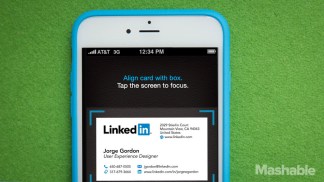
5 apps to streamline tedious tasks | Mashable

With a constant influx of new technologies to market, it can be tough to keep up with trends. Instead of spending months speculating what new features will appear, it’s worthwhile to consider how best to make the available products work for you.

We tracked down a slew of apps to streamline the tedious tasks in your life, from printing photos to adding a new contact to your phone. These recommended hacks will shave hours off your chore list — hours that can be well spent being far more productive.

Read More.

Walmart Makes Big Fat Online Mistake and Then It Gets Worse | Inc.com

walmart_39269Big online marketing mistakes seem all the rage these days. In late August, Spanish clothing and accessories retailer Zara got into hot water over what appeared to be a yellow Jewish star on a kid’s striped pajama top that looked like prison gear. Then there was Urban Outfitters with the Kent State sweatshirt that sported what looked like bullet holes and blood stains.

When confronted with evidence of what angered people, at least they managed to cleanly remove the offending items. It doesn’t make things all better, but it’s an important first step. If only Walmart had learned that lesson.

The company has just gone through a one-day rollercoaster with marketing stomachs likely still heaving. It all started with Walmart’s Halloween costume. Someone noticed a different subsection on the company’s website: Fat Girl Costumes, as the blog Jezebel reported.

And that started the very-bad-not-so-good day for Walmart’s marketing department. Even as the story was hitting online media and complaints were landing in the company’s social networking accounts–the term “fat girl costumes” apparently hit the top 10 of Twitter trends–things moved slowed at Walmart. Jezebel noted that by 11:15 a.m. eastern, there was still a fat girl costumes section, although there were no items in it.

Read More.