4 years after Occupy Wall Street, big banks are hurting | CNN Money

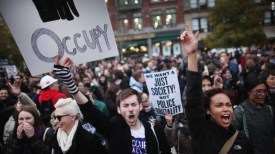
Four years ago, police started evicting Occupy Wall Street protesters from Zuccotti Park in New York City.

Justin Wedes remembers it well. It was one of several times he was arrested for protesting as an Occupy Wall Street leader.

“I think there’s a general sentiment, even amongst many on Wall Street, that our current political and economic system isn’t working,” says Wedes, who has now returned to his hometown of Detroit.

The Occupy tent cities are gone, but the movement has had a lingering effect on American politics — and even Wall Street itself.

Read More

Move Over, PayPal: This $5 Billion Startup Is the Hottest Thing in Money | Inc.com

Nearly two decades ago, PayPal transformed the world of e-commerce by offering to mask a user’s credit card information for online transactions. Today, that baton could easily pass to Stripe, a San Francisco-based payments startup founded by two young Irish entrepreneurs, brothers John and Patrick Collison.

Over the past 12 months, five-year-old Stripe has moved from the cutting edge in financial software development to mainstream awareness for businesses. It’s raked in tens of millions of venture capital; sealed important payments deals with prominent companies; and brought on high-profile executives who should help the company grow and scale.

Read More

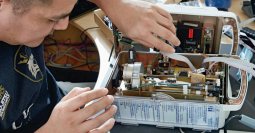
Hospital Gear Could Save Your Life Or Hack Your Identity | Bloomberg Business

But when he showed up, he was surprised to find himself in a conference room full of familiar faces. The Mayo Clinic had assembled an all-star team of about a dozen computer jocks, investigators from some of the biggest cybersecurity firms in the country, as well as the kind of hackers who draw crowds at conferences such as Black Hat and Def Con. The researchers split into teams, and hospital officials presented them with about 40 different medical devices. Do your worst, the researchers were instructed. Hack whatever you can.

Like the printers, copiers, and office telephones used across all industries, many medical devices today are networked, running standard operating systems and living on the Internet just as laptops and smartphones do. Like the rest of the Internet of Things—devices that range from cars to garden sprinklers—they communicate with servers, and many can be controlled remotely. As quickly became apparent to Rios and the others, hospital administrators have a lot of reasons to fear hackers. For a full week, the group spent their days looking for backdoors into magnetic resonance imaging scanners, ultrasound equipment, ventilators, electroconvulsive therapy machines, and dozens of other contraptions. The teams gathered each evening inside the hospital to trade casualty reports.

Read More
Should you buy or rent? | Business Insider

Podcaster and author James Altucher recently stopped by Business Insider to talk about his provocative blog post about whether or not owning a home is a smart investment.

Altucher is a bestselling author, entrepreneur, angel investor and former hedge fund manager. His podcast and blog teach the lessons he’s learned about money, health and happiness after having it all, losing it, and getting it back again.

See Video

These Beautiful “Mental Maps” Of Cities Help Your Brain Regain What It Has Lost To GPS | Co.Exist 

The more we drive with GPS—or walk down the sidewalk staring at directions on a smartphone—the less we’re able to navigate on our own. Relying on navigational tech might even make the hippocampus, the part of our brain that handles memory, shrink a little.

A set of maps from designer Archie Archambault might help us rebuild the mental maps of cities that we’re starting to lose. Instead of a literal grid of streets, he maps out neighborhoods and the basic parts of a city the way someone who lives there might think of it, or at least the way they probably did before Google Maps existed.

Read More

Living and Dying on Airbnb | Medium

It is wishful thinking that Airbnb can scale up “what makes this global community so special” rather than have its community become co-opted by the values of the global marketplace — presumably efficiency, the maximization of profit, and personal interest (as opposed to “trust and safety”). It seems like Airbnb would like to wish away the complexities of what community really means: shared interests that hold people together, a set of agreed-upon rules to keep people in check, and transparency.

Read More

Obama rejects Keystone XL Pipeline, in huge win for environmentalists | Mashable

After a seven-year review process that gave rise to a grassroots climate activist movement, the Obama administration rejected the Keystone XL Pipeline on Friday, a decision that handed a major victory to environmentalists. Obama announced his determination at a morning news conference in the Roosevelt Room, alongside Secretary of State John Kerry and Vice President Biden.

“The State Dept has decided the Keystone XL Pipeline would not serve the national interests of the U.S.,” Obama said. “I agree with that decision.”

The move comes only weeks ahead of a crucial climate summit in Paris, where diplomats will work to forge a new global warming agreement to limit greenhouse gas emissions for all countries starting in 2020. The administration has committed to reducing U.S. carbon emissions by 26% to 28% below 2005 levels by 2025, and is pushing for an ambitious climate agreement to be forged.

During his statement on Keystone, Obama confirmed for the first time that he will be going to Paris to join other world leaders in addressing the summit.

Read More

One Map That Shows Why Regulators Are Freaking Out About Drones | Forbes

In the wake of several high profile drone accidents and a spike in reported sightings over the past year tracked by the Federal Aviation Administration, the government is cracking down on the unmanned flying objects. By the end of the month new drone registration requirements are expected. The AS-MC01-P multicopter unmanned aerial vehicle (UAV), developed by Aerosense Inc., a joint venture between Sony Mobile Communications Inc. and ZMP Inc. (Photographer: Kiyoshi Ota/Bloomberg)

The FAA and the Department of Transportation want drone registration and have called on a handful of interested parties—ranging from drone manufacturers to Amazon and other companies with drone delivery systems in their sights—for recommendations. Thursday marks the final day of a three-day meeting of the new “drone task force,” which has been issued a November 20 deadline to hand in its formal suggestions for policing drones.

Read More

Prop F Has Failed. But the Battle for SF’s Soul Will Go On | WIRED

PROPOSITION F HAS failed. The San Francisco ballot measure, which would have more severely restricted Airbnb-style short-term rentals, was defeated last night 55 percent to 45 percent, with about 133,000 votes cast and all precincts reporting. (Citizens in the state of California have the ability to bypass legislature and propose their own laws, which they vote on in these local elections.)

The measure—known casually as the Airbnb initiative—has captured the interest not only of residents living in San Francisco but beyond as a symbol of the tensions in a city grappling with the dramatic effects of the tech boom.

On one side, there are the San Franciscans who maintain that Airbnb and services like it chase long-term renters out of the city by restricting housing supply and sending rents skyrocketing. On the other, you’ll find the residents who say Airbnb helps them make ends meet by letting them make a little more income by renting out their homes. Airbnb reportedly spent north of $8 million on the measure, versus $1 million spent by Prop F supporters.

Read More