Messaging App Telegram Shuts Down 78 ISIS Propaganda Channels | Forbes

It’s been less than two months since the messaging app Telegram launched a new feature called Channels that allowed anyone to broadcast messages to thousands of people in a similar fashion to Twitter. Within that short time frame, it appears that dozens of Channels were created by supporters of ISIS to spread the group’s propaganda to thousands of users.

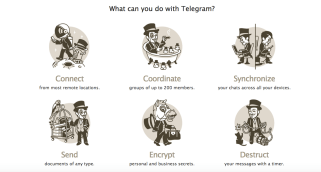
Supporters of ISIS have used Telegram to publish official statements, claiming responsibility for the Paris attacks for instance, and to communicate with one another. Founder Pavel Durov created Telegram in 2013 so that he could communicate with friends and colleagues without interference from the Kremlin; the app prides itself on a heavily encrypted network that keeps all communication private.  The company says on its FAQ page that its network is more secure than mass market messaging apps like WhatsApp and LINE.

Read More

NASA Wants to Make a C-3PO to Help Colonize Mars, But That May Not Be a Super Idea | WIRED

WHAT IS YOUR favorite space robot? How about stalwart Opportunity, still doing Martian science 11 years after its mission was supposed to end? Canadarm2 is another strong candidate: The 58-foot-long, seven-jointed robot put the International Space Station together, grappling from module to module like a slo-mo ninja warrior. Or maybe you’re more of a humanoid C-3PO fan. In that case, there’s the R5, a bipedal droid from NASA that can do all the repetitive and dangerous things that humans are too busy, bored, or susceptible to radiation to perform. Well, in theory.

Fact is, humanoid robots aren’t quite there yet. Not on Earth (witness the follies from the last DARPA Robotics Challenge), not in space. The world’s best bipedal robots have trouble doing things like opening doors, climbing out of jeeps, and walking in straight lines. That’s something NASA would like to fix, so it’s given a pair of R5s—along with $500,000 each—to two US universities with awesome robotics teams.

Read More

4 years after Occupy Wall Street, big banks are hurting | CNN Money

Four years ago, police started evicting Occupy Wall Street protesters from Zuccotti Park in New York City.

Justin Wedes remembers it well. It was one of several times he was arrested for protesting as an Occupy Wall Street leader.

“I think there’s a general sentiment, even amongst many on Wall Street, that our current political and economic system isn’t working,” says Wedes, who has now returned to his hometown of Detroit.

The Occupy tent cities are gone, but the movement has had a lingering effect on American politics — and even Wall Street itself.

Read More

Move Over, PayPal: This $5 Billion Startup Is the Hottest Thing in Money | Inc.com

Nearly two decades ago, PayPal transformed the world of e-commerce by offering to mask a user’s credit card information for online transactions. Today, that baton could easily pass to Stripe, a San Francisco-based payments startup founded by two young Irish entrepreneurs, brothers John and Patrick Collison.

Over the past 12 months, five-year-old Stripe has moved from the cutting edge in financial software development to mainstream awareness for businesses. It’s raked in tens of millions of venture capital; sealed important payments deals with prominent companies; and brought on high-profile executives who should help the company grow and scale.

Read More

Hospital Gear Could Save Your Life Or Hack Your Identity | Bloomberg Business

But when he showed up, he was surprised to find himself in a conference room full of familiar faces. The Mayo Clinic had assembled an all-star team of about a dozen computer jocks, investigators from some of the biggest cybersecurity firms in the country, as well as the kind of hackers who draw crowds at conferences such as Black Hat and Def Con. The researchers split into teams, and hospital officials presented them with about 40 different medical devices. Do your worst, the researchers were instructed. Hack whatever you can.

Like the printers, copiers, and office telephones used across all industries, many medical devices today are networked, running standard operating systems and living on the Internet just as laptops and smartphones do. Like the rest of the Internet of Things—devices that range from cars to garden sprinklers—they communicate with servers, and many can be controlled remotely. As quickly became apparent to Rios and the others, hospital administrators have a lot of reasons to fear hackers. For a full week, the group spent their days looking for backdoors into magnetic resonance imaging scanners, ultrasound equipment, ventilators, electroconvulsive therapy machines, and dozens of other contraptions. The teams gathered each evening inside the hospital to trade casualty reports.

Read More

Should you buy or rent? | Business Insider

Podcaster and author James Altucher recently stopped by Business Insider to talk about his provocative blog post about whether or not owning a home is a smart investment.

Altucher is a bestselling author, entrepreneur, angel investor and former hedge fund manager. His podcast and blog teach the lessons he’s learned about money, health and happiness after having it all, losing it, and getting it back again.

See Video

These Beautiful “Mental Maps” Of Cities Help Your Brain Regain What It Has Lost To GPS | Co.Exist 

The more we drive with GPS—or walk down the sidewalk staring at directions on a smartphone—the less we’re able to navigate on our own. Relying on navigational tech might even make the hippocampus, the part of our brain that handles memory, shrink a little.

A set of maps from designer Archie Archambault might help us rebuild the mental maps of cities that we’re starting to lose. Instead of a literal grid of streets, he maps out neighborhoods and the basic parts of a city the way someone who lives there might think of it, or at least the way they probably did before Google Maps existed.

Read More

Living and Dying on Airbnb | Medium

It is wishful thinking that Airbnb can scale up “what makes this global community so special” rather than have its community become co-opted by the values of the global marketplace — presumably efficiency, the maximization of profit, and personal interest (as opposed to “trust and safety”). It seems like Airbnb would like to wish away the complexities of what community really means: shared interests that hold people together, a set of agreed-upon rules to keep people in check, and transparency.

Read More