3 things Texas needs to do to prevent another catastrophic power failure | Fast Company

Texans like to think of their state as the energy capital of the world. But in mid-February 2021, the energy state ran short of energy.

An intense winter weather outbreak, informally dubbed Winter Storm Uri by the Weather Channel, swept across the U.S., bringing snow, sleet, freezing rain, and frigid temperatures. Texas was hit especially hard, with all 254 counties under a winter storm warning at the same time.

Read More

10 Solar Power Uses That Will Surprise You | Life Hack

When you have an ample source of renewable energy, why waste non-renewable alternatives? It seems, the government of USA has given this a careful thought and has proclaimed a plan to maximize the production of solar panels in the first half of 2016 to 35 gigawatts. When compared to the amount of solar panels developed worldwide, this number is exceptionally very large. Thanks to the declining cost of installing and developing solar panels, the market for these will grow globally by 2017.

Even if the solar panel market is new, one cannot deny its potential as an alternative to fossil fuels. On many occasions, we have seen these panels being used for solar pool heating or for lighting up an apartment. But you will be quite surprised to see how this energy is used in some unexpected areas. Here are 10 of the most unexpected uses of solar power that will leave you awestruck.

Read More

This Company Turns Food Waste and Sewage Into Energy| Small Biz Trends

When it comes to recycling, most people at least know how to dispose of things like plastic and aluminum. Food waste however, is another story.

It’s not that old food items can’t be used in other ways. It’s just much more difficult for recycling companies to sort through food waste when it’s usually combined with other things like paper plates and plastic spoons.

That’s where Harvest Power comes in. The company is able to turn food waste into energy. And it doesn’t need the food to be already sorted or “clean.”

Harvest Power’s anaerobic digesters can process large amounts of food waste mixed with things like oils and treated sewage.

That waste is then converted into usable energy. Currently, Harvest Power has a facility located at Walt Disney World in Florida. That facility processes the uneaten food waste at the parks and resorts and then sells it back to Disney as energy.

Read More

How Do Tesla’s Home Batteries Work? | Live Science

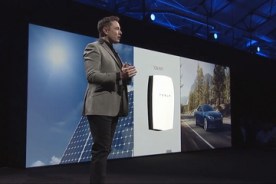
Last week, Tesla Motors announced an ambitious new product line: batteries to power homes or businesses.

The idea is that homes and businesses powered by solar panels could harvest and store energy during the day that could be used to run homes at night, or be used as a backup during a power outage.

“Our goal is to fundamentally change the way the world uses energy,” the company’s founder, Elon Musk, said at a news conference April 30. [Creative Genius: The World’s Greatest Minds]

Although the exact technology involved in the battery, called Powerwall, is a closely guarded secret, it probably isn’t based on revolutionary concepts, said Jordi Cabana, a chemistry professor at the University of Illinois at Chicago who studies new battery materials.

“Just looking at the specs that they publicize, it doesn’t look very different — in terms of the cost — to what they’re putting in their cars,” Cabana told Live Science.

Read More.
DOE Announces $30 Million in New Small Business Funding to Help Commercialize Clean Energy Technologies

Department of Energy Office of Public Affairs

For Immediate Release

Washington, DC — U.S. Energy Secretary Steven Chu announced yesterday that $30 million in funding from the Recovery Act and FY 2010 budget appropriations will be made available to qualified small businesses to support the commercialization of promising new technologies. Today’s funding announcement builds on the Department’s existing efforts under the Small Business Innovation Research program (SBIR) and the Small Business Technology Transfer program (STTR) to develop near-term clean energy technologies and support American small businesses that will play an important role in building the clean energy economy of the future. This is the first time DOE has offered Phase III awards under these small business programs.

“Small businesses are the engine of job creation and innovation, and we need their ingenuity and entrepreneurial spirit to drive a clean energy economy,” said Secretary Chu. “By helping America’s small businesses bring these innovative technologies to market, we will spur economic growth and help reduce the country’s energy use.”

Small companies previously awarded Phase II grants through DOE’s Small Business Innovation Research program (SBIR) or the Small Business Technology Transfer program (STTR) are eligible. Projects that include developed technologies with a strong potential for commercialization and impact on U.S. manufacturing and job creation are encouraged to apply. Successful applicants may receive up to $3 million over three years to research, develop, and deploy new technologies.
Continue reading “DOE Announces $30 Million in New Small Business Funding to Help Commercialize Clean Energy Technologies”

Report: U.S. Green Building Market Will Balloon to $173.5 Billion by 2015 | Fast Company

Think the trend of businesses making green office renovations is just a passing fad? Not according to the latest issue of EL Insights, which reports that the U.S. green building market value will balloon from $71.1 billion now to $173 billion by 2015. Commercial green building is expected to grow by 18.1% annually during the same time period from $35.6 billion to $81.8 billion. In this case, green building is defined as building with resource use and employee productivity in mind.

Read Article.

U.S. Department of Energy Announce SBIRs Grants |U.S. Department of Energy

DOE Announces $37 Million for
Small Business Research and Technology

Funding Emphasizes Investment in Clean Energy Technologies and Job Creation

Washington, DC— U.S. Energy Secretary Steven Chu announced today that $37 million in funding from the Recovery Act will be made available to qualified small businesses through the Department’s Small Business Innovation Research (SBIR) and Small Business Technology Transfer (STTR) programs. Today’s funding announcement emphasizes the Department’s commitment to developing near-term, clean energy technologies while allowing small businesses take part in the new industrial revolution that the sustainable energy economy will bring.
Continue reading “U.S. Department of Energy Announce SBIRs Grants |U.S. Department of Energy”