Bunning Statement on Bernanke: ‘You Are the Definition of a Moral Hazard’ | Real Time Economics – WSJ

Senator Jim Bunning smokes Ben Bernanke:

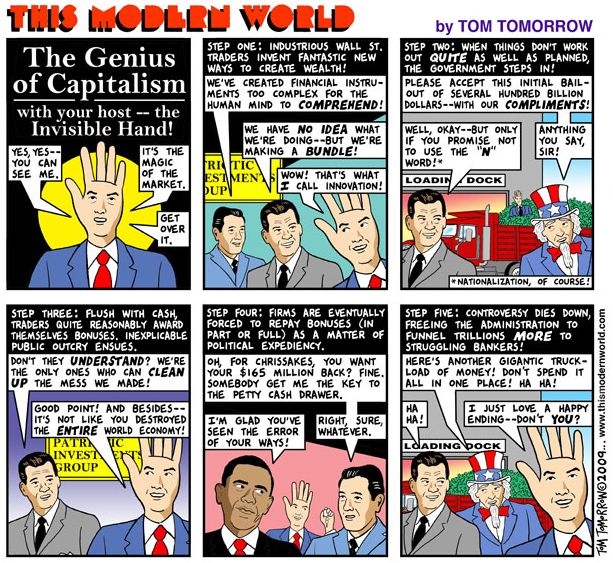
Instead of taking that money and lending to consumers and cleaning up their balance sheets, the banks started to pocket record profits and pay out billions of dollars in bonuses. Because you bowed to pressure from the banks and refused to resolve them or force them to clean up their balance sheets and clean out the management, you have created zombie banks that are only enriching their traders and executives.

…you put the printing presses into overdrive to fund the government’s spending and hand out cheap money to your masters on Wall Street, which they use to rake in record profits while ordinary Americans and small businesses can’t even get loans for their everyday needs.

Read This NOW!

A more complete, yet less satisfying description of the hearing can be read here.

Judge blasts bad bank, erases 525G debt | NYPOST.com

The lucky winner!

The government has been backing up to the back doors of these institutions, unloading truckloads of cash. Many have used the funds to purchase other banks or shore up their balance sheets; few have passed any relief to their customers.  The backlash against them has primarily been debt repudiation (bankruptcy and foreclosure) and now, debt cancellation.

Spinner excoriated OneWest for repeatedly refusing to work out a deal, for misleading him about the dollar amounts at stake in the case, and for its treatment of the couple over months of hearings.

OneWest’s conduct was “inequitable, unconscionable, vexatious and opprobrious,” Spinner wrote.

He canceled the debt because the bank “must be appropriately sanctioned so as to deter it from imposing further mortifying abuse against [the couple].”

The bank is involved in a similar case in California, where it’s trying to foreclose on an 89-year-old woman, despite two court orders telling it to stop.

Read Article.

Should the U.S. Continue Its Stimulus-Program Payouts? | TIME

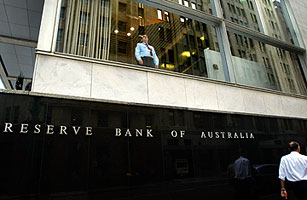
For now the weak dollar is helping America’s exports. But it is also spooking holders of U.S. debt, whose continued purchases of U.S. Treasury bills allow Washington to fund its deficit spending. Last week, the International Monetary Fund (IMF) announced that the Reserve Bank of India had bought 200 tons of IMF gold reserves, the biggest single purchase by a central bank in 30 years. That pushed the price of gold past $1,100 an ounce, the latest record breaker in a string of new highs, as the market anticipated gold buying by other central banks to hedge against a falling dollar.

Read Article

How Do You Pull Off a Ponzi Scheme? : Stupid Regulators | Securities and Exchange Commission Files

20090930_mightnotbereal_560x375
Bernie Madoff's wild ride (Photo AP)

Don’t worry about government regulating health care, get them to regulate the financial markets:

Madoff said it was “amazing to me” that he didn’t get caught … because they specifically asked him, “Are these securities at DTC? (Depository Trust and Clearing Corp.)”  They further pressed, “What is your account number.” He replied, “646.” Madoff stated that it was “obvious they thought that something was amiss.” He went on to say that when they asked for the DTC account number, “I thought it was the end game, over. Monday morning they’ll call DTC and this will be over… and it never happened.”

Madoff stated that when … Enforcement did not follow up with DTC, “I was astonished.”

But the real question is, can the industry be regulated at all:

Madoff noted that the industry is growing incredibly complicated. He gave the example of when his firm put up a credit default swap and didn’t know how to do the books. Madoff said he didn’t know … He said he called Merrill Lynch, Lehman Bros, five firms total, all of which didn’t know. He said the NASD had no clue. Madoff stated that today, lots of trades are done off the books because people don’t know what to do with them.

Read the Horror – exhibit-0104

Consumer Spending Falls In September, Biggest Drop In Nine Months

IMG_0017By Martin Crutsinger – Huffington Post

WASHINGTON — Consumer spending plunged in September by the largest amount in nine months, reflecting the end of the government’s Cash for Clunkers auto sales program. Incomes, the fuel for future spending, were flat.

While the government reported that the overall economy grew in the July-September period, signaling the end of the worst recession in seven decades, the weakness in spending and incomes as the quarter ended underscores the fragility of the recovery.

Continue reading “Consumer Spending Falls In September, Biggest Drop In Nine Months”

US foreclosures’ flurry of activity | fst

foreclosureThe effects of the credit crunch have been clear for all to see: from bank failings to government bailouts, to a full-blown economic fallout, the recession continues to hang over us – now with just spots of recovery on the horizon.

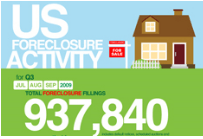
As such, the American people are now facing unprecedented levels of layoffs and cut backs, and US mortagage foreclosure filings remain near a record high. This comes despite news that foreclosure filings had actually fallen for a second straight month last month, largely thanks to ongoing government efforts to keep borrowers in their homes. But, while foreclosures in September were down four percent when compared with August, they remain up by 29 percent from the year-earlier month.

The RealtyTrac US Foreclosure Market Report, which is behind the current findings, provides a count of the total number of properties with at least one foreclosure filing reported during the month (or quarter). The data, collected from ore than 2000 counties nationwide, accounts for more than 90 percent of the US population.

As a result, for those people actually facing foreclosure filings – 343,638 in all throughout September – which include mortgage default notices, house auctions and home repossessions by banks, the problem seems both very intense and very, very real…

Read Article.

The Small Business Advocate for Aug-Sep 2009 | SBA

The Small Business Economy

Although many positive signs have indicated that the economy is beginning to improve and recover, at the end of 2008 America was experiencing one of the largest quarterly drops in GDP since the Great Depression. … The recession began with plummeting home values, and the construction industry, composed primarily of small businesses, has been the hardest hit.

Also:

Advocacy Interns Expand Summer Staff

Special Insert: Small Business FAQ

For the full report Click Here