Shaping a Bright Future: Key Skills for Aspiring Communication and Public Relations Professionals | The Startup Magazine

Key Takeaways

  • Understanding foundational skills is crucial for future success in communication and public relations.
  • Developing soft skills can significantly enhance career prospects.
  • Staying updated with industry trends can set professionals apart in competitive markets.

In today’s whirlwind pace of today’s digital and interconnected world, communication and public relations have emerged as pivotal players in steering public perception and cultivating essential relationships. For those eyeing success, acquiring and honing the right skills is non-negotiable and a key part of public relations professional development.

Read More

The Power of Extreme Ownership: Leadership Lessons from the Battlefield to the Boardroom | LifeHack

The streets of Ramadi, Iraq, 2006. In the aftermath of a tragic friendly-fire incident that resulted in the death of an Iraqi soldier, Navy SEAL Task Unit Commander Jocko Willink faced a crucial leadership moment. Instead of pointing to the fog of war, communication breakdowns, or the multiple factors beyond his control, Willink did something unexpected: he took complete responsibility for the incident. This decision would later become the foundation of a leadership philosophy that has transformed organizations worldwide.

The principle that emerged – Extreme Ownership – is deceptively simple: leaders must own everything in their world, no exceptions. But this simplicity masks a profound truth about effective leadership that extends far beyond the battlefield.

Read More

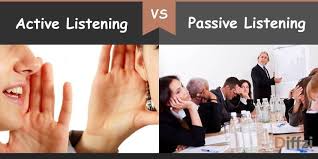
Active Listening vs Passive Listening: Is One Better Than the Other?

Seems like we are inundated with information every day. I don’t know about you but sometimes, I find it difficult to unplug and not feel like I need to be in front of a screen or talking to someone.

It sure feels like we are digesting information and communicating with others in one form or another all the time. With so much information coming at us from all angles, it’s easy to become distracted and not give important items the attention they deserve. It’s very easy to default to passive listening pretty much all the time.

Read More

Communication Overload Impacts Employee Performance | Small Business Trends

How Communication Overload Affects Employee Performance

GuideSpark CEO Keith Kitani said in an email to Small Business Trends, “Competition for employee attention is intense, especially when you consider the sheer volume of communications that employees receive every day, so it’s easy for a company’s important communications to get lost in the noise.”

GuideSpark’s survey also found that employees receive about nine emails per day that fall into the category of strategic corporate communications. In most cases, these are the messages you really need to get through and make an impact on your team. But they’re usually mixed in with all the other, less important messages. And even if they do get through, employees end up wasting tons of time sifting through their inbox daily to make sure those important communications get addressed.

Read More

17 Tactics to Drastically Improve Communication in Relationships | Lifehack

communication

You’re talented, you have great ideas and you’re hard working, but you’re often unrecognized, misunderstood and taken for granted.

Whether it’s in your personal or work relationships, you find yourself frustrated at how often people can misinterpret what you have to say.

If only there was something people could do to read your mind and feel your emotions. Right?

Sorry. While something like this doesn’t exist there is the next best thing, which is to take some simple strategies to improve your communication in relationships.

Read More

Study: Poor Writing Skills Are Costing Businesses Billions | Inc.com

Communication is an essential skill for any business, but what’s shocking is how much time and money businesses are spending each year to bring employees up to a basic proficiency level. Writing seems to be one of the skills requiring the most remedial training.

A study from CollegeBoard, a panel established by the National Commission on Writing, indicates that blue chip businesses are spending as much as $3.1 billion on remedial writing training–annually. Of this budget, $2.9 billion was spent on current employees–not new hires.

Think it’s from lack of education? Think again.

Read More

5 Ways to Instantly Connect With Anyone You Meet | Entrepreneur

How we communicate largely determines what we experience in life. It influences how much money we make, every relationship we have and where we go in our career.

Our income can be limited if we are unable to pitch our product to a client, ask for a desired salary in an interview or request a raise from management. On the other hand, the depth of our relationships will be constrained if we don’t have the confidence to approach new people or have the ability to resolve conflict and express ourselves.

Read More

What Does the Pope Think About Technology? #It’sComplicated | WIRED

HE’S GOT A stunning 7.2 million followers on Twitter but believes digital media “can stop people from learning how to live wisely, to think deeply and to love generously.”

He has posed for selfies in St. Peter’s Square, but has lamented the fact that so much communication online is purely about display, not real connection.

He’s called the Internet a “gift from God.” But he’s also warned that the abundance of data and digital stimulation we all consume each day can amount to a kind of “mental pollution” that harms our relationships and shields us from the real pain and joy that comes with human interaction.

Read More

What You Need to Know about Body Language at Work | Page 19

We’ve heard it a million times before: “90% of communication is nonverbal.” But what does that really mean? And how can you use that information? We asked the experts.

When we talk about language, we almost always are referring to words and sentences, nouns, verbs, dependent clauses, and all the various things that we can write down.

However, human communication is much broader than that—it includes variations in tone, emphasis, and entirely nonverbal signals like facial expressions, eye contact (or lack thereof), and hand gestures. Even the direction you’re facing communicates something to your conversation partner, regardless of whether or not they’re totally aware of it.

Clearly, there is a benefit to being able to reliably read (and project) nonverbal signals. So what’s a person to do? We consulted industry experts on nonverbal communication for their best tips. Read on.

Read More

To Communicate More Effectively, Use The Theory Of Seven | Forbes

My Theory of Seven says that anytime you have to communicate with a large group of people, you should do so as though everyone is seven years old. This doesn’t mean talking down to people; it means being so interesting, clear and simple that you hold their attention.

The Theory of Seven works in marketing, selling, speaking, education, and management.

We’ve all suffered through the speaker who drones on and on for an hour, assuming that adults have an infinite ability to pay attention. In reality, you probably started daydreaming before the guy finished thanking his host, colleagues, mentors, former teachers and long-lost relatives.

Read More.