What Advertisers Are Getting Wrong About Programmatic | Adweek

Specs

Current gig Vp of strategy at TubeMogul

Previous gig Head of technology at Ikon Communications

Age 35

Adweek: Describe your role as vp of strategy

Phil Cowlishaw: It’s a little bit like Navy SEALs. I take a high view of our most important strategic accounts and then deep dive into them to get a deep understanding of exactly what business drivers will make a difference for them and then how TubeMogul, the platform, can deliver this. My job is to lead a team that helps these accounts, to truly align their business models with our software features. At the end of the day, it’s ultimately helping them get the most value out of our platform. It’s really about how they can pull the triggers inside of our platform to shift more product or brand awareness.

What clients have you been working with?

L’Oréal USA, Jose Cuervo, Mondelez, Allstate, Heineken, Quiznos, Hotels.com and Lenovo.

What trends do you see emerging in digital advertising?

There’s an increased interest in this space on the brand side. We’re seeing brands trying to understand exactly what programmatic is and how it could potentially help their business. We’re seeing a significant shift into the programmatic space and a drive and adoption by big brand advertisers and their agencies to try and understand the power of programmatic, especially in online video, and how it can drive business results.


Read More

Google Is Planning For A Zero-Waste, Circular Economy | Fast Company

The current economy is built on waste—dig up some materials, turn that into a product, ship it to an “end user” who eventually tosses it in the trash. But that’s starting to change.

Google is one of the latest mega-corporations to commit to the principles of a circular economy—one that keeps “technical nutrients” like plastic and silicon out of the landfill, and trims out wasted water, energy, food, and land.

“Our goal is to embed circular economic principles into the fabric of Google’s infrastructure, operations, and culture,” says Kate Brandt, Google’s sustainability lead. “What that means is that we’ll be focusing on opportunities wherever possible to eradicate waste through smart design—at our data centers, in our kitchens, on our campuses, in all we do around the world.”

Read More

Fake and Overused Weather Photos: Avoid Sharing These Images | Weather.com

Social media has been a beneficial tool for weather forecasters in the 21st century. It allows meteorologists to give the public advance warning about a dangerous weather event, and, once the event begins, news gatherers use social media to quickly share images and video of a damaging storm system.

Conversely, social media has also made it easier to spread a lie. All it takes is one person to find an old picture or video, rebrand it as current and share it to Facebook or Twitter. Then it has the potential to go viral all over again.

Hurricanes, tornadoes and winter storms give these fake photos a high-profile platform to resurface. The image above, posted after a deadly tornado hit the Tulsa, Oklahoma, metro area on March 25, 2015, seems to look real. But as soon as it began to make the rounds on social media, locals immediately knew it was a fake.

Before you share the next striking, unbelievable image during a severe weather event, we want you to know how to recognize a phony. Spotting fake photos isn’t easy, but it’s slightly simpler when abiding by one maxim: if it seems too good to be true, it probably is. As for recycled weather photos that came from a past event, websites like Tineye and Google Image Search can help pick out reused images that were posted on the Internet long ago. To use Tineye or Google Image Search, just save the photo in question and upload it to either site. They will tell you if that photo has been previously shared on social media.

Read More

So Long Blogging. Hello—Yep, We’re Going to Say It—Plogging | WIRED

WE LOVE SHORT.

Concise 140-character limits. GIFs. Texts. Snaps. Vines. Photos. Summaries. Notifications. Emoji. Slang. Yo.

But some of Silicon Valley’s biggest, smartest tech companies and investors are going long on long. And not long videos, either. They seem to be doubling down on good old-fashioned words.

Last week, Facebook updated its little-known Notes feature to encourage users to write “more beautiful and customizable” posts separate from status updates. Medium announced a $57 million round of funding (on Medium, of course) and is holding a VIP event next week to reveal new features. Everyone’s favorite unicorn Slack relaunched its Posts feature to help users write longer at work. And Re/code reports that Twitter is building a product to allow users to share posts longer than the typical 140-character limit.

Read More

Could your morning coffee be a source of sustainable energy? | Mashable

Coffee fuels the people and, to some extent, the economy. But why stop there?

Arthur Kay was studying architecture at The Bartlett, UCL where he was set the challenge of designing a coffee shop and coffee roaster. During the process he, “quickly realized that coffee was being wasted everywhere. It was pouring out of coffee shops, office blocks, transport hubs and factories.”

Instead of seeing this waste as a challenge, Kay looked at it as an opportunity and discovered a way to refine the phenomenally high oil content in waste coffee grounds into biodiesel. He calls this remarkable discovery a ‘happy surprise’, but what happened next was considered, determined and very coincidental.

Read More

Facebook Declines to Remove Page Vilifying Autistic People | Forbes

Over the weekend, a Facebook page appeared that claimed it existed for families united against “autistic shooters.” It’s unclear whether or not the administrator of the page was attempting satire or parody or being serious or somewhere in between, but the entire page used a jocularly vicious tone in its extended series of false claims that could have had no other effect but to cause harm and damage to autistic people.

Given the glee that the administrator evinced over the negative response to the page, the intent could not be in doubt: to compound for the autism community the pain that we all feel over yet another national tragedy.

To my certain knowledge, within hours of the page’s appearance, there were hundreds of requests to Facebook to remove this page, in addition to a petition to request that it be removed, which had thousands of signatures. From what I understand–and from my own experience–for almost two days, Facebook’s repeated response was to assert, again and again, that the page did not violate Facebook’s community standards. ETA: Evidently, Facebook continues to think that because the page, taken down last night, is back up again.

Read More

Does Everyone Have a Look-Alike? | Live Science

We’ve all done a double take when mistaking a random person on the street for someone we know or know of, like the celebrity look-alikes Will Ferrell and Chad Smith — the actor and the Red Hot Chili Peppers’ drummer, respectively.

But does everyone have a doppelganger? There’s a fairly decent chance of it, actually, thanks to the limited number of genes that influence facial features.

Read More

3 Millennial Founders on What Really Makes Their Generation Tick | Inc.com

For serial entrepreneur Stacey Ferreira, 23, the Millennial generation is best defined by this Napoleon Hill quote: “If you’re not learning while you’re earning, you’re cheating yourself out of the better portion of your compensation.”

More than anything else, she says, Millennials are seekers of purpose.

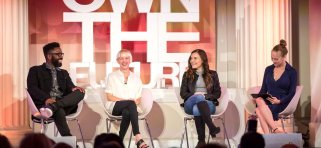
Ferreira, who heads up the digital advertising agency AdMoar, took the stage Thursday morning at Inc.’s annual Women’s Summit in New York City along with Rodney Williams (31), co-founder and CEO of Lisnr, SOLS co-founder Kegan Schouwenburg (29), and Inc. senior editor Christine Lagorio to discuss what really defines this generation at large.

Accounting for as many as 80 million people between the ages of 18 and 34–and an estimated $200 billion in U.S. spending power–Millennials are clearly a valuable demographic to businesses and employers.

Read More