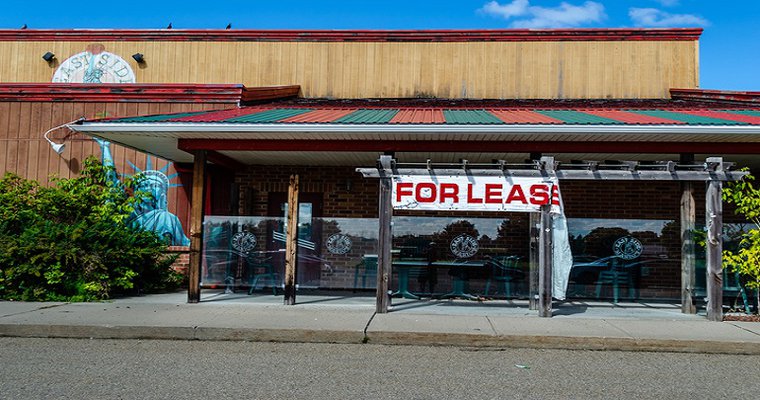
Thinking of opening a physical location? Here’s a look at initial restaurant start-up costs| Food Truck Operations

Opening a restaurant is your dream, but is it something you can afford?

Just like any big investment, most people require financial assistance in the form of a bank loan to afford the startup costs. We’ll help you weed through the individual costs of starting a restaurant so you can create a reasonable budget and acquire the funding you need. We also include ways to save on the cost factors.

How much does it cost?

The median cost of opening a restaurant is $275,000 or $3,046 per cover for a leased space, according to a recent survey. This number jumps to $425,000 or $3,734 per cover with an added land purchase. Numbers like this can be slightly deceiving because there is no one-size-fits-all answer to this question. The cost of your restaurant will be affected by a number of factors, including the location of your business, your restaurant concept, and whether you choose to lease or buy your space.


Read More

What Is a Bridge Loan and How Can Businesses Use It? | business.com

Bridge loans are a form of short-term funding intended to help your business buy assets or complete projects.

A bridge loan is a form of short-term financing that is designed to help a company meet its obligations until it secures a long-term business loan. This type of business loan is commonly used in commercial real estate and other transactions where timing is key and businesses need to secure funds quickly in order to take advantage of an opportunity.

When a business takes out a bridge loan, it uses the proceeds to purchase or improve assets, or to finance its own operations. Then, once it secures long-term financing, it uses the funds from the new long-term loan to pay off the bridge. Businesses use bridge loans (which often carry interest rates several points higher than conventional long-term financing) to fill short-term funding gaps. These include asset purchases, such as real estate, equipment, and inventory.

Read More

10 Things You Didn’t Know Your iPad Could Do | Digital Trends

The iPad is becoming an increasingly versatile tablet. Between the branching out of iPadOS from iOS and the fact that Apple has been leaning into the iPad as a kind of laptop replacement, the iPad has a lot to it. In fact, I’ve actually been using the iPad Pro as a replacement for a laptop for over a year now, and while I still have a Mac Mini that I use for the bulk of my work, I’ve learned a lot about iPadOS and how to get the most out of it.

Interested in getting more out of your iPad? Here are 10 things that you probably didn’t know your iPad could do.

Read More

Three Big Reasons Why You Should Be Careful of Hard Money Loans | The Startup Magazine

Hard money loans are a form of collateral-backed loan that real estate assets secure. Those who have the necessary collateral can obtain them, even if they don’t have good credit. What makes it strange is that the lender doesn’t rely on you to pay the loan back. That’s why your credit doesn’t play a significant role in the process.

Your hard money lender will base your loan primarily on how much your collateral is worth. For example, if you default on your loan, they will take possession of the property you used for security. Let’s find out more about what hard money loans are and how they work.

Read More

This CEO Changed His Feedback Style–and His Company’s Revenue Grew Almost 1,500 Percent | Inc.com

Would you rather be feared or loved? For three years, Dan O’Malley opted for the latter–and every day, he says, he failed his employees a little more.

The founder and CEO of Numerated stumbled onto that epiphany by accident: The four-year-old Boston-based startup, which helps banks and credit unions automate their processes, went into crisis mode in March 2020, when the Small Business Administration launched the Paycheck Protection Program. It turns out, when your entire 55-person team is working 20-hour days for weeks on end (to help banks process roughly $250 million in forgivable small-business loans per hour), you don’t have time to mince words. You do, however, start to bond with the people around you down in the foxhole.

That was the secret sauce, right there. “I didn’t have the time to be worried about how people would take the feedback. I just had to give it,” O’Malley says. But brutal honesty can be jarring, and can elicit defensive reactions, so he added a personal twist. He’d start with a short warning: “This is probably going to come off rough, and I don’t mean it that way.” And after detailing exactly what went wrong, he’d ask: How can I help? What do you need to fix it?

Read More

5 Ways That Charity Can Boost Your Business | Getentrepreneurial.com

There are two reasons to get your company involved in charitable activities: It’s good for the world and it’s good for business.

A survey from just two years ago shows that 88 percent of consumers want their favoured companies to help them make a difference.

Your business will receive several advantages in partnering with a charitable organization, including improving image, more productive employees, boosting your brand, building a network, and a healthier bottom line.

Read More

Allbirds creates a plant-based leather | Inhabitat

Allbirds put its best foot forward when it stepped into the sustainable footwear sphere. Now, the company is going further with the development of a new, plant-based leather. Made with rubber, vegetable oil and other natural ingredients, this leather alternative, aptly named Plant Leather, has 40 times less carbon impact than animal-derived leather and 17 times less carbon impact than synthetic leathers made from plastics.

The leather industry is a huge polluter. Many chemicals are used to process leather, and tanneries generate a lot of waste. The runoff from leather production negatively impacts air and water quality. It also means killing animals in order to use their hides. While this used to be done in a more sustainable, nose-to-tail manner for thousands of years, today, the process of making leather is not environmentally friendly

Read More

Canoo Electric Pickup Truck | CoolBusinessIdeas.com

LA-based electric mobility company Canoo has pulled back the curtain on its third vehicle, following the launch of a subscription-based people mover and a delivery van. The company has now joined the likes of Tesla, Bollinger, Rivian and others to add an all-electric pickup truck to its vehicle fleet.

“Our pickup truck is as strong as the toughest trucks out there and is designed to be exponentially more productive,” said Canoo’s Tony Aquila. “This truck works for you. We made accessories for people who use trucks – on the job, weekends, adventure. You name it, we did it because it’s your platform and she’s bad to the bone.”

The vehicle certainly has a different look to it than other electric pickup trucks that have been announced, which tend to be very much like their ICE brethren. Gone is the long hood, and instead the cabin has been pushed way forward for maximum visibility.

Read More

Does coffee really stunt kids’ growth? | Live Science

One reason coffee isn’t usually given to kids may be the widely held belief that the caffeinated beverage can stunt children’s growth. But is there any truth to this idea?

The answer is a resounding “no”: There’s no evidence that coffee or caffeine stunts childhood growth and development.

Instead, a person’s height is largely governed by other factors. For example, hundreds of genes so far identified are thought to be responsible for approximately 16% of a person’s adult height.

Read More

What Is the FDCPA? | businessnewsdaily.com

The FDCPA is a federal law that protects consumers from predatory debt collection activities.

  • The FDCPA is a federal law that governs third-party debt collectors’ interactions with debtors. It generally protects consumers only, not businesses or corporations.
  • The FDCPA applies to most third-party debt collectors but not the company that is seeking debt repayment.
  • The FDCPA mandates that third-party debt collectors do not lie, call the debtor outside of certain times and at certain locations, or threaten debtors.
  • This article is for business debtors who want to know what their rights are during collections and business creditors who want to be aware of the law as they try to collect on past-due accounts.

Read More