Will You Have the Retirement you Dreamed Of? | Peter Mehit

retired peopleNo doubt many baby boomer business owners are looking forward to exiting their businesses and enjoying retirement. Yet many of them will find that what they can make from selling their business will not be what they need to retire comfortably. This can be true even if the business is profitable and has many customers. The five questions discussed briefly below are not all the things that an owner should look at, but they are the some of the major ones. An owner looking to maximize the sale price of their business needs to have a solid answer for each of these questions.

How much do I want (or need) my business to sell for? – Start with this question first. In answering this question, remember that you’ll have lots of time on your hands and will probably want to travel or engage in activities that will take some cash. Add in all your living expenses and you will have a number that is appropriate for the lifestyle you want to live. Add 100% to the number for inflation, changes and emergencies. Now you have a target. Working with a financial planner can help you determine this number with greater accuracy.

Continue reading “Will You Have the Retirement you Dreamed Of? | Peter Mehit”

The SBA Does Not Loan Money | Peter Mehit

The SBA Does Not Loan Money

 Q. Should I get a loan from the SBA?

A. You can’t get a loan from the SBA, but you can get a SBA loan guarantee.

Come again?

Well, first off, the SBA does not loan money, so you can’t get a loan from the SBA.  Only banks loan money.  The SBA writes guarantees to limit the losses a bank will experience if your loan goes bad.  This is important to know, because it means you will have to qualify under the bank’s rules.

These can be very different from the SBA’s.  For example, it is not a requirement for you to collateralize the full loan amount to get an SBA guarantee.  Under SBA rules if you run out of assets, but have pledged what you have available, you can be approved.  Right now, we know of no bank that will make a loan without collateral equal to our greater than the amount you’re borrowing.

Each bank’s rules are slightly different, with the large banks having the most restrictive and the local and regional banks being the most liberal.

Continue reading “The SBA Does Not Loan Money | Peter Mehit”

The Consultant’s Dilemma: People Can’t Say No | Peter Mehit

mehWe are coming up on a decade in our own business. We have worked with thousands of clients and many times that number of prospects. As independent business people, our survival depends on our ability to forecast and close work. We have a very high close rate once we’re presenting, especially in person. This has been achieved through careful study of human nature and at a high cost.

As a consultant, you need to make the prospecting cycle as tight as possible so you are not chasing leads that won’t go anywhere. We began to experience greater success when we understood the following principle: Most people can’t say no.

I don’t mean this in the sense that they will buy from you if you overcome objections or demonstrate value. Most prospects know very quickly if they see value in what you’re doing and will buy. Our experience has been the best engagements result from connections that form quickly or, if there are delays because of a competitive procurement process, you are continually building a tighter relationship as it goes on. Absent this, you are likely waiting for a ‘no’.

The reason for this, my partner and I believe, is that most people hate the idea of rejection and hence are hesitant to do it to other people. I, for one, appreciate having my attention and effort liberated by a firm ‘no’. I am now free to begin the hunt for a new client, sometimes with lessons learned. But the slow ‘no’, or worse, the ‘we’re thinking about it’ just takes up mental and emotional cycles that are better spent elsewhere.

Continue reading “The Consultant’s Dilemma: People Can’t Say No | Peter Mehit”

Multitasking is a Myth | Peter Mehit

multitasking

We congratulate ourselves on being able to juggle many things at one time. Usually this celebration occurs as we speak to someone over our Bluetooth headset, between bites on a Big Mac while driving. We Twitter while on Facebook, instant message in meetings. Think about other things while we’re doing things.

Then we’re shocked, shocked, when the school proclaims our child has ADHD. Our way of life is ADHD. Soon we’ll be fretting when our kids don’t have it.

We think we can do many things at the same time, but we can’t. It’s simply not true. Human beings can only focus on one thing at a time. Not even computers can do it. They take whatever work needs to be done and break it up into threads so they can utilize tiny time slices on a processor.

People who think they’re good multitaskers, I like to call them delusional, use the reasoning that because they can handle a high volume, chaotic flow of information and requests, they should. But it’s a huge waste of time. Don’t believe it? Check this out.

Continue reading “Multitasking is a Myth | Peter Mehit”

Martin Diedrich: Human, being | Peter Mehit

martin diedrich“Think about this: People get out of bed and spend their entire day on a man made surface, never touching anything natural with their bare feet. People drive in climate controlled cars so they don’t have to worry about global warming. Cars are sold for the entertainments they possess. We’re zipping down the road at death defying speeds in total isolation. We go to jobs where we sit in cubicles all day long. People feel isolated and disconnected.”  Martin Diedrich’s Kean Coffee is an antidote to this isolation and disconnectedness, a chance to reconnect and reenergize. His goal is to be the new town square.

We met with him at his coffeehouse in Newport Beach. It was a hive of activity. “You’re established in this business when the guests know each other,” he says looking at the knots of people coming and going from the space. His goal is to create an ‘urban refuge’ a place where people connect over coffee and leave the hubbub of the day behind. To that end, there is no free wifi. Unlike most coffeehouses, people are talking to each other, not staring at screens. On this day, every seat was full and the space was loud with conversation.

“You can make this anywhere; people are people, “he says pausing to sip his coffee, “People are social creatures. They love to gather together, and hang out with one another. The sad thing is (society has) departed from that in a major way. I think today people yearn for opportunities to get together. ”

Continue reading “Martin Diedrich: Human, being | Peter Mehit”

With Gratitude for the Boys | Peter Mehit

IA 1

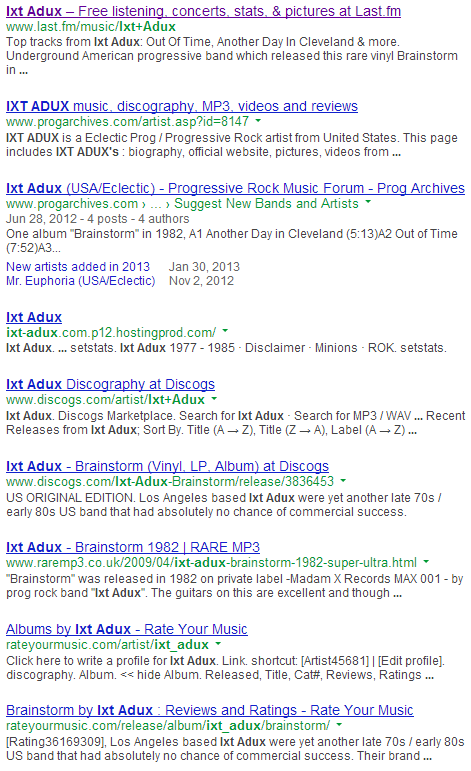
Yesterday, l spent the day with some old friends. Marty Austin and Dan Williford are the guitarists from lxt Adux, a band we took through the early eighties club scene in the search of the elusive record contract.

IA 3If you Google the band, you’ll find we have, even still, a following in Italy where we were named one of the premier bands of the eighties on several internet lists. Even though these lists are maintained by someone in their back bedroom, I personally find it a hell of an honor anyone cares that much. And copies of the original vinyl “Brainstorm” album are worth $150/ea if you have them.

We didn’t get the elusive contract because our music was ahead of its time: a kind of a mash up of King Crimson (both phases), Primus and Zappa complete with multiple time signatures and key changes in a time when three power chord hair bands were raking in millions. 

Maybe it would have never been the right time, we were so busy perfecting the ideas and the performance we never really stopped to see if people could tap their foot to what we were doing. After all, one reviewer, giving our album four stars (out of five) starts a glowing 2009 review led with: “Los Angeles based Ixt Adux were yet another late 70s / early 80s US band that had absolutely no chance of commercial success.” 

IA 2

Still, it was the most amazing, creative period I’ve ever lived through. For us, it actually was about the craft. We worked at it for seven years and the end everyone moved on to another chapter in their lives two albums and dozens of shows later.

For the most part we stayed in touch through out the years, although we lost touch with Marty. After while, it really started to bother me and eventually I fired a Jungian bottle rocket (subject of another post) and we found him.

The really great thing is we’ve started playing again. Free form jams at first, but eventually we started going back to the material we were working on when we split up. The unfinished business. We’ve been tapping around at it, wire brushing off the rust, digging down into muscle memory to cross the gulf of time.

Yesterday, we worked through some arrangements. The rehearsal discipline from thirty years ago was there, like only a day had gone by. We made some big strides in getting a difficult piece of music back on its feet. It was an awesome day with two of the coolest people I’ll ever know.  I just want the world to know how grateful I am, that we’re alive and together and making music.

It’s like the world has been restored.

For an idea of what the band was like in its native element, check out a 1982 performance at Lincoln Park in Santa Monica of Dan Williford’s previously unreleased Ms. Conception here. – Ed.

Dr. Richard Sudek Interview | Peter Mehit

Below is the transcript of the full interview I conducted with Dr. Richard Sudek, Director of Chapman University’s Leatherby Center for Entrepreneurship and Business Ethics. The center is nationally recognized as a leader in the field and Chapman has produced a number of notable entrepreneurs, including our client, Frank Delgadillo, creator of the Ambiguous and Comune action wear lines.

Excerpts from this interview appeared in Impact (formerly Caypen) magazine in both their online and print editions.

Q: Can you give us some background on the Leatherby Center and what you do here?

Sudek: I’m the Director of the Leatherby Center for Entrepreneurship and Business Ethics.

PM: What is your background?

Sudek: I had my own computer company, built starting with $250 and sold it, so I’m not your typical academic. What I’m really trying to do is change the entrepreneurial ecosystem here in OrangeCounty. The entrepreneurial ecosystem is poorly connected from my perception. We’d like Chapman to be involved in helping connect it. We’d like Chapman to be the place where entrepreneurs, inventors and investors meet and collaborate.

Most of our energy is outward facing rather inward facing.

One of the things to point out is that Chapman one of the best kept secrets here in OrangeCounty. We’re a top 50 business school. We have a Nobel prize winner in economics. Our entrepreneurship program is ranked 13th by BusinessWeek. Because I wanted to cross connect the university, we built this thing called ESUN, Entrepreneur Student University Network. Originally it was designed to be small, so we started with the local schools; Cal Tech. USC, UCLA, Loyola, Pepperdyne, UCI, Fullerton and Claremont McKenna to try to cross connect our centers which we’re starting to do.

The thing that really launched this is we created this competition called California Dreaming. And we brought in other schools such as Oklahoma, BYU, Berkeley and Hawaii, etc and created a $100,000 business plan competition that we have in April. Next year it will be a $200,000. It’s going actually be two different competitions a business plan competition and fast pitch competition. Microsemi will be the anchor sponsor, as they were last year. The idea is to get students in front of investors, not just to win cash. I brought in VCs and angels from the bay area and local VCs and angels.

One of the teams, BYU, who won the competition, got some equity funding from this in late April. So that’s the idea is to get students connected to that.

PM: So you’re trying to build the hub for this kind of activity here?

Sudek: Yes. Now this reaches outward across different states so the idea is the help students in general although focused on Chapman, OrangeCounty, Southern California, going out from there.

Continue reading “Dr. Richard Sudek Interview | Peter Mehit”

Speaking With Russian Entrepreneurs | Peter Mehit

Sirgut-1

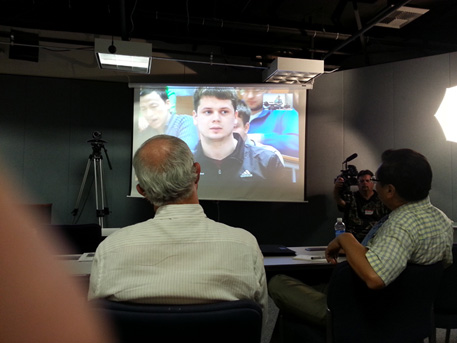
Last Friday, we had the honor to speak with a room full of entrepreneurs in Surgut, Siberia via teleconference. The conference was set up by Michelle Skiljian of the Inland Empire Women’s Center and Dr. Tapie Rhom, an IT professor at CSUSB along with the help of many others. We filed into  the tele-learning center at Cal State San Bernardino for a 7:00pm start. The tele bridge started late because the participants on the Russian end had to fight a snow storm to get to the venue. The crowd was slow to build but after about twenty minutes there were fifty or so participants involved in the conversation with about 15 Southern California business owners.

They aren’t all that different than us, except they have higher expectations for what America does for it’s start up nation. Most of their questions centered on sources of capital (with an interesting sidebar about support for parolees), the kinds of businesses we start here and, in particular, the kinds of businesses women are getting into. The Russian audience was majority women and the only three business owners that spoke were women. They explained the split of business owners in Russia 85-15% male, with the majority of women owning care giving or service businesses.

Continue reading “Speaking With Russian Entrepreneurs | Peter Mehit”

Interview – Amir Banifatemi | Peter Mehit

AmirAmir Banifatemi is founder of K5 Accelerator, which is based at ChapmanCollege’s e-Village. He has extensive experience developing start up and growth companies in many different markets but focuses primarily on healthcare, internet and media technologies. While he is focused keenly on developing value, he also has an eye toward projects that have significant technological breakthroughs and significant social and economic impact.

Mehit: You’ve been quoted that the center of gravity in OrangeCounty has been around real estate and finance resulting in a very careful and staid culture. What would you like to see changed?

Amir: I would try to improve a certain number of things, one of those would be more collaboration. I think the history of OrangeCounty and how people are disbursed does not promote synergies. Unfortunately, distance makes it difficult for people to meet and collaborate on projects, except on big projects.

Further if you look historically, at San Francisco or other places, when people get out of college, where do they go? They go to Hewlett Packard or the Fairchild or Intel but what do they do here? They go to a real estate company or title company. The appropriate employment environment is lacking.

Finally, people are focused on cash today instead of cash tomorrow. Your attitude, your investment of time and resource in collaboration and how you view society and community are different if you looking at cash tomorrow.

Continue reading “Interview – Amir Banifatemi | Peter Mehit”

Jim Butz Interview | Peter Mehit

Jim Butz has extensive business experience working as part of Bell Labs, AT&T and Lucent Technologies. Currently he is a Venture Partner at California Capital Partners, a merchant banking platform. His decades of experience includes mergers, acquisitions, strategic alliances, organizational development and operational improvement. He brings his vast experience to the local scene along with a fearless perspective of where we are and where we need to go.

Mehit: What is Cal Cap? What are you investing in?

Butz: California Capital Partners is a merchant banking platform. Most of the people who are involved with Cal Cap are pretty seasoned people and have been in equity investing for thirty, thirty-five years. Phil Smith, who is one of the managing directors in New York City actually put together Citibank’s first venture fund together forty years ago.

Martin Mansfield, of Pacific Ridge Capital, shutdown his business and joined Cal Cap. So now, we’re Series 7, FINRA compliant, he’s got Series 24 so he can manage ten other people doing deals. What we’ve mostly been focusing on recently is higher up the food chain with people who are looking for money from private equity sources.

We did sixteen investments since we started in 2006. We’ve done everything from pet pharmaceuticals to a beer company and everything in between.

We’re currently raising some money for some people to drill oil down in Texas. We also looking to put together a fund of funds to investigate intellectual property that’s held by large corporations.

Mehit: What qualities are you’re looking for?

Butz:  A promising return, because you’re really still looking at it the way you look at any venture, which are large returns in a short period of time. Everybody still looks for a 5 – 10x return in three to five years even though the average hold time on a venture backed company was at 9.6 years.

Continue reading “Jim Butz Interview | Peter Mehit”