Covid-19: Pfizer to allow developing nations to make its treatment pill | BBC News

US drug company Pfizer has penned a deal to allow its experimental Covid-19 treatment pill to be made and sold in 95 developing nations.
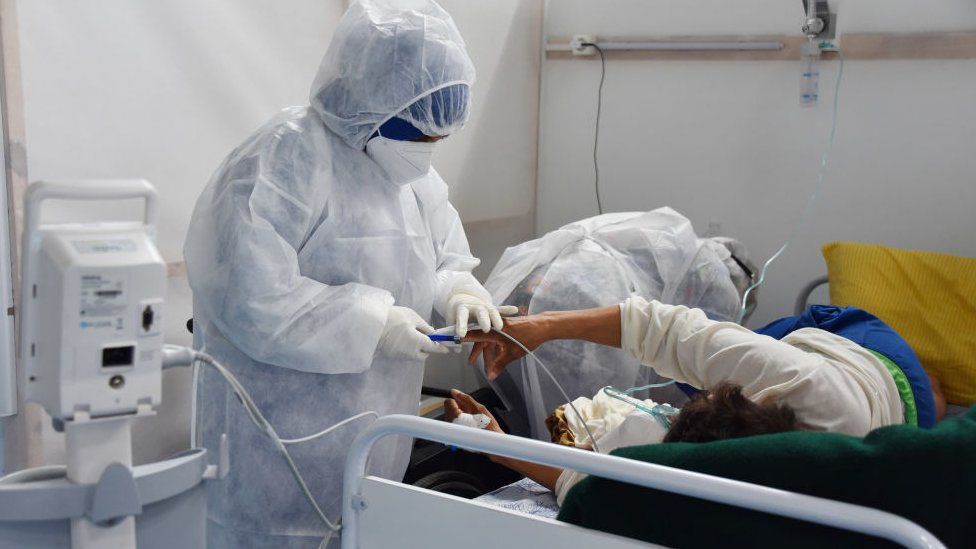
The deal with the UN-backed Medicines Patent Pool not-for-profit could make the treatment available to 53% of the world’s population.

But it excludes several countries that have had large Covid-19 outbreaks, including Brazil.

Pfizer says the pill lessens the risk of severe disease in vulnerable adults.
Read More

Amazon to pay $500,000 for not sharing Covid data | BBC News

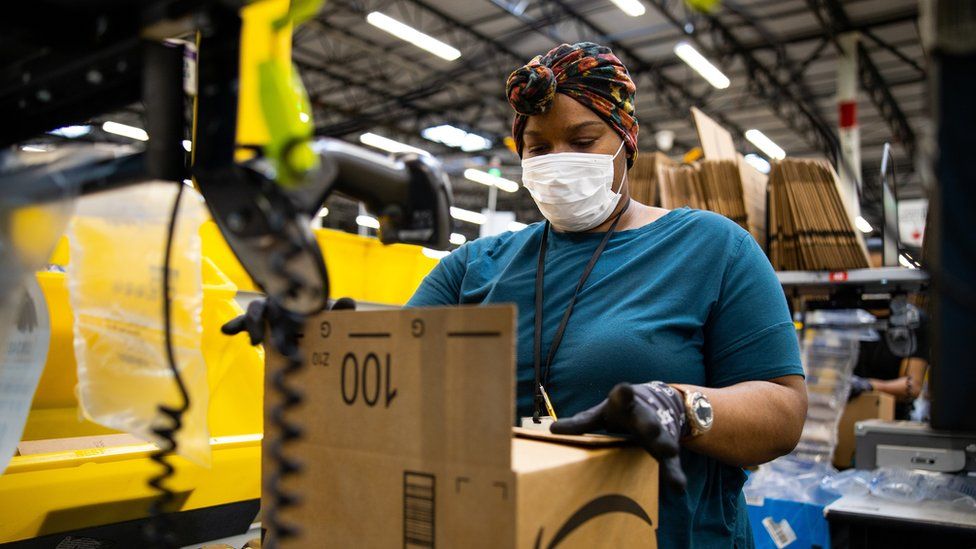
Amazon has reached a legal settlement in California over claims it failed to adequately inform its warehouse workers about Covid-19 cases in the workplace.

California’s attorney general said workers had been left “terrified and powerless”.

The delivery giant will pay $500,000 but did not admit wrongdoing in agreeing on the settlement.

Amazon said the law did not require it to share total numbers of cases with staff, but it had now started to do so.

Read More

What Is Imax Enhanced, and Should You Care? | WIRED

DISNEY+ TODAY ADDED a new way to watch 13 of its biggest Marvel titles: Imax Enhanced. This new viewing mode on the platform features a larger picture, along with a standard for better image picture and sound, similar to Dolby Vision or Dolby Atmos. Fortunately, you can get some benefits of this new standard on most existing TVs.

Imax Enhanced, like most of the labels on the side of your TV’s box, is actually a complex set of video and audio standards. These help studios format their movies for distribution to ensure the highest quality (at least according to whichever standard they choose). Most of the time, this process happens without viewers needing to know much except for checking for compatibility, like making sure your soundbar supports Dolby Atmos to hear audio mixed in that standard

Read More

How much money can crypto gaming absorb in the near term? | TechCrunch

Welcome to The TechCrunch Exchange, a weekly startups-and-markets newsletter. It’s inspired by the daily TechCrunch+ column where it gets its name. Want it in your inbox every Saturday? Sign up here.

Hello and happy weekend! Today we’re talking insurtech, SPACs and how well direct listings can manage the IPO pricing question. But first, crypto.

The crypto beat was busy this week, with Coinbase earnings giving us a good look into just how busy trading activity was for the asset class in the third quarter. If you recall Robinhood’s earnings, what Coinbase had on offer won’t prove a surprise. After the American equity investment platform’s crypto revenues fell sharply, Coinbase also posted declines in its aggregate trading volumes and revenues compared to the second quarter of the year.

Read More

Why Zillow Couldn’t Make Algorithmic House Pricing Work | WIRED

ZILLOW’S ZESTIMATE OF home values has become a go-to reference for US homeowners. But when Zillow tried to use its algorithm to buy and sell homes, it badly misread the market.

The company’s iBuyer (or “instant buyer”) arm, where tech-first firms use algorithms to quickly value, buy, and sell homes, launched in 2018 in Phoenix. It joined a bustling market in the Arizona city: Opendoor, Redfin, and Offerpad have been buying and flipping homes there since around 2014.

Read More

The industrial data revolution: What founders got wrong | TechCrunch

In February 2010, The Economist published a report called “Data, data everywhere.” Little did we know then just how simple the data landscape actually was. That is, comparatively speaking, when you consider the data realities we’re facing as we look to 2022.

In that Economist report, I spoke about society entering an “Industrial Revolution of Data,” which kicked off with the excitement around Big Data and continues into our current era of data-driven AI. Many in the field expected this revolution to bring standardization, with more signal and less noise. Instead, we have more noise, but a more powerful signal. That is to say, we have harder data problems with bigger potential business outcomes.

And, we’ve also seen big advances in artificial intelligence. What does that mean for our data world now? Let’s take a look back at where we were.

Read More

Microscopic metavehicles are pushed and steered by light | New Atlas

Although solar-powered devices are now fairly common, Swedish scientists have created something a little different. They’ve built tiny “metavehicles” that are mechanically propelled and guided via waves of light.

Led by Prof. Mikael Käll and former PhD student Daniel Andrén, a team at the Chalmers University of Technology constructed the vehicles by coating microscopic particles with what are known as “meta-surfaces.” The latter are described by the university as “carefully designed and ordered nanoparticles, tailored to direct light in interesting and unusual ways.”

Read More

Artificial Sweeteners Increase Food Cravings | Cool Business Ideas

Artificial sweeteners are widely promoted as safe, zero-calorie alternatives to sugar, ideal for those trying to lose weight. But a new study is indicating artificial sweeteners may increase appetite and food cravings, particularly in females and the obese.

“There is controversy surrounding the use of artificial sweeteners because a lot of people are using them for weight loss,” says corresponding author on the new study, Kathleen Page. “While some studies suggest they may be helpful, others show they may be contributing to weight gain, type 2 diabetes and other metabolic disorders. Our study looked at different population groups to tease out some of the reasons behind those conflicting results.”

Page hypothesizes the discordancy in the science is somewhat due to the fact that many studies investigating the effects of artificial sweeteners on metabolic activity or the brain are conducted in mostly male subjects, often with normal weight. This new research set out to investigate the influence of artificial sweeteners on these processes across a broad cohort of men and women.

Read More

YouTube will no longer show ‘dislike’ counts on videos | Mashable

Say goodbye to “dislike mobs” on YouTube.

YouTube has announced that it’s making dislike counts private on all videos across YouTube.

The thumbs down button isn’t going away. Users can still click thumbs down to dislike a video in order to inform the YouTube recommendation algorithm about content they didn’t like.

However, when a user presses thumbs down, there will be no dislike count letting users know how many people also disliked the video.

Read More

An Apple-1 computer sold for $500,000 at auction. Here’s a look inside. | Mashable

Little word of advice: Hang onto your Apple devices.

A working Apple-1 computer in a rare wooden case was sold at auction on Tuesday by John Moran Auctioneers, going for a cool $500,000. The original owner bought it from his professor in 1977 for a mere $650.

The first ever Apple-1 was created by Steve Jobs and Steve Wozniak in Jobs’ parents’ hallowed garage, following the founding of the company in 1976. The Apple-1 put the company on the map as the first personal computer that came with a fully assembled motherboard. Only 200 of these computers were handcrafted by the pair and their skeleton crew.

Read More