 Machines contain the breadth of human knowledge, yet they have the common sense of a newborn. The problem is that computers don’t act enough like toddlers. Yann LeCun, director of artificial intelligence research at Facebook, demonstrates this by standing a pen on the table and then holding his phone in front of it. He performs a sleight of hand, and when he picks the phone up—ta-da! The pen is gone. It’s a trick that’ll elicit a gasp from any one-year-old child, but today’s cutting-edge artificial intelligence software—and most months-old babies—can’t appreciate that the disappearing act isn’t normal. “Before they’re a few months old, you play this trick on them, and they don’t care,” says LeCun, a 54-year-old father of three. “After a few months, they figure out this is not normal.”
Author: knjohn
Comma Queen: “Who/Whom” for Dummies | The New Yorker
 “Who” and “whom” are relative pronouns, and the trick for choosing the right one is to switch the clause around so that you can substitute a personal pronoun. Personal pronouns have a property called case. “I,” “he,” “she,” “we,” and “they” are in the nominative case, and function as subjects of a sentence or a clause. “Me,” “him,” “her,” “us,” and “them” are in the objective case, and are used as direct objects, indirect objects, and objects of a preposition. Your ear will tell you which personal pronoun is correct.
Why your rent check just keeps going up | Money.Cnn

It’s gotten a lot harder to make the rent.
Rents have been soaring across the country, even outpacing home values, according to a recent Zillow report. Some areas are facing a particularly harsh reality: In San Francisco, renters have seen a nearly 15% yearly increase, and Denver tenants have faced an 11.6% rise.
And it’s not just a big city problem.
“Places that were more traditionally affordable are growing more quickly,” said Skylar Olsen, senior economist at Zillow.
The reason? A shortage of available rentals.
“Vacancy rates are at very low levels, which continues to push rents higher,” said Andrew Jakabovics, senior director, Policy Development & Research at Enterprise Community Partners.
Cats Do Control Humans, Study Finds | Live Science
 If you’ve ever wondered who’s in control, you or your cat, a new studypoints to the obvious. It’s your cat.
Household cats exercise this control with a certain type of urgent-sounding, high-pitched meow, according to the findings.
This meow is actually a purr mixed with a high-pitched cry. While people usually think of cat purring as a sign of happiness, some cats make this purr-cry sound when they want to be fed. The study showed that humans find these mixed calls annoying and difficult to ignore.
“The embedding of a cry within a call that we normally associate with contentment is quite a subtle means of eliciting a response,” said Karen McComb of the University of Sussex. “Solicitation purring is probably more acceptable to humans than overt meowing, which is likely to get cats ejected from the bedroom.”
EMarketer Report Cites Major Challenges Facing Mobile Video Advertising | Adweek
 There is a consensus in advertising that mobile video is the future, but that future is still hazy.
Mobile video can run in apps like Facebook, Snapchat and YouTube or be bought through ad networks that serve the mobile Web. There are six-second, 15-second and 30-second formats, and there are Gifs. There also are ways to measure by impression or engagement.
It’s this fragmented landscape that is creating uncertainty at an otherwise golden moment for mobile video, according to eMarketer, which released a report today taking a comprehensive look at the forces shaping the sector.
“There’s still some inconsistency with the ad formats for mobile video,” said eMarketer analyst Jeremy Kressmann. “There’s in-stream video working off publishers’ native players; there’s interstitials that pop up; there’s in-app, in-game video; interactive video; in banner and in-feed video.”
“It’s confusing on the ad-buyer side trying to figure out what they’re buying and how to get scale,” he said.
American Regional Dialects, Expressions | Business Insider
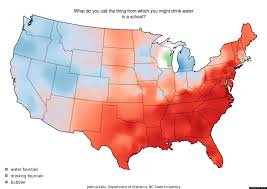 American English dialects and pronunciation have been a point of interest from coast to coast among linguists for years.
In 1999, the Harvard Dialect Survey, a research project conducted by Professor Bert Vaux, used a series of questions, to collect information about what terms, word pairs and sounds are used in different parts of North America. Some of the words highlighted in the survey inspired the “Regional Dialect Meme” videos, where people from around the country taped their pronunciation versions of words and sayings.
The data from the Harvard study was eventually brought to life by PhD student, Joshua Katz, through a series of interactive dialect maps, which went viral.
Interactive Map Lets You Find Dinosaur Tracks, Extinct Volcanoes | Live Science
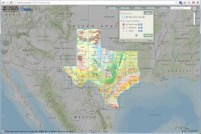 Want to trace the footsteps of dinosaurs or pinpoint the exact location of extinct volcanoes? A new interactive geological map of Texas lets people browse everything from where dinos once roamed to the whereabouts of oil and gas formations.
The U.S. Geological Survey map, which can be accessed for free online, offers a unique window into the history of the ground beneath the Lone Star State. The map shows Texas at a scale of 1:250,000, and allows users to zero in on geographic layers of interest, such as specific fault lines or types of rocks.
5 Ways to Monitor Competitor Website Traffic | Small Biz Trends

The entire goal of SEO (search engine optimization) is to get ahead of your competitors, by whatever Google-friendly means necessary. And just like in warfare, if you want to know how to get ahead of your adversary, you need to know their strategies.
Luckily, Google and other search engines make it pretty easy for you to monitor competitor website traffic strategies by using a number of useful tools.
Identify Competitors
To begin, know your enemy. You can’t expect to get ahead of your competitors if you don’t know exactly who they are, what their mission is, and how they plan to execute it. Your biggest competitors may not be who you think they are. Search engines no longer base comparable companies on size. Just because a company is small, doesn’t mean that they won’t be dangerous to your business.
Take the time to jot down a list of your biggest challengers by searching your own top keywords in search engines. The first 10-20 most common competitors on the list are most likely your biggest threat, and those are the companies you’ll want to closely analyze in order to learn what they’re doing right for such high rankings.
Why You Should Be Asking Your Customers for Referrals | All Business
 I have said this time and time again: you must ask for referrals if you want to grow your business. Referrals can contribute to a larger percentage of your revenue if done correctly. In fact, approximately 50 percent of my revenue is generated from referrals. Without them, I would be stuck putting in countless hours online trying to drum up fresh leads.
Referrals are easier to generate than you may think. The hardest part is getting up the courage to ask. Some people think they will offend customers by asking for more business. In reality, your customers will be more than happy to send people your way if they are satisfied with your work. As such, it is important that you develop a good relationship with your clients and develop a plan to seek referral business from each and every one of them.
If you are not yet sold on asking for referral business, here are a few facts that will hopefully convince you:
Referrals don’t cost anything.
People always know someone who can benefit from your services.
Your customers are better at marketing than you.
Referrals can lead to more referrals.
United Flights Halted: The Malicious Work Of A Hacker Or An Old-Fashioned Computer Glitch? | Forbes
 Was the world’s second-largest airline grounded for nearly an hour Tuesday morning by a hacker?
Probably not. But that was the immediate suspicion after Chicago-based United Airlines began experiencing significant problems with its flight dispatch system around 8 a.m. CT.
The Federal Aviation Administration quickly issued a ground stop, effectively shutting down the airline’s more than 700 jets (except, of course, those already in the air). The ground stop order was lifted about 40 minutes later.
Wired.com and other media outlets quickly posted online news stories about the event in which they quoted Tweets and other social media postings from passengers stuck onboard grounded United planes. Though all those early reports cautiously added that the actual cause of the dispatch system disruption remained unknown, at least to the website editors – they speculated that United’s system had been hacked into by outsiders.

