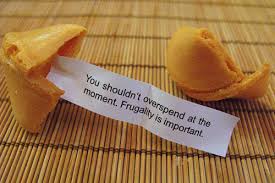
Success Is Controlling How You Spend Your Time | Inc.com

timeI  blew the mind of one of my Babson College students this morning.

Like most people, he believes that success is measured by how much money you have and how much money you make. By that measure, there is no single individual who is the world’s most successful.

After all, Bill Gates–whose net worth totaled $79.6 billion according to Forbes’s January 29, 2015, tally–probably has the most money, but I sincerely doubt he makes the most money every year.

That title probably goes to a hedge fund manager. For example, Ray Dalio–who runs $120 billion (assets under management) Bridgewater Associates–pulled in a cool $3 billion in personal earnings last year, according to Forbes.

But if you believe that success means both having the highest net worth and getting paid the most every year, then neither Gates nor Dalio is successful.

That’s because the pursuit of the most wealth or the highest annual income is success only if you keep winning every year. Otherwise, you are going to spend time trying to figure out how you can get to be number one–rather than taking pleasure in what you have achieved.

Read More.

Google Is About to Make Your Wireless Carrier a Lot Less Relevant | WIRED

GOOGLE’S NEW WIRELESS phone service, Project Fi, offers a long list of modern day perks. It automatically moves phones between traditional cellular networks and the WiFi wireless networks inside homes and businesses. Once on WiFi, you can still make calls and send texts. And you can pay for all this in small, flat, monthly fees—avoiding the sort of inflated, strings-attached pricing that so often accompanies our cell services.

Read More.

Comcast abandons $45bn Time Warner Cable deal | BBC News

“Today, we move on,” said Comcast chairman Brian L Roberts.

“We structured this deal so that if the government didn’t agree, we could walk away.”

In March last year, the US Department of Justice (DoJ) launched an antitrust probe into the deal.

“The companies’ decision to abandon this deal is the best outcome for American consumers,” said Attorney General Eric Holder in a statement.

“This is a victory not only for the Department of Justice, but also for providers of content and streaming services who work to bring innovative products to consumers across America and around the world.”

The deal was also being scrutinised by the Federal Communications Commission, and had been criticised by some politicians and various consumer and industry groups.

Shares in Comcast declined slightly on the news, whereas Time Warner Cable’s were up slightly.

Read More.

  Three Strategies to Engage Your Clients | Getentrepreneurial.com

“What have you done for me lately?” is the client attitude du jour. And by “lately,” they mean very recently. The number of client experiences with and impressions from your competition expands daily with a multitude of tech-driven access points.

Client engagement—from relationship to results—is a key to your increasing sales with greater productivity to get out of the office earlier to do what you love with those you love.

How do you strategically engage your clients?

Here are 3 Strategies to Engage Clients for more business:

Be Initiating

Read More.

The Science Of Why You Should Spend Your Money On Experiences, Not Things | Co.Exist

3043858-inline-i-1-the-science-of-why-you-should-spend-your-money-on-experiences-not-thingMost people are in the pursuit of happiness. There are economists who think happiness is the best indicator of the health of a society. We know that money can make you happier, though after your basic needs are met, it doesn’t make you that much happier. But one of the biggest questions is how to allocate our money, which is (for most of us) a limited resource.

There’s a very logical assumption that most people make when spending their money: that because a physical object will last longer, it will make us happier for a longer time than a one-off experience like a concert or vacation. According to recent research, it turns out that assumption is completely wrong.

“One of the enemies of happiness is adaptation,” says Dr. Thomas Gilovich, a psychology professor at Cornell University who has been studying the question of money and happiness for over two decades. “We buy things to make us happy, and we succeed. But only for a while. New things are exciting to us at first, but then we adapt to them.”

Read More.

Mobile Ads Skyrocketed 76% in 2014, Making Digital Advertising a $50 Billion Business | Adweek

The digital advertising space grew 16 percent last year compared to 2013 and totaled $49.5 billion in sales, according to an Interactive Advertising Bureau report released today.

A key driver in that growth was the burgeoning mobile space, which the IAB found to have skyrocketed by 76 percent—from $7.1 billion in 2013 to $12.5 billion last year.

“High double-digit growth in mobile advertising is a reflection of the continued shift in consumer behavior away from desktop and towards mobile devices,” stated David Silverman, a partner at PricewaterhouseCoopers U.S., which prepared the data for the IAB

Read More.

Saving on Sustainability | IBIS World

While many US companies are making swift moves toward eco-friendliness to boost their corporate images or because they truly care, many others simply have to because of the nature of their businesses or ever-stricter environmental regulation. For instance, the daily operations of energy and manufacturing companies’ already necessitate monitoring of output and waste. Meanwhile, EPA legislation revisions planned this year are expected to expand the pool of companies at risk of costly noncompliance fines if they don’t implement more sustainable practices.

Already taking those steps are behemoths like Bank of America and its internal recycling program, Hewlett Packard and its e-waste initiative and Walmart and its use of energy-efficient lighting. While these corporate giants may have the necessary funds and resources to make drastic investments in sustainability, there are many steps businesses of all sizes can take to lessen their negative impact on the environment or simply stay compliant as regulation tightens. And with the right purchasing strategies, businesses can avoid taking an axe to their bottom line. IBISWorld has identified some key products and services that can help companies achieve their sustainability goals, as well as the strategies to do so for the best price.

Read More.

Google, Microsoft Join Obama to Fight Climate Health Woes | Bloomberg

download (1)President Barack Obama is warning that climate change will start affecting Americans’ health in the near future and he’s recruiting top technology companies to help prepare the nation’s health systems.

The administration unveiled a series of initiatives Tuesday to help moderate the effects it says a warming planet will have on increasing smog, lengthening allergy seasons and increasing risks of extreme weather-related injuries.

“The challenges we face are real, and they are clear and present in people’s daily lives,” said senior presidential adviser Brian Deese in a telephone conference call with reporters on Tuesday. Seven in 10 doctors are seeing effects on their patients’ health from climate change that is “posing a threat to more people in more places,” Deese said.

The White House plans meetings this week with medical professionals, academics and other stakeholders. Later this spring, Surgeon General Vivek Murthy will host a climate change and

Read More.

IS TECHNOLOGY SLOWING US DOWN? | BusinessTips.com

downloadWays That Technology Might Be Inhibiting Our Efficiency and Solutions to Maximizing its Benefits

Welcome to the Digital Age. Gone are the days of typewriters, Polaroid cameras and rotary phones. Computers, digital cameras and smart phones have not only replaced their prehistoric counterparts in our ever-advancing technological world, but they are seemingly as much a necessity to one’s survival as food and clothing. Why? Simply put, they are the normal means of communication, productivity and solutions in both the corporate world and our personal lives. As technology continues to advance, however so must our understanding of how it all works and how to use it correctly. Failure to utilise technology correctly can negatively impact communication and efficiency. Here are three signs that the technology you are using may actually be slowing you down, and solutions for improvement and maximizing its benefits.

1. Despite the use of technology, your tasks are taking you the same amount of time or sometimes longer to complete.

Read More.