Elon Musk Admits that Owning Twitter Hasn’t been easy | Digital Trends

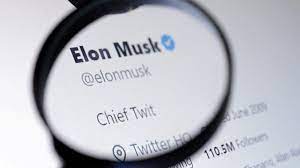
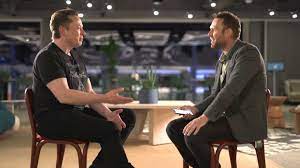
Twitter CEO Elon Musk agreed to an interview with the BBC on Tuesday night. It took place at Twitter’s headquarters in San Francisco with BBC journalist James Clayton and was streamed live on Twitter Spaces, the platform’s audio chatroom feature.

The interview covered a lot of areas, from Musk’s controversial acquisition of the platform in October 2022 to the mass layoffs of staff to how the company handles misinformation. He also confirmed reports earlier in the day that legacy blue checkmarks on Twitter accounts that aren’t paying for Twitter Blue will be removed on April 20.

Read More

Twitter will only show verified accounts on its ‘For You’ page | Mashable

Elon Musk says that Twitter will only display the tweets of verified users on its For You page, starting April 15.

This decision comes after the company announced it would be “winding down” its legacy verified program and removing legacy checkmarks by April 1. The now-controversial blue checkmark will only be available to Twitter Blue subscribers paying $8 per month.

Read More

Twitter now shows bookmark counts on tweets | Mashable

Twitter has slapped yet another social media stat on users’ tweets: Bookmark counts.

On Thursday, Twitter started to roll out analytics onto tweets that show how many times a tweet has been bookmarked(Opens in a new tab). As of publishing time, the bookmark count stat is only showing up on Twitter’s iOS apps but will soon expand and be displayed on Twitter for web and other platforms too.

Read More

Here’s why Twitter users are all posting Twitter Spaces links in their tweets | Mashable

If you’ve been on Twitter over the past week or so, you’ve likely seen extremely viral tweets that include random links to Twitter Spaces, the platform’s audio chat room feature. If you’ve clicked on any of those Twitter Spaces links, you’ll likely find a nonsensical Twitter Spaces chat scheduled for some time in the future that’s completely unrelated to the tweet. The user also has no apparent intention of going live in their Twitter Spaces chat.

So, why are Twitter users doing this?

As with nearly every weird, quirky trend among Twitter users since Elon Musk acquired the company, the answer is simple: It’s because of the algorithm.

Read More

Why the CEO of the world’s largest crypto exchange backed Musk’s Twitter buyout | TechCrunch

Binance’s CEO and founder Changpeng Zhao made headlines outside his typical wheelhouse of web3 as an investor in Elon Musk’s Twitter buyout. Zhao, who put in $500 million, told an audience at Web Summit in Lisbon, Portugal this week that he would consider joining the social media company’s board if Musk asked him to do so.

But why is he eager to get involved with the messy process of running a social media company when that seemingly has little to do with crypto, Binance’s core business? Essentially, what’s in it for the exchange?

Read More

Twitter is finally testing an edit button | CNN

After years of users clamoring for such a feature, Twitter is finally testing edited tweets.

Twitter (TWTR) said in — where else? — a tweet Thursday morning that some users may start seeing edited tweets in their feed because it is testing the long-awaited edit button.

“This is happening and you’ll be okay,” the company said.

In a Thursday blog post, the company said edited tweets are being tested internally and that the feature would expand to subscribers of its paid Twitter Blue service later this month. The test will first roll out to Twitter Blue subscribers in New Zealand, with Australia, Canada and the US to follow, according to the company. Users outside the test group will also be able to see edited tweets on the platform.

Read More

Twitter tests ‘notes’ feature with 2,500 word limit | BBC News

Twitter is trialling a new feature allowing users to share “notes” as long as 2,500 words.

The social media platform normally limits posts to 280 characters.

Twitter said the move was a response to seeing people use the platform to post pictures of longer announcements and steer followers to outside newsletters.

The test will run for two months and involve a small group of writers in Canada, Ghana, the UK and US.

Read More

Twitter and Facebook are coming for the newsletter business | Fast Company

Can’t they please just let us have this one thing?

This was the thought that came to mind last week, when Twitter announced its acquisition of the newsletter platform Revue, and when three sources told The New York Times that Facebook is planning its own newsletter tools for journalists and writers.

For Twitter and Facebook, getting into the newsletter business makes sense. Alongside Google, their platforms have come to dominate the distribution of journalism and online discourse in general, using their news feeds and search results to monetize a never-ending flow of content. With newsletters, a growing number of writers are trying to get off that treadmill and establish a more direct relationship with readers. Some prominent journalists have even quit their staff jobs to make newsletters full-time, and some budding newsrooms now publish primarily to readers’ inboxes.

Read More

How to Manage (and Monitor) Your Reputation on Social Media | Entrepreneur

Facebook, Twitter, Instagram, Youtube; it’s tough to do business these days without having at least a fledgling presence on these and other social media sites. Although the purest definition of social media is “a technology platform that connects people,” it can also be a valuable advertising platform that gives a company a way to directly engage its fans on a wide scale.

Social media from a marketing and PR perspective should be used to hold a conversation with the public, and brands should be leveraging their experts to engage, pursue and control that conversation. This is how the most successful brands engage, listen and interact with their customers across a variety of platforms. The unsuccessful ones forget this, which makes them appear stale or distant at times — and sometimes even the source of anger as “greedy corporate giants,” because mismanaged social media is the perfect recipe for a bad reputation

Read More