Is Silicon Valley really losing its crown? | TechCrunch

Where is the heart of the technology industry?

The simple answer is “Silicon Valley,” a term that now generally means the San Francisco-San Jose-Oakland area of California. There are other options: The two largest public cloud providers, Microsoft and Amazon, are based in the state of Washington. Europe’s tech scene has been busy in recent years, meaning that it can’t be ignored in any such conversation. And the combined tech industries of China and India form a bloc that carries material heft.

So there are contenders. But Silicon Valley has historical centrality in the tech industry — it’s a hub of startup and major corporate technology activity stretching back decades, one that has been able to create a venture capital flywheel of investment and reinvestment that other markets work to mimic. Now, the question is perhaps better phrased as not “where is the new center of tech,” but has the technology industry become so broad-based that it has no real gravitic nexus?


Read More

The next clash of Silicon Valley titans will take place in space | Digital Trends

Like one of those comic book supervillain crossovers where The Joker meets Lex Luthor or Doctor Doom takes on Magneto, the world’s biggest tech companies are battling one another — with Earth as their ultimate prize.

That might sound a bit melodramatic, but it also sums up a recent trend by Silicon Valley companies looking to bring the internet to our planet’s furthest reaches by launching their very own internet satellites into orbit. Far from some obscure skunkworks project from companies with way too much money, however, these launches have the possibility to finally make the world the hyper-connected place that tech giants dream of. At stake? The chance to connect every last person on the planet to the internet. Oh, and many, many billions of dollars, too.

Read More

Why The Biggest Threat to Silicon Valley Could Be Inside Your Gadgets | Inc.com

Certain intervals of time we accept as givens. The earth rotates on its axis once every 24 hours; seven days make a week; a half-hour sitcom is really 22 minutes plus commercials; Apple does a big-deal iPhone launch every other year. You know: the fundamentals.

In 1965, Intel co-founder Gordon Moore identified one of these intervals in a way we still associate with his name. Thanks to miniaturization, he observed, the number of tran­sistors that could fit onto a single microchip was doubling every year, making computers exponentially more powerful, energy-efficient, and inexpensive. In 1975, he revised Moore’s law, as it was by then known, to set the period of doubling at 24 months, where it has remained ever since.

Read More

Why Silicon Valley Is So Good at Making People Hate Things They Should Love | Inc.com

To anyone who has spent time in a great metropolis, San Francisco can only be experienced as a collection of dysfunctions interrupted by the occasional nice view. The housing market is the stuff of nightmares. Traffic heading in and out of town sits gridlocked for hours a day. The overcrowded public transit system primarily serves a narrow corridor of neighborhoods. Whole tracts of the city are weirdly barren of restaurants or supermarkets.

And let’s not even start on the ways this increasingly wealthy city fails its large homeless population.

All this dysfunction creates a ready market for consumer-focused startups that can ease the suck a little. It’s no accident that Uber, Airbnb, and Instacart all started here. And so it was when app-enabled electric scooters started showing up on the streets of San Francisco in March, a lot of people wanted to ride them. Cheap, convenient, zero-emissions transportation that gets you exactly where you’re going–that’s something that would improve every city, not just one this broken.

Read More

CodeFights: Play this coding game, score a job in Silicon Valley | Money Cnn

It took less than three months for an online coding game to transform James Johnston’s life.

Johnston, 31, was designing software for orthodontists and living in Chattanooga, Tennessee, when he landed a better-paid software engineering job in Silicon Valley at a major tech startup.

The key to this career upgrade and cross-country move? CodeFights, an online game that offers programmers the chance to improve their skills and get noticed by Silicon Valley titans like Uber and Dropbox.

Johnston told CNNMoney he discovered the game through a Facebook ad in June.

“I was kind of intrigued and thought it was a fun little activity,” he said.

Read More

Why I moved my startup from San Francisco to San Diego | TechCrunch

San Francisco has long been hailed the home of the tech startup — the place to be for entrepreneurs looking to lay the foundation for the next big thing. As a mobile app platform with high aspirations, we joined the mix, sharing an area code for four years with the lauded engineers of Silicon Valley and inserting ourselves into the supposed center of the tech world. It seemed like the best possible move.

And for a while, it was.

Read More

6 Silicon Valley Fads That Will Fade in 2016 | Inc.com

Silicon Valley has its own unique culture that could be described as whimsical and nerdy, but also prone to excess. It’s that last feature we may see dialing back in 2016 as tech startups begin to feel the reality of shifting investing habits among venture capitalists, and more people start to accept the word “bubble” as a household term. Here are six trends that could be on their way out in the new year.

Read More

In Silicon Valley Now, It’s Almost Always Winner Takes All | The New Yorker

I want to focus on what Branson, a self-made billionaire, who is more often right than wrong, said about ride-sharing not being a “winner-takes-all” market. What Branson says is generally true for companies that sell analog products, such as packaged goods or soda, or analog services, such as air travel. Coke isn’t going to drive Pepsi out of business, and Toyota isn’t going to eliminate Honda.

Read More

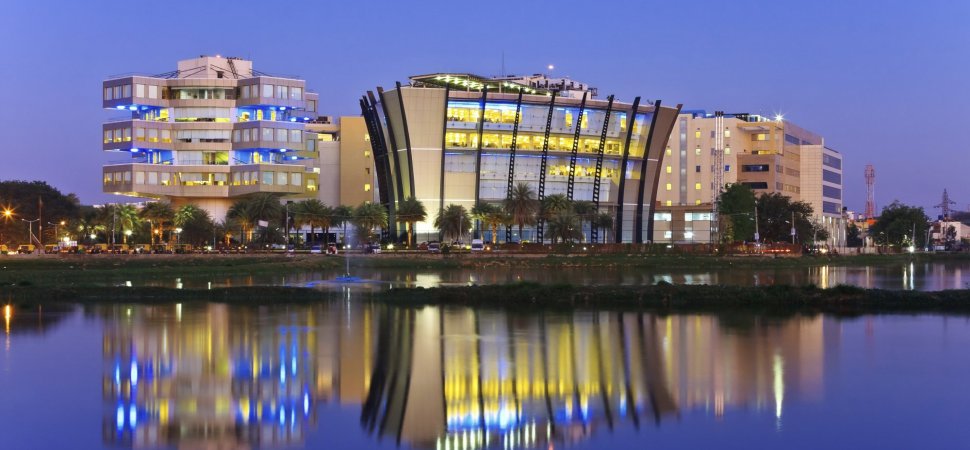
How India’s ‘Garden City’ Is Igniting the Entrepreneurial Spirit | Inc.com

getty_186255464_64850Often referred to as the “Silicon Plateau,” Bangalore holds many nicknames.

The green, sprawling capital city of Karnataka, a state in the southwestern region of India, is situated beneath a towering, 2,600-foot tall rock formation called the Mysore Plateau, which is bounded by the Sahyadri mountains and the sloping Kaveri river.

Over the past few years, Bangalore has earned the mantle of India’s “Silicon Valley.”

Although historically an outsourcing hub, the city is becoming its own technology business center. In 1909, the first Indian Institute of Science was established in Bangalore, and today it counts 3,500 students. The school’s most renowned education centers for climate change, neuroscience, and engineering have spurred more interdisciplinary research.

Today, Bangalore ranks as the 15th hottest startup ecosystem in the world, according to a recent report from Crunchbase and research firm Compass. The metropolis counts around 4,900 active startups, with nearly $2.3 billion in company investments last year.

A wide range of startup activity is happening in Bangalore. Internet penetration throughout India, especially, presents many opportunities for digital entrepreneurs. The country’s current population is a staggering 1.3 billion, and a July report from the Internet and Mobile Association of India projects that the country will count 500 million Internet users by 2017.

Read More