3 Common Millennial Misconceptions in the Workplace | Business News Daily

Think you’ve got your millennial employees figured out? You may not know them as well as you think.

Last month, Bentley University released the results of “Millennial Mind Goes to Work,” a survey that polled more than 1,000 U.S. millennials ages 18 to 34 on their attitudes about career and workplace issues. The statistics revealed nuances of many of the assumptions older generations have made about Generation Y, such as their obsession with technology and propensity for job hopping.

The study, which was conducted as part of the school’s millennial workforce preparedness program called PreparedU, reinforces the fact that millennials have been mischaracterized by employers in many instances, said Bentley University President Gloria Larson.

Read More.

Victoria’s Secret Launches Mobile Messaging App | Adweek

Victoria’s Secret wants to see what today’s millennials are talking about with a new twist on mobile messaging.

At the same time that practically all millennial-minded marketers are using Snapchat, Line, Kik and every other social and mobile platform out there to get in touch with teens, Victoria’s Secret has rolled out its own chat feature within its Pink shopping app.

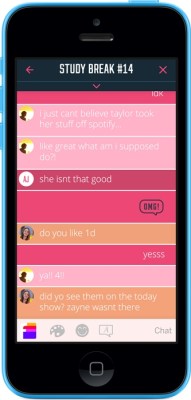
The lingerie brand is the first marketer to use a chatting feature from a mobile messaging app called Frankly.

After opening the chat feature, app users can talk about predetermined topics like holiday gifts or school. Because this is Victoria’s Secret and millennials are fickle the public chats are customizable with different shades of pink backgrounds and branded emojis. There’s also the usual crop of smiley face emojis that app users can play with, much like a text message.

Read More.

Here’s How One New College Grad Made $66,000 In One Month–Without A Full-Time Job | Forbes

After his junior year at Brigham Young University, Nick Walter, now 25, landed a great summer internship in the Seattle office of Pariveda Solutions, a Dallas-based tech consulting firm. Though he enjoyed the work and liked his clients and colleagues, he felt stifled. Used to jeans and t-shirts, he didn’t like wearing khakis and polo shirts and most of all, he says, “I hated that I had to be at this office every day for X amount of time doing what they said I had to do.”

So instead of heading down the career track he’d always expected of himself—he’d envisioned the security of a steady paycheck and benefits—he decided to go to BYU part-time for the next two years, while hiring himself out as a consultant and developing his own apps for the iPhone including seven how-two apps he wrote with a friend. One of them, called simply Weight Lifting Videos, has helped net $1,200 a month.Then he stumbled on a more lucrative possibility.

Read More.

Wall Street firm pushes for student loan forgiveness | Money Cnn

One Wall Street firm has an idea that’s raising eyebrows: forgive some student debt for first-time homebuyers.

It’s too early to say exactly how the stimulus measure BlackRock BLK suggested would work, but it would take Congressional action because the federal government administers the majority of student debt.

The move could be a creative way to ease student debt, which has quickly become a $1.2 trillion Achilles heel in the American economy.

Millennials aren’t buying many homes. Mounting student debt may be part of the problem. “Fiscal policy initiatives targeted at young workers with high levels of student indebtedness might, perhaps surprisingly to some, have an outsize impact in supporting the housing recovery and financial markets,” Rick Rieder, co-head of Americas Fixed Income at BlackRock, wrote in a recent commentary.

Read More.

Generation X: America’s neglected ‘middle child’ | Pew Research Center

Generation X has a gripe with pulse takers, zeitgeist keepers and population counters. We keep squeezing them out of the frame.

This overlooked generation currently ranges in age from 34 to 49, which may be one reason they’re so often missing from stories about demographic, social and political change. They’re smack in the middle innings of life, which tend to be short on drama and scant of theme.

But there are other explanations that have nothing to do with their stage of the life cycle.

Gen Xers are bookended by two much larger generations – the Baby Boomers ahead and the Millennials behind – that are strikingly different from one another. And in most of the ways we take stock of generations – their racial and ethnic makeup; their political, social and religious values; their economic and educational circumstances; their technology usage – Gen Xers are a low-slung, straight-line bridge between two noisy behemoths.

Read More.

Plastic Beats Cash Among Young Adults | Businessweek

American adults under age 30 hate cash so much that 51 percent of them will use plastic, even for purchases amounting to less than $5. That’s according to a survey released on Wednesday by CreditCards.com.

The older you are, the likelier you are to whip out cash, rather than a debit card or credit card, the study found. Seventy-seven percent of Americans 50 or older prefer cash for purchases of under $5.

Republicans and Democrats are equally likely to use cash for small purchases, and both parties’ followers are more favorably inclined toward cash than political independents. That may have less to do with political inclinations than the fact that independents tend to be younger.

Read More.

What Cannes Lions Taught Us About Marketing To Millennials | Adrants

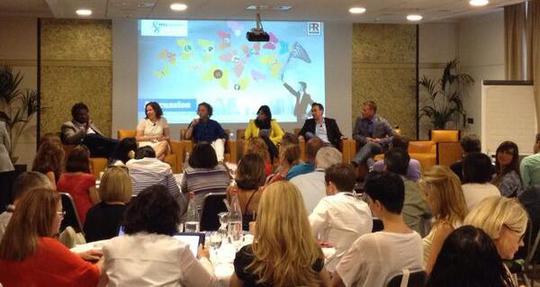
mlsgroup_cannes_lions_2014-thumbA panel of experts was assembled last week at the Cannes Lions International Festival of Creativity, who gave us their take on marketing to Millennials in 2014.

The panel, of course, agreed that brands must resonate with their target audience and have a realistic understanding of societal needs in order to have the kinds of conversations deemed to be relevant by millennial consumers.

In order to engage with Millennials, it was noted that brands must be willing to loosen up and give up control, which is a scary idea for most brands.

Read More.

Why Millennials Are Immature, Entitled and the Best Hire | Entrepreneur.com

As it has been pointed out countless times in the media and through anecdotes, millennials in the workplace feel entitled to undeserved promotions and raises, are addicted to their smartphones and job hop every few years. The litany of complaints goes on, but of course no generation is as bad — or as good — as reported: Generation X was more than just a bunch of slackers and Baby Boomers’ strengths shook off their juvenile delinquent label.

In the case of Generation Y, twenty-somethings bring new perspectives and habits to the workplace that add value to their employers, even though those strengths also carry inherent weaknesses.

Whether you’re managing millennials or are a twenty-something yourself, here are the unique and creative talents Gen Y brings to the table, the lessons they still need to learn and the opportunities they have to establish themselves as the next generation of leaders.

Read More.

Millennials Less Likely to Relocate Than Previous Generations | Mashable

Yang belongs to the age group, adults under 35, that’s traditionally the most mobile part of an American work force constantly on the move since the 19th century. Now, that’s changing as members of the millennial generation, the estimated 85 million born from 1981 through 2000, prove less restless than their forebears. The standstill may be holding back recovery in the labor and housing markets.

“They remain stuck in place,” said William Frey, a senior fellow at the Brookings Institution in Washington who specializes in migration issues. “The recent slowdown is really an interaction of demographics and a continued housing- and labor-market freeze. Millennials are mired down, very cautious about buying a home or moving to new areas.”

Read More.

Are Smart Clothes the Real Future Of Wearable Tech? | Ypulse

tech clothing2014 was supposed to be “the year of wearable tech,” but four months in, it seems clear that it’s going to take some time for wearables to go mainstream. The majority of attention is being paid to smartbands and smartwatches, and new entries to the market keep coming. Google has announced their expansion outside of Glass with smartwatch Android Wear, Nissan has unveiled a watch concept that would pair wearable tech with the car industry, Disney has made headlines with their new smartbands for guests, even Will.i.am is developing a smartwatch. The competition to be the star of tech that lives on our wrists is intense, but so far it is unclear whether consumers—even tech-hungry Millennials— are going to embrace these innovations. Research suggests that one-third of those who have purchased wearable tech abandoned their devices after just six months of use, causing some to wonder if the “next big thing” in tech is a harder sell than brands previously suspected. One of the big issues of wristband and Glass technology is that currently it is very noticeable and not necessarily stylish. We wrote that wearable tech would have to be either beautiful or undetectable to be embraced by a broader audience than the techie crowd, and the makers of these devices are heeding the warning, with Google partnering with glasses-maker Luxxotica for more fashionable Glass frames, and Intel working with Opening Ceremony and Barneys New York to create a wristband that actually looks cool.

So what will the future of wearable tech actually look like?

Read More.