This weekend brings a prime opportunity to see the biggest planet in the solar system shining at its brightest all year.
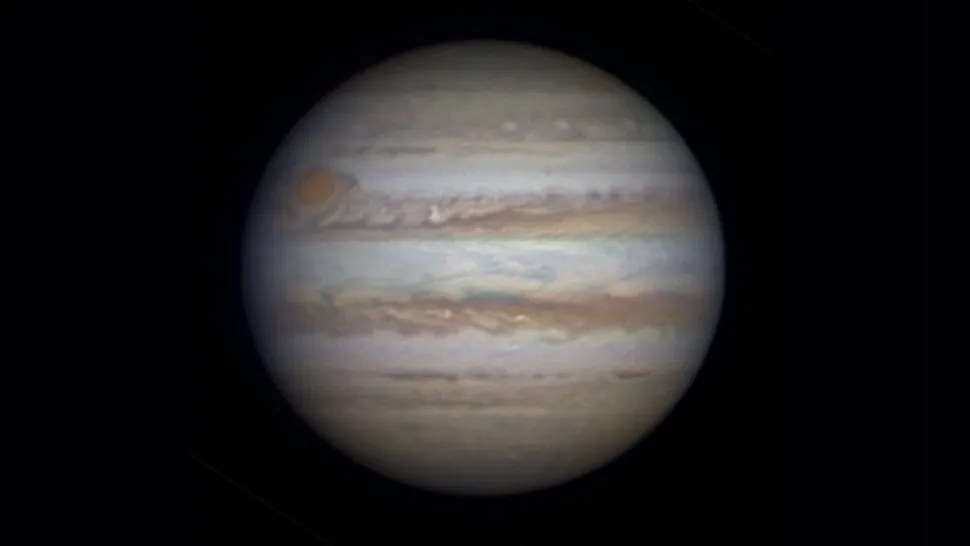 After dominating the night sky for more than a month, Jupiter will reach opposition this Saturday (Jan. 10). This marks the point when Earth lies directly between Jupiter and the sun, putting the gas giant opposite our star in Earth’s sky. The result is a brilliant, unmissable light in the eastern evening sky that shines all night long. At magnitude -2.7, Jupiter will outshine every star for many weeks.
(In astronomy, a lower magnitude corresponds to a brighter object. Sirius, the brightest star in the night sky, has an apparent magnitude of about -1.4.)
 Dispatches From The Front