Japan: Ikea is offering a tiny apartment in Tokyo for less than $1 per month | CNN

Swedish retailer Ikea is becoming a landlord in Japan with a tiny apartment it will rent out in Tokyo.

The 10-square-meter (107-square-foot) apartment is located in the Shinjuku district and will cost just 99 yen ($0.86) per month to rent, according to details released by Ikea this week.

Only one unit is available, and it is fully furnished with Ikea furniture and accessories. The company is accepting applications from potential tenants, who must be over 20 years old, until December 3.

Read More

Japan babies cash incentivie | Business Insider

Japan’s nationwide fertility rate just hit its highest level in 21 years.

The total rate increased to 1.46 in 2015, slightly up from the previous rate of 1.42 in 2014, according to the health ministry.

The biggest contribution to the increase came from women aged 30 to 34, according to Bloomberg.

This is no doubt a good sign for a country struggling with a looming demographic crisis.

However, what’s particularly interesting about this spike in fertility is that there was a correlation with cash incentives for new parents.

Read More

Japan Unleashes A Robot Revolution | Bloomberg Business

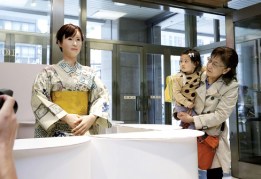
A new greeter at the entrance of the Mitsukoshi department store in central Tokyo has caused a stir. The worker, dressed in a kimono and cheerfully welcoming shoppers in honorific Japanese, is a robot made by Toshiba and shows how lifelike these machines can be.

This latest example of Japan’s skill comes just as Prime Minister Shinzo Abe is calling for a “robot revolution.” Advances in robotic computing power, the ability to recognize voices and images, and machine learning could help the country overcome the handicap of a fast-aging populace and a declining workforce.

At the opening of Japan’s Robot Revolution Initiative Council on May 15, Abe urged companies to “spread the use of robotics from large-scale factories to every corner of our economy and society.” Backed by 200 companies and universities, the five-year, government-led push aims to deepen the use of intelligent machines in manufacturing, supply chains, construction, and health care, while expanding robotics sales from 600 billion yen ($4.9 billion) annually to 2.4 trillion yen by 2020.

Read More.

In Japan, It Soon May Be Illegal Not To Take Vacation | Fastco.Exist

3043444-poster-p-1-in-japan-it-soon-may-be-illegal-not-to-take-vacation-days-at-workWake up at 7:30, commute to work, spend 13 hours in the office, run for the last train home, eat, and crash into to bed. The next day, rinse and repeat. Welcome to the insane working hours of a Japanese “salaryman” during crunch times at work. It’s a schedule that sometimes leads to what the Japanese call karoshi—death by overwork. Now, in an attempt to help, the Japanese government is considering a plan to force workers to take five vacation days a year.

Here’s an expat in Japan documenting his typical work week, with 78 hours of work and only 35 hours of sleep:

Read More.

Japanese Women Fall to No. 2 in Life Expectancy | LiveScience.com

credit: takayuki, shutterstock

photo credit: takayuki, Shutterstock

For the first time in more than 25 years, Japanese women are not considered to have the longest life expectancy across the globe, losing out to Hong Kong, according to Japan’s Ministry of Health, Labour and Welfare.

Japanese women’s life expectancy at birth dropped from 86.30 in 2010 to 85.90 in 2011, while men dipped from 79.55 in 2010 to 79.44 in 2011, according to the ministry of health. For Hong Kong, life expectancy at birth in 2011 for females was 86.7 years, while for males it was 80.5 years.

Read More.