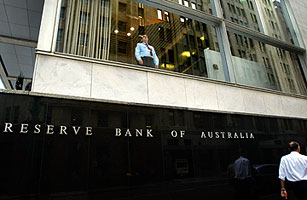
For now the weak dollar is helping America’s exports. But it is also spooking holders of U.S. debt, whose continued purchases of U.S. Treasury bills allow Washington to fund its deficit spending. Last week, the International Monetary Fund (IMF) announced that the Reserve Bank of India had bought 200 tons of IMF gold reserves, the biggest single purchase by a central bank in 30 years. That pushed the price of gold past $1,100 an ounce, the latest record breaker in a string of new highs, as the market anticipated gold buying by other central banks to hedge against a falling dollar.
Don’t worry about government regulating health care, get them to regulate the financial markets:
Madoff said it was “amazing to me” that he didn’t get caught … because they specifically asked him, “Are these securities at DTC? (Depository Trust and Clearing Corp.)” They further pressed, “What is your account number.” He replied, “646.” Madoff stated that it was “obvious they thought that something was amiss.” He went on to say that when they asked for the DTC account number, “I thought it was the end game, over. Monday morning they’ll call DTC and this will be over… and it never happened.”
Madoff stated that when … Enforcement did not follow up with DTC, “I was astonished.”
But the real question is, can the industry be regulated at all:
Madoff noted that the industry is growing incredibly complicated. He gave the example of when his firm put up a credit default swap and didn’t know how to do the books. Madoff said he didn’t know … He said he called Merrill Lynch, Lehman Bros, five firms total, all of which didn’t know. He said the NASD had no clue. Madoff stated that today, lots of trades are done off the books because people don’t know what to do with them.
‘Too Big to Fail’ banks have nearly a one percent advantage over small banks, a $34 billion dollar subsidy.
This piece deals with one of the many consequences of the bail out.
WASHINGTON — Consumer spending plunged in September by the largest amount in nine months, reflecting the end of the government’s Cash for Clunkers auto sales program. Incomes, the fuel for future spending, were flat.
While the government reported that the overall economy grew in the July-September period, signaling the end of the worst recession in seven decades, the weakness in spending and incomes as the quarter ended underscores the fragility of the recovery.
Governor Arnold Schwarzenegger’s California Recovery Task Force today announced that more than $156 million in American Recovery and Reinvestment Act (Recovery Act) funds are now available for application for energy efficiency and solar projects in California. A package of options under the State Energy Program (SEP) and the Energy Efficient and Conservation Block Grants (EECBG) Program offer local jurisdictions, non-profits and private organizations the opportunity to invest in energy efficiency and photovoltaic energy projects – while helping to stimulate their local economies. Governor Schwarzenegger announced that California was the first state in the nation to apply federally for SEP funding available under the Recovery Act.
We just ran across this issue with one of our clients, so I thought this would be good information to pass along. Note that the ‘good will’ limitation was $250,000 or 50% before, so this is a big policy change.
As always, all SBA deals are done according to individual bank policies so it remains to be seen if this change will actually help someone.
Effective Oct. 1, good will and other intangible assets can amount to up to $500,000, with no limit on the percentage of the loan. When intangibles exceed $500,000, the S.B.A. will recommend that banks limit the S.B.A.-backed loan to 75 percent of the purchase price.
This meeting took place between Hank Paulson, then Treasury Secretary and the Board of Goldman Sachs, in Moscow, in secret. This was two months before the collapse and subsequent bailout.
Goldman Sachs was a hugely powerful for-profit investment bank, and there he is, giving private chapter and verse on his opinions about the US and global economy, talking about internal Treasury matters, and previewing an upcoming (and surely market-moving) speech. All in secret, at a “social event” which somehow got kept off his official calendar.
This spells trouble for one especially vulnerable group — managers in their 40s and early 50s. They tend to be more expensive than their younger counterparts; they may lack some of the high-tech savvy needed to succeed in a more efficient workplace; and they face a downsized job market that will stay that way much longer than usual.
Reports from last month reveal that the US federal deficit had been catapulted to record territory in August, hitting $1.38 trillion with just one month left in the budget year.
It remains a concerning figure – not least because of the worries it has raised regarding the willingness of foreigners to continue purchasing Treasury debt. For that is where the debt comes from: US Treasury securities – a government debt issued by the United States Department of the Treasury, which other countries and institutions then buy.
In essence then, Treasury securities (in this case, Treasury bonds) are nothing more than glorified loans – and as the US Treasury releases data pertaining to this – it is becoming increasingly hard for the American people to get a grasp on the fact this is how their country borrows money.
If its any consolation, it should be noted that this is how all governments borrow money, so the US isn’t alone: but with America’s deficit now soaring to an incredulous height, concerns seem to not only be justified but also gaining impudence.


 ‘Too Big to Fail’ banks have nearly a one percent advantage over small banks, a $34 billion dollar subsidy.
  By Martin Crutsinger – Huffington Post



 Dispatches From The Front