Do humans and chimps really share nearly 99% of their DNA? | Live Science

Chimpanzees, along with bonobos, are humans’ closest living relatives. In fact, you may have heard that humans and chimps share 98.8% of their DNA.

But is this actually true? And what does “similar DNA” actually mean?
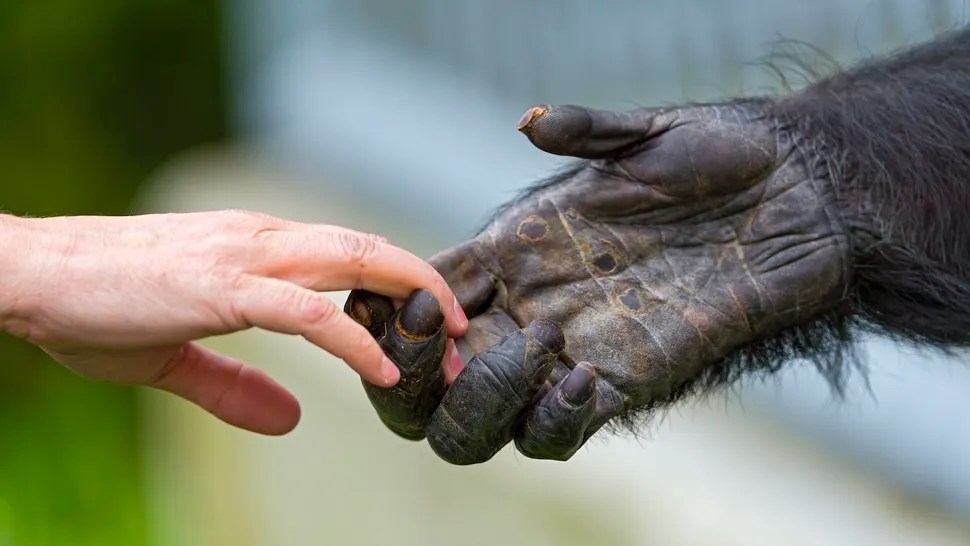
The truth is that the frequently cited 98.8% similarity between chimp (Pan troglodytes) and human (Homo sapiens) DNA overlooks key differences in the species’ genomes, experts told Live Science.

Human and chimp DNA is made of four basic building blocks, or nucleotides: adenine (A), guanine (G), cytosine (C), and thymine (T). The genomes of both species can be thought of as a “string of the letters A, C, G and T … about 3 billion letters long,” David Haussler, scientific director at the UC Santa Cruz Genomics Institute, told Live Science in an email.

When scientists compare human and chimp DNA, they identify the letter (nucleotide) sequence in both genomes and look for stretches of DNA where there is a lot of overlap between the two genomes. Then, they count the number of matching letters in these regions.

Read More

‘You probably didn’t inherit any DNA from Charlemagne’: What it means when your DNA ‘matches’ a historic person’s | Live Science

In 2022, we reported the DNA sequences of 33 medieval people buried in a Jewish cemetery in Germany. Not long after we made the data publicly available, people started comparing their own DNA with that of the 14th-century German Jews, finding many “matches.” These medieval individuals had DNA fragments shared with thousands of people who have uploaded their DNA sequence to an online database, the same way you share DNA fragments with your relatives.

But what type of a relationship with a medieval person does a shared DNA fragment imply?

It turns out, not too much that will help with your family roots research.

Read More

Pentagon’s New Factory: Your DNA | Wired.com

The fields of bioengineering and synthetic biology have already produced some useful, scary and flat-out bizarre entities. Besides renewable petroleum or steel strong spider silk, there are all sorts of potential therapeutic, industrial and agricultural purposes for reorganized DNA.

But DARPA thinks progress is too slow. Previous projects (it calls them “primitive”) are ad hoc and labor intensive, chugging along by trial and error in secretive silos. Hence we are “limited to producing only a small fraction of the vast number of possible chemicals, materials and living systems that would be enabled by the ability to truly engineer biology.”

Read Article.