The industrial data revolution: What founders got wrong | TechCrunch

In February 2010, The Economist published a report called “Data, data everywhere.” Little did we know then just how simple the data landscape actually was. That is, comparatively speaking, when you consider the data realities we’re facing as we look to 2022.

In that Economist report, I spoke about society entering an “Industrial Revolution of Data,” which kicked off with the excitement around Big Data and continues into our current era of data-driven AI. Many in the field expected this revolution to bring standardization, with more signal and less noise. Instead, we have more noise, but a more powerful signal. That is to say, we have harder data problems with bigger potential business outcomes.

And, we’ve also seen big advances in artificial intelligence. What does that mean for our data world now? Let’s take a look back at where we were.

Read More

Dropbox Slashes Its Price as the Cost of a Gigabyte Nears Zero | WIRED

When I talk to folks at Dropbox, they’re eager to tell me about how different people are using its file-sharing service: the musician, the photographer, the professor, the startup founder. They like to talk about new features, like password-protected links and the remote wipe tool that lets you remove files from a lost computer.

But what they save for the end of our meeting, almost like an afterthought, are the two numbers that traditionally meant the most for a data storage service: how many gigabytes you can store, and at what price.
As it turns out, these numbers look at lot better than they used to. On Wednesday, the company slashed the price of a gigabyte by 90 percent on Dropbox Pro, the paid version of its signature consumer product. Up until now, users paid $9.99 per month to store up to 100 gigabytes of data. Now, for that same price, they can store one terabyte.

Read More.

6 Ways to Transform Data into Information That Drives Decision Making | Allbusiness.com

Like most business owners and managers, you are likely inundated with oceans of data on a daily basis, yet not much of it helps you make decisions that improve results.The problem we all face is having too much data because we know that’s a good thing, yet very little of it enables effective decisions. Often, the data isn’t going to help you. Either it’s not the right kind of data or it isn’t compiled and analyzed properly.In other words, it isn’t Information — it’s just data. You need information for decision making.

Read More.

The Data You Ignore Is More Valuable Than You Thought | Forbes.com

Business leaders understand the importance of data, but just because you’re checking analytics doesn’t mean you haven’t also overlooked some important metrics.The new world of data isn’t just about gathering new information; all kinds of data that your business collects effortlessly can provide enormous value if you can look at it the right way.Finding the needle in of your haystack of data sources can be a lot more difficult than it might seem. To explore the untapped wells of information that companies should be paying attention to, I recently sat down with Catherine Havasi, co-founder and CEO of Luminoso, one of the most advanced data analytics companies out there today

Read More.

The Rosetta Project | Preserving Our Knowledge for Tomorrow

We are at, arguably, the zenith of the human experience. On every front of  art or science, both practical and theoretical knowledge built on thousands of years of human observation has accumulated into massive amounts of information stored electronically, magnetically or optically. Unlike the ancients who preserved their most valuable observations in stone, stable for thousands of years, or in books, which last hundreds, our information is stored in technology such as hard disk drives, compact disks or magnetic tape with typical lives of around 10, 15 and twenty years. In the event of a breakdown in society or technology, this information would be lost to future generations. The Rosetta Project is an attempt to develop storage that will last thousands of years while being compact.

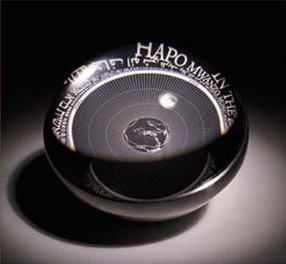
Our first prototype of a very long-term archive is The Rosetta Disk – a three inch diameter nickel disk with nearly 14,000 pages of information microscopically etched onto its surface. Since each page is an image, rather than a digital encoding of 1’s and 0’s, it can be read by the human eye using 500 power optical magnification. The disk rests in a sphere made of stainless steel and glass which allows the disk exposure to the atmosphere, but protects it from casual impact and abrasion. With minimal care, it could easily last and be legible for thousands of years.

Learn About The Rosetta Project.