Extreme weather caused by climate change is raising food prices worldwide, study says | CNN Business

Extreme weather caused by climate change is driving up the prices of basic food products worldwide and posing wider risks to society, a new study has found.

The cost of a wide range of goods – from potatoes in Britain to coffee in Brazil – saw dramatic spikes in recent years due to weather conditions that were “so extreme they exceeded all historical precedent prior to 2020,” according to the study led by Maximillian Kotz of the Barcelona Supercomputer Center.

Previous studies have examined how high temperatures have affected the cost of food produce in the long term, by impacting yields and hitting supply chains. The new research, published Monday, looked at 16 examples across 18 countries around the world where prices spiked in the short term as a result of either extreme heat, drought, or heavy precipitation between 2022 and 2024.
Read More

A shadow ‘financial crisis’ has cost the world $2 trillion | CNN Business

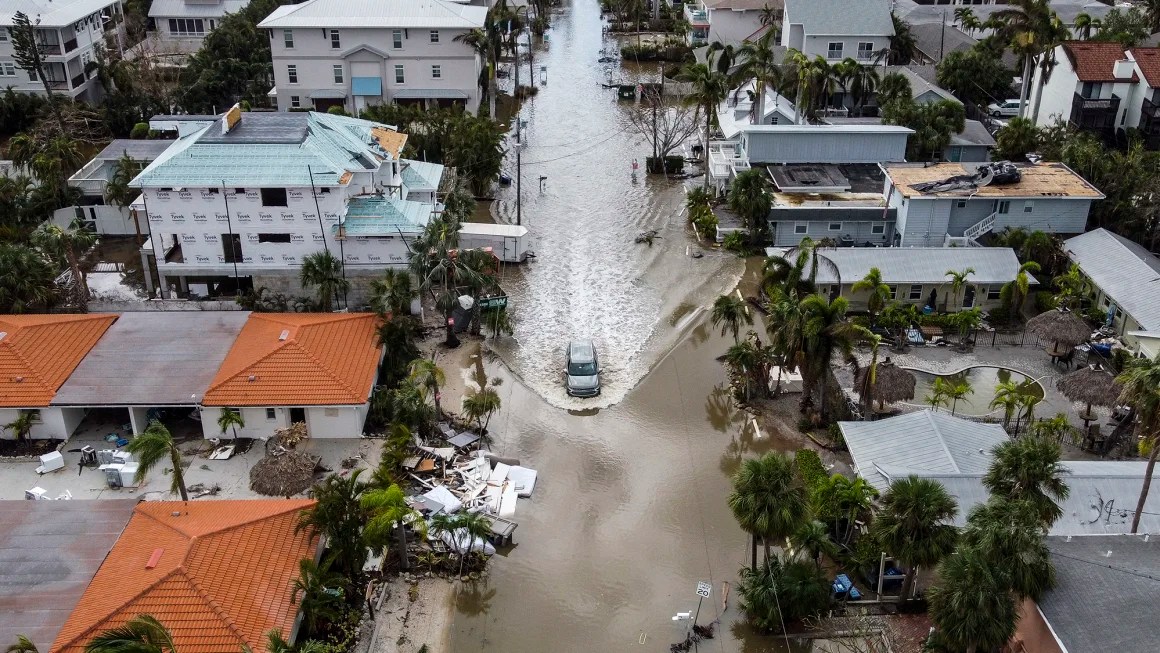
Last month, two major storms, Hurricane Helene and Hurricane Milton, caused a total of between $51.5 billion and $81.5 billion of property damage, mostly to Southeastern US states, according to estimates from CoreLogic.

That’s a lot of damage – but it’s only a small fraction of what climate change has cost people around the world.

A new report is flashing a warning signal about climate change and natural disasters, finding that their total economic damage has skyrocketed into the trillions.

The report from the International Chamber of Commerce, which comes as the United Nations Climate Change Conference begins in Azerbaijan this week, estimated that the total cost of damage from climate-related extreme weather events globally was approximately $2 trillion between 2014 and 2023 – roughly in line with the economic toll of the 2008 global financial crisis.

Read More

MIT researchers propose a new way to measure climate change: outdoor days | Fast Company

Minnesota officially just had its warmest winter on record. Some residents probably enjoyed the break from shoveling snow, but many Midwesterners found it ominous to comfortably jog outdoors in late January. It could turn out to be a fluke—just a particularly strong El Niño—or it could be a harbinger of things to come, particularly after the hottest global summer on record. Either way, a professor at MIT wants more people to start thinking about climate change in terms of how it will radically alter seasonality as we know it.

Read More

How to Stay Cool Without Air-Conditioning and Prevent Heat Exhaustion (2023) | WIRED

IT’S THAT TIME of year again. That long, mostly holiday-bare stretch of the year in the northern hemisphere full of record-breaking temperatures, raging wildfires, and heat-related illnesses that we call summer. Not every home has air-conditioning. Adding it isn’t always financially or contractually possible. Others, to reduce environmental footprint, go without AC because the energy-sucking machines raise city temperatures by pumping heat outdoors. Even for those with AC, the power could go out during an ill-timed heat wave.

Thanks to global climate change and the heat-island effect of urban cities trapping heat within pavement and buildings, life on Earth is growing warmer by the year. This is the only planet we’ve got though, and unlike billionaires, we can’t just fly off to a new planet once we’ve toasted this one into oblivion. Here’s how to stay cool even when the Earth is feelin’ hot, hot, hot. Hey, at least you can always give into the sun, build yourself a solar cooker, and have a weenie roast.

Read More

8 Ways To Make Your Money Greener | Forbes

Teenage Swedish climate activist Greta Thunberg grabbed headlines in the U.S. last month when she traveled to the 2019 UN Climate Action Summit in a sailboat and then accused adults of having stolen her generation’s hopes and dreams with their inaction on climate change. But in her home country, Thunberg and her movement already seem to be having an effect on the habits of adults; domestic air travel is falling in Sweden as she’s become the face of a push to reduce air travel.

Even if you’re not ready to cut back on flying, there are other ways you can have a personal and positive impact on the environment. One of the most obvious is with your money—how you bank it, invest it, spend it and share it.  Here are eight ways to make your money greener (or promote other causes you deem worthy).

Read More

No One Works When It’s Hot, So Climate Change Is Going To Ruin The Economy | Fast Company

3052676-slide-s-3b-rich-countries-wont-escape-the-terrifyingThe slowing down of life on a hot summer day isn’t your imagination. Economic literature is full with examples of how productivity comes to a crawl—even in America’s over-air conditioned society—when the temperatures climb above a given tipping point.

Consider that the number of cars rolling off U.S. auto assembly lines decreases during heat waves. Or that American children have scored lower on math tests that are given when the thermometer rises above 79 degrees. One study found that weekdays above 86 degrees have cost an average of $20 a person in lost economic performance in the U.S. And if temperatures above 85 degrees are sustained over a growing season, yields for crucial crops like corn and soybean in the U.S. drop substantially—a worrisome economic and global food security outcome in a predicted future of hotter summers.

The many trillion dollar question is what happens when all of these individual effects become more frequent as the world’s thermostat rises. How much will climate change cost? And how will it change the economic landscape of the places that aren’t affected by heat-related productivity losses now, but will be soon.

Read More

Google, Microsoft Join Obama to Fight Climate Health Woes | Bloomberg

download (1)President Barack Obama is warning that climate change will start affecting Americans’ health in the near future and he’s recruiting top technology companies to help prepare the nation’s health systems.

The administration unveiled a series of initiatives Tuesday to help moderate the effects it says a warming planet will have on increasing smog, lengthening allergy seasons and increasing risks of extreme weather-related injuries.

“The challenges we face are real, and they are clear and present in people’s daily lives,” said senior presidential adviser Brian Deese in a telephone conference call with reporters on Tuesday. Seven in 10 doctors are seeing effects on their patients’ health from climate change that is “posing a threat to more people in more places,” Deese said.

The White House plans meetings this week with medical professionals, academics and other stakeholders. Later this spring, Surgeon General Vivek Murthy will host a climate change and

Read More.

Small Volcanic Eruptions Slow Global Warming | livescience.com

Small volcanic eruptions account for part of the global warming slowdown since 2000, a new study suggests. Until now, the climate impacts of small volcanic blasts were overlooked because their planet-cooling particles cluster below the reach of satellites, scientists reported Oct. 31 in the journal Geophysical Research Letters. It turns out, satellites were missing about 30 percent of these particles, called aerosols, the study found

Read More.

New York Set to Reach Climate Point-of-No-Return in 2047 | Bloomberg

Temperatures in New York are increasing, and after 2047 they won’t return to the historical average of the past one and half centuries, according to a study today in the journal Nature.

“Climate departure,” when the average temperature for each year is expected to exceed historical averages from 1860 through 2005, will occur in Jakarta and Lagos in 2029, Beijing in 2046 and London in 2056, according to the study. New York will match the global departure 34 years from now and tropical areas will get there sooner.

The research highlights the urgency of cutting greenhouse-gas emissions because the warming climate may drive some species to extinction, threaten food supplies and spread disease, according to the study. By 2050, 5 billion people may face extreme climates, and migration and heightened competition for natural resources may trigger violence and instability.

“The results shocked us: regardless of the scenario, changes will be coming soon,” Camilo Mora, a geographer at the University of Hawaii at Manoa and lead author of the study, said in a statement. “Within my generation, whatever climate we were used to will be a thing of the past.”

Read More.