Chimpanzees, along with bonobos, are humans’ closest living relatives. In fact, you may have heard that humans and chimps share 98.8% of their DNA.
But is this actually true? And what does “similar DNA” actually mean?
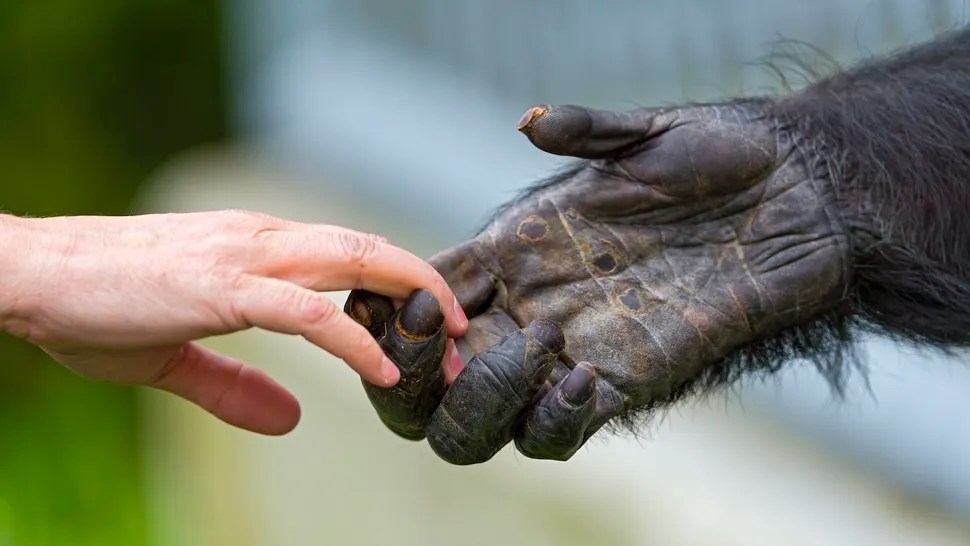 The truth is that the frequently cited 98.8% similarity between chimp (Pan troglodytes) and human (Homo sapiens) DNA overlooks key differences in the species’ genomes, experts told Live Science.
Human and chimp DNA is made of four basic building blocks, or nucleotides: adenine (A), guanine (G), cytosine (C), and thymine (T). The genomes of both species can be thought of as a “string of the letters A, C, G and T … about 3 billion letters long,” David Haussler, scientific director at the UC Santa Cruz Genomics Institute, told Live Science in an email.
When scientists compare human and chimp DNA, they identify the letter (nucleotide) sequence in both genomes and look for stretches of DNA where there is a lot of overlap between the two genomes. Then, they count the number of matching letters in these regions.

 Dispatches From The Front