Freeze remains on strict new immigration law in Texas | BBC

An appeals court has kept a freeze in place on a Texas immigration law, one of the toughest of its kind, in a case being closely watched across the US.

The legislation would allow officials in Texas to detain and prosecute anyone they think has entered the country illegally, superseding federal powers.

The law briefly came into force on Tuesday for a few hours during a legal back and forth between courts.

A US appeals court heard arguments in the case on Wednesday morning.

The three-judge panel appeared split on whether the law can remain in place while its constitutionality is being challenged in court.

They issued no ruling on the case on Wednesday, and it is unclear when they will do so.

Read More

Nvidia and Qualcomm join Open Source Robotics Alliance to support ROS development | TechCrunch

The Open Source Robotics Foundation (OSRF) this week announced the launch of the similarly named Open Source Robotics Alliance (OSRA). The new initiative is designed to maintain development for and maintenance of open source robotics projects, with a particular focus on the OSRF’s own robot operating system (ROS).

First released in 2007 by erstwhile Bay Area incubator Willow Garage, ROS has played a foundational role in robotics development for decades. In a show of support, Nvidia and Qualcomm have both signed on as “Platinum” members for the new alliance, along with Alphabet’s X spinout Intrinsic.

“Nvidia develops with ROS 2 to bring accelerated computing and AI to developers, researchers, and commercial applications,” Nvidia VP Gordon Grigor notes in a release tied to the news. “As an inaugural platinum member of OSRA, we will collaborate to advance open-source robotics throughout the ecosystem by aiding development efforts and providing governance and continuity.”

Read More

After raising $1.3B, Inflection is eaten alive by its biggest investor, Microsoft | TechCrunch

In June 2023, Inflection announced it had raised $1.3 billion to build what it called “more personal AI.” The lead investor was Microsoft.

Today, less than a year later, Microsoft announced that it was essentially eating Inflection alive (though I think they phrased it differently).

Co-founders Mustafa Suleyman and Karén Simonyan will go to Microsoft, where the former will head up the newly formed Microsoft AI division, along with “several members” of their team as Microsoft put it — or “most of the staff,” as Bloomberg reports it. Reid Hoffman will stay behind with new CEO Sean White to try to salvage what’s left of the company, which, I feel I have to repeat, raised $1.3 billion dollars 9 months ago and $225 million in mid-2022.

Read More

Mother’s Side Hustle Turned Full-Time Sees Up to $20M a Year | Entrepreneur

This Side Hustle Spotlight Q&A features Elle Rowley, founder of Solly Baby, a company that produces sustainably sourced baby wraps made of 100% certified TENCEL Modal and other baby gear. In 2023, Rowley stepped away from her day-to-day role (she now serves the brand as a strategic advisor and is on the board), and the company welcomed Nicole Newhouse as CEO to lead the next stage of Solly Baby’s growth.

When did you start Solly Baby as a side hustle, and where did you find the inspiration for it?

After having my first baby in 2009, I was surprised to find a surge of creative inspiration that I had never known before having kids. My husband was still in school, and I was hungry to start something to supplement our meager student income. By the time I was pregnant with our second child in 2011, the online world was fertile ground for mothers looking to start a side hustle from home. I tried a few different things, but I intuitively knew that there was a gap in the market when it came to aesthetically pleasing baby gear, so I was pretty focused on that space throughout my pregnancy.

Read More

Think You Can Afford Retirement? Here’s How Much It Costs | Entrepreneur

The age of a retiree could be correlated with how much they spend — and nearly half of retirees say that they retired earlier than expected.

A new piece from Go Banking Rates with statistics from the Bureau of Labor Statistics (BLS) shows a difference in the expenses of younger and older retirees and reveals the average income of those who reach retirement age.

BLS data showed that younger retirees between 65 and 74 years of age had more expenses on average, at $4,870 per month than those 75 years or older, who averaged about $1,000 less at $3,813 per month.

The overall average for expenses among retirees was $4,345 per month or $52,141 every year. This number is below the average income per year for retirees, which the U.S. Census Bureau placed at $75,254, but higher than the median income of $47,620 found by the Census Bureau.

Read More

Aescape’s AI robot massaged my back and butt: 5 reasons I’m quitting human masseuses | Mashable

Human masseuses, beware! AI massage robots are here — and they have untiring arms and hands that no human can compete with.

Aescape, a lifestyle robotics company, invited Mashable to check out an AI-assisted massage robot in New York City. “Sign me up!” I said. “Who am I to turn down a free massage?”

Now, when I pictured “AI massage robot,” I was thinking I’d be shown some sort of handheld gadget — or something like the viral TikTok neck-and-back massager. Little did I know I’d be laying down on a full-sized massage bed with gigantic, gnarly robot arms.

Read More

FCC has finally redefined which internet speeds are ‘broadband’ | Mashable

Do you remember Ajit Pai? The former FCC Chairman handpicked by then-president Donald Trump? You know, the one who was infamous for drinking out of a giant Reese’s coffee mug and…oh yeah, killing net neutrality?

In 2021, when he was on the way out of the agency, Pai declared that a paltry 25 megabits per second (mbps) minimum speed requirement for broadband in the U.S. was more than enough for Americans.

Now, just 3 years, one new U.S. President, and a new Chairman of the FCC later…the FCC is finally redefining what speeds classify as “broadband.”

Read More

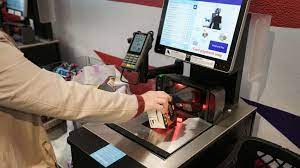
Dollar General will remove self-checkout from 300 stores to prevent shoplifting | CNN Business

Dollar General is backing away from the self-checkout trend in retail.

The company is pulling out self-checkout stands in 300 stores that have the highest levels of shoplifting and merchandise losses. In 9,000 other stores, Dollar General is converting some or all of its self-checkout registers to regular checkout with cashiers. And in another 4,500 or so stores, Dollar General is limiting self-checkout to purchases of five items or less.

Dollar General said the moves will help it reduce shrink — the retail industry term for shoplifting, employee theft, damaged products, administrative errors, online fraud and other factors. Dollar General has skeleton staffing levels in stores and is more vulnerable to shoplifting and other merchandise losses than many other retailers, retail analysts say.

Read More

How do we solve a problem like Boeing? | CNN Business

It took decades for Boeing to build a reputation as one of the most reliable companies on the planet. It’s taken less than six years to undo it all and leave the once-great American company facing an uncertain future.

Regulators, airlines, fliers and even Boeing’s own workers are practically in revolt after a series of mid-flight disasters and a steady erosion of the company’s quality standards. Investors are none too thrilled, either: Boeing’s stock (BA) is down 27% for the year, making it the second-worst performer in the S&P 500, behind Tesla.

The latest headache for Boeing came Monday, when a 787 Dreamliner flying from Australia to New Zealand plunged suddenly mid-flight, injuring several passengers. It’s not clear what, if any, culpability Boeing has here — it said it’s gathering information about what went wrong. But the accounts from passengers are hardly flattering at a moment when Boeing is already under federal investigation for the Jan. 5 door-plug blowout.

Read More

Credit Card Receipt Signature Requirements | businessnewsdaily.com

Many merchants breathed a sigh of relief when Visa, Mastercard, Discover and American Express announced they were no longer collecting signatures on credit card or debit card transactions due to the advent of EMV technology. But is there still a reason why you should consider collecting signatures? In this guide, we’ll go into detail about what a credit card receipt is, what information is included on a receipt, why customer signatures were required in the first place, the security standards that replace the signature and practical tips that cardholders can implement to keep their cards out of the wrong hands.

Read More