We just ran across this issue with one of our clients, so I thought this would be good information to pass along. Note that the ‘good will’ limitation was $250,000 or 50% before, so this is a big policy change.
As always, all SBA deals are done according to individual bank policies so it remains to be seen if this change will actually help someone.
Effective Oct. 1, good will and other intangible assets can amount to up to $500,000, with no limit on the percentage of the loan. When intangibles exceed $500,000, the S.B.A. will recommend that banks limit the S.B.A.-backed loan to 75 percent of the purchase price.
This meeting took place between Hank Paulson, then Treasury Secretary and the Board of Goldman Sachs, in Moscow, in secret. This was two months before the collapse and subsequent bailout.
Goldman Sachs was a hugely powerful for-profit investment bank, and there he is, giving private chapter and verse on his opinions about the US and global economy, talking about internal Treasury matters, and previewing an upcoming (and surely market-moving) speech. All in secret, at a “social event” which somehow got kept off his official calendar.
The benefit–besides being able to brainstorm on almost every inch of your office–is that the paint is half the cost of whiteboard and better-performing–you can leave marks up indefinitely, and they won’t stain the wall.
This spells trouble for one especially vulnerable group — managers in their 40s and early 50s. They tend to be more expensive than their younger counterparts; they may lack some of the high-tech savvy needed to succeed in a more efficient workplace; and they face a downsized job market that will stay that way much longer than usual.
Reports from last month reveal that the US federal deficit had been catapulted to record territory in August, hitting $1.38 trillion with just one month left in the budget year.
It remains a concerning figure – not least because of the worries it has raised regarding the willingness of foreigners to continue purchasing Treasury debt. For that is where the debt comes from: US Treasury securities – a government debt issued by the United States Department of the Treasury, which other countries and institutions then buy.
In essence then, Treasury securities (in this case, Treasury bonds) are nothing more than glorified loans – and as the US Treasury releases data pertaining to this – it is becoming increasingly hard for the American people to get a grasp on the fact this is how their country borrows money.
If its any consolation, it should be noted that this is how all governments borrow money, so the US isn’t alone: but with America’s deficit now soaring to an incredulous height, concerns seem to not only be justified but also gaining impudence.
The effects of the credit crunch have been clear for all to see: from bank failings to government bailouts, to a full-blown economic fallout, the recession continues to hang over us – now with just spots of recovery on the horizon.
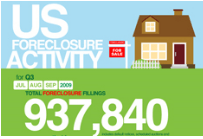
As such, the American people are now facing unprecedented levels of layoffs and cut backs, and US mortagage foreclosure filings remain near a record high. This comes despite news that foreclosure filings had actually fallen for a second straight month last month, largely thanks to ongoing government efforts to keep borrowers in their homes. But, while foreclosures in September were down four percent when compared with August, they remain up by 29 percent from the year-earlier month.
The RealtyTrac US Foreclosure Market Report, which is behind the current findings, provides a count of the total number of properties with at least one foreclosure filing reported during the month (or quarter). The data, collected from ore than 2000 counties nationwide, accounts for more than 90 percent of the US population.
As a result, for those people actually facing foreclosure filings – 343,638 in all throughout September – which include mortgage default notices, house auctions and home repossessions by banks, the problem seems both very intense and very, very real…
a “25-meter interior swimming pool, three decks and a 36-meter “beach” along the back. The large solar panels covering the roof and sides of the vessel could save at least 200 tons of diesel fuel a year.


 meeting took place between Hank Paulson, then Treasury Secretary and the Board of Goldman Sachs, in Moscow, in secret. This was two months before the collapse and subsequent bailout.


 The effects of the credit crunch have been clear for all to see: from bank failings to government bailouts, to a full-blown economic fallout, the recession continues to hang over us – now with just spots of recovery on the horizon.