 Food and beverage giants are shrinking their offerings. Why? Consumers view sugar and fat to be the new tobacco, according to new research by Havas Worldwide, which found that in the last year 42 percent of consumers have reduced their sugar intake while 38 percent of consumers have decreased fat consumption. “Smaller sizes have always been appealing for products perceived as indulgent,” explained Tim Maleeny, Havas’ chief strategy officer, managing partner. “Somehow the smaller serving offsets a sense of guilt.” For brands, going small may be key to their business, noted Allen Adamson, North American chairman at brand consulting firm Landor Associates. “The alternative—if they don’t do this—is consumers will drop them off the shopping list, and that’s deadly for a brand,” he said.
Why Don’t People Buy From Me? | Getentrepreneurial.com
 The Biggest Marketing Challenge WE All Face
The biggest challenge we’re dealing with today is change. Things are changing so fast. As a result of this rapid pace of change people do not know who to trust!
There are six questions your prospects want answered before they will buy from you. These questions are designed to allow you to think like your buyer and speak with them so they know you are the right and safe choice.
Why the Six Questions are Important
When I started my business back in 2001, I lacked trust. What I really mean is that I did not know who could help me get clear on my ideal client. Every time I ask someone they said things I did not understand. I was confused and a confused mind does not take action. This is what we’re dealing with.
Stick with me as I talk about things you may not have thought about before. Keep an open mind because, to grow your business, you need to find someone you can trust.
Remember we stated earlier that “trust” is the biggest marketing issue we need to address. This is what marketing is about – helping our prospects to trust us so we can start the sales process.
Let’s jump right in.
Mastering the Fine Art of Managing People | Inc.com
 Eric Ryan vividly recalls the origin of his rigorous hiring philosophy. It was 2005, and his sustainable cleaning-products business, Method, was growing fast. “I heard someone say, ‘We just need a warm body,'” recalls Ryan. “It scared the crap out of me.”
Mediocre hires are like empty calories: They make you bigger but less healthy. At Method, which has 158 employees, and at his new vitamin and nutrition business, Olly, which has 12, Ryan approaches each hire as though the company’s future depended on getting it right. Landing a job at Method is hard. Ryan estimates that the process takes twice as long as at many other companies. “We maintain a very high standard, and if it takes a while to find the perfect person, that’s OK,” says Ryan.
Weekly Economic Update | LAEDC
 v.19 n. 21 – Released May 18, 2015
This Week’s Headlines:
- California Financial Report for April
- Retail Sales Flat in April
- Events of Interest
- June 03, 2015: International Trade Outlook
Is It Time For Companies To Pay For Not Paying Enough? The “Walmart Tax” Gains Momentum | Co.Exist
 Making minimum wage dooms you to a life of hardship and toil. We in the U.S. have accepted or ignored this situation for a long time, while companies make billions of dollars by paying their workers less than enough to survive. But a national discussion about income inequality and the wave of worker protests for livable wages has brought attention to the issue. And now some policymakers want to add to the debate by focusing not just on the poor living conditions that result from low wages, but on the billions of dollars that the low-wage service economy costs every single taxpayer, as we pay for things like food stamps and health care for workers whose companies don’t pay them enough to live on.
Every year, U.S. taxpayers pay $153 billion in public assistance to working families, according to a recent study conducted by the University of California’s Berkeley Center for Labor Research and Education. This is more than the annual budgets of the U.S. Department of Education and Health and Human Services combined.
Paying low-wage employees more by raising the minimum wage—$15 an hour is what “livable” wage advocates are fighting for—is likely the most direct solution. But barring this, a few Connecticut lawmakers want to be the first in the nation to end what they see as essentially a massive payout to the Walmarts and McDonald’s of their state.
These High-School Students Found a Way to Make Any Headphones Wireless | Entrepreneur

Wireless headphones have been around for awhile, but a device that can make any old set of headphones wireless is about to hit the market.
Launching their Kickstarter campaign today, the team behind the Spiro X1 wants to give you a no-strings-attached listening experience. The Spiro X1 (or “X1” for short) is a circular device that plugs into headphones using the connection typically taken by a wire. A user would simply disconnect their wires from the headphone jack and plug in the X1 in its place. Once connected, bluetooth technology allows users to listen to music and answer calls through their headphones with no physical wire.
In addition to making headphones wireless, customers can use the product to answer calls and play or pause songs using the X1’s center button, as well as adjust the volume via the side buttons. Also notable are the X1’s proprietary circuit board and near-weightlessness (it weighs less than a quarter of a pound, measuring an estimated 38 millimeters in diameter and approximately 12 millimeters thick).
Until We Meet Again – Final Part | Peter Mehit
 Ever drive to a mall and park your car and then after you finish shopping, you come back and you can’t find it? This gets worse if you own say a white Honda Accord, or a brown Camry. You look and look and look. And after all that searching and frustration, where do you find it? Exactly where you left it.
But parking lots can be a good thing too, especially if you can use them to park items that are going to crash your agenda. Here’s how it works:
You’re having your weekly status meeting. It used to cost $322. But because you started keeping time you were able to get the meeting to run and hour and ten minutes (about $250). Then we were able to save about $40 a meeting more by having people show for their part of the meeting and leave when they were done. We’re down to $210 per meeting (saving $112). How can you get that last ten minutes back?
Continue reading “Until We Meet Again – Final Part | Peter Mehit”
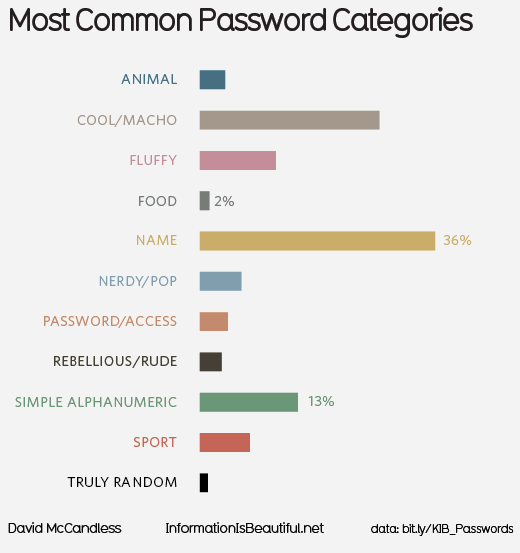
Top 500 Passwords Visualized | Information Is Beautiful
Think your password is unique? Take a look at this infograph to see if your password really is unique.
5 things you didn’t know about the Pez dispenser | CNN Money
 There’s no mistaking the tilted heads that dispense pastel colored candy stacked in a narrow column.
Mickey Mouse, Winnie the Pooh and Hello Kitty have graced Pez dispenser heads and recently Anna and Elsa from the movie “Frozen” have also joined the line-up. Next year, expect to see the ‘Batman vs Superman’ movie characters making an appearance. Also expect new flavors like banana.
Pez was originally invented in Austria in 1927, but the company’s only factory and headquarters are located in Orange, CT. It is owned by the Haas family who are descended from the inventor of the candy, Eduard Has III.
Here are 5 things you might not have known about Pez:
Are We Headed for an Egg Shortage? | Bloomberg Business
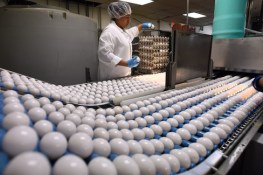 Joe Greco, who’s been churning out cookies and cakes for 27 years, usually uses about 600 pounds of liquid eggs a week at his bakery near Chicago. Now, his freezer has seven times that amount because Greco worries that record prices are about to go even higher.
The cost of breaker eggs — those cracked and sold in liquid form for use by wholesale bakers and restaurants such as McDonald’s Corp. — have more than doubled in the past three weeks. The culprit behind the surge: the worst-ever American outbreak of the bird flu virus.
More than 33.5 million chickens, turkeys and other birds have been affected. Iowa, the top U.S. egg producer, was hardest hit, losing 40 percent of its laying hens. The disease prompted the government to forecast the first annual drop in egg production since 2008. Greco is concerned his 4,200-pound (1,900-kilogram) stash of liquid eggs won’t protect him from higher costs, and that he’ll have to start buying eggs still in shells to crack by hand.
“As soon as I heard about the bird flu, I knew this was going to happen,” said Greco, 47, who owns Palermo Bakery in Norridge, Illinois, near Chicago’s O’Hare Airport. He’s been racing to buy extra supplies over the past month and saw prices for the pails of liquid eggs he buys jump 28 percent last week. “After the Fourth of July, there might be another nightmare, so I’m still shopping around to see if there are better prices.”
Highly pathogenic avian influenza spread rapidly through parts of the Midwest in the past two months, and Iowa lost about 23 million hens. Post Holdings Inc. has warned that bird flu will hurt fiscal 2015 earnings at its food-service unit, while countries in the Middle East and Asia have placed restrictions on shipments of U.S. poultry.

