Some Thoughts on “Cutting Back” on Frugality | The Simple Dollar

downloadIt’s a pretty typical story.

Person reaches a financial breaking point. Person begins to use frugality to cut back strongly on their expenses. Person pays down their debts and begins saving for the future. Person begins to feel a whole lot better about their financial state.

At that point, many people reach a crossroads. They begin to ask whether or not it makes sense to keep being so frugal. Once you have a healthy amount of savings or investments, is there really a reason to continue being so frugal?

Whenever I hear that question, it serves as a recognition to me that there are two ways to look at frugality.

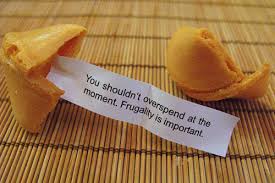
Some people look at frugality as a tool. Frugality is something you choose to do to extract more money by doing things differently than you would normally do them. If you begin to feel like things are in a financially good place, it’s tempting to put that tool down and not “work” as much.


Read More.

Ikea Pledged $1 Billion To Fight Climate Change–And That’s Just A Small Part Of Its Green Agenda | Co.Exist

3047177-inline-i-2-ikea-pledged-a-billion-bucks-to-fight-climate-copyIkea might still be better known for cheap flat-pack bookcases than sustainability. But the world’s biggest furniture company is in the process of transforming itself to fight climate change. The latest step—a pledge of 1 billion euros (or $1.13 billion) for renewable energy and climate adaptation projects—is one piece of Ikea’s bigger vision to bring you the greenest Smörboll and Ödmjuk.

“We looked at this issue and said there hasn’t been enough positive advocacy from the business community,” says Steve Howard, Ikea’s chief sustainability officer. “It’s only now that we’re starting to see more businesses step up in this space.”

Over the next five years, the Swedish giant will spend €600 million on wind and solar installations for its stores and factories. That’s on top of another €1.5 billion spent since 2009; by 2020, the company plans to run on 100% renewable energy. To put these sums in scale, these figures are higher than what some entire European nations have pledged to the UN Green Climate Fund. Germany, one of the biggest donors, pledged €750m. It’s also a not-insignficant chunk of Ikea’s net profit in 2014: €3.33 billion ($3.79 billion).

Read More.

Understand Your Entrepreneurial DNA Before You Start Up | Entrepreneur

As an angel investor, I get requests almost every day to review a new product or website, and provide feedback on its potential success. Yet I can’t remember the last time any entrepreneur asked me to assess personal potential, despite the fact that most investors will admit they invest in the person more than the product. It is people who drive successful businesses.

So it behooves every aspiring entrepreneur to understand their own DNA before picking a project to bet their life on, and to facilitate effective communication with all constituents, including partners, investors, team members and customers. We all have strengths and special interests, and it always pays to capitalize on these, rather than assume all opportunities are the same.

Read More.

Fact or Fiction? 5 Myths About EMV Clarified | Business News Daily

If they haven’t heard already, brick-and-mortar retailers are going to be hearing the term “EMV” a lot more in the coming months. As payment card issuers continue to roll out their newer, more secure cards containing a data-encrypting chip, merchants are feeling the pressure to upgrade their point-of-sale (POS) terminals to make sure they’re up to date with EMV technology.

As with any widespread technological update, many businesses may hear confusing or conflicting information regarding how the changes will affect them. Business News Daily spoke with security and payment industry experts to get to the bottom of five common beliefs (and misbeliefs) about EMV.

Myth 1: EMV will make credit card transactions completely safe and secure.

Verdict: False.

Read More.

The Future of Computers Is the Mind of a Toddler | Bloomberg Business

downloadMachines contain the breadth of human knowledge, yet they have the common sense of a newborn. The problem is that computers don’t act enough like toddlers. Yann LeCun, director of artificial intelligence research at Facebook, demonstrates this by standing a pen on the table and then holding his phone in front of it. He performs a sleight of hand, and when he picks the phone up—ta-da! The pen is gone. It’s a trick that’ll elicit a gasp from any one-year-old child, but today’s cutting-edge artificial intelligence software—and most months-old babies—can’t appreciate that the disappearing act isn’t normal. “Before they’re a few months old, you play this trick on them, and they don’t care,” says LeCun, a 54-year-old father of three. “After a few months, they figure out this is not normal.”

Read More.

Comma Queen: “Who/Whom” for Dummies | The New Yorker

“Who” and “whom” are relative pronouns, and the trick for choosing the right one is to switch the clause around so that you can substitute a personal pronoun. Personal pronouns have a property called case. “I,” “he,” “she,” “we,” and “they” are in the nominative case, and function as subjects of a sentence or a clause. “Me,” “him,” “her,” “us,” and “them” are in the objective case, and are used as direct objects, indirect objects, and objects of a preposition. Your ear will tell you which personal pronoun is correct.

Read More & See Video.

Why your rent check just keeps going up | Money.Cnn

It’s gotten a lot harder to make the rent.

Rents have been soaring across the country, even outpacing home values, according to a recent Zillow report. Some areas are facing a particularly harsh reality: In San Francisco, renters have seen a nearly 15% yearly increase, and Denver tenants have faced an 11.6% rise.

And it’s not just a big city problem.

“Places that were more traditionally affordable are growing more quickly,” said Skylar Olsen, senior economist at Zillow.

The reason? A shortage of available rentals.

“Vacancy rates are at very low levels, which continues to push rents higher,” said Andrew Jakabovics, senior director, Policy Development & Research at Enterprise Community Partners.

Read More.

Cats Do Control Humans, Study Finds | Live Science

If you’ve ever wondered who’s in control, you or your cat, a new studypoints to the obvious. It’s your cat.

Household cats exercise this control with a certain type of urgent-sounding, high-pitched meow, according to the findings.

This meow is actually a purr mixed with a high-pitched cry. While people usually think of cat purring as a sign of happiness, some cats make this purr-cry sound when they want to be fed. The study showed that humans find these mixed calls annoying and difficult to ignore.

“The embedding of a cry within a call that we normally associate with contentment is quite a subtle means of eliciting a response,” said Karen McComb of the University of Sussex. “Solicitation purring is probably more acceptable to humans than overt meowing, which is likely to get cats ejected from the bedroom.”

Read More.

EMarketer Report Cites Major Challenges Facing Mobile Video Advertising | Adweek

There is a consensus in advertising that mobile video is the future, but that future is still hazy.

Mobile video can run in apps like Facebook, Snapchat and YouTube or be bought through ad networks that serve the mobile Web. There are six-second, 15-second and 30-second formats, and there are Gifs. There also are ways to measure by impression or engagement.

It’s this fragmented landscape that is creating uncertainty at an otherwise golden moment for mobile video, according to eMarketer, which released a report today taking a comprehensive look at the forces shaping the sector.

“There’s still some inconsistency with the ad formats for mobile video,” said eMarketer analyst Jeremy Kressmann. “There’s in-stream video working off publishers’ native players; there’s interstitials that pop up; there’s in-app, in-game video; interactive video; in banner and in-feed video.”

“It’s confusing on the ad-buyer side trying to figure out what they’re buying and how to get scale,” he said.

Read More.

American Regional Dialects, Expressions | Business Insider

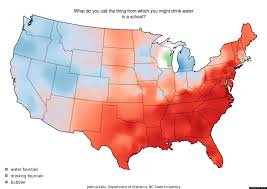
downloadAmerican English dialects and pronunciation have been a point of interest from coast to coast among linguists for years.

In 1999, the Harvard Dialect Survey, a research project conducted by Professor Bert Vaux, used a series of questions, to collect information about what terms, word pairs and sounds are used in different parts of North America.  Some of the words highlighted in the survey inspired the “Regional Dialect Meme” videos, where people from around the country taped their pronunciation versions of words and sayings.

The data from the Harvard study was eventually brought to life by PhD student, Joshua Katz, through a series of interactive dialect maps, which went viral.

Read More and See Video.