Bitcoin could split in debate over currency’s future | BBC News

A row over changing the software that produces bitcoins could split the virtual currency, core developers say.

Bitcoin XT, a new version, is currently being recommended by the currency’s chief scientist, Gavin Andresen.

And its developer, Mike Hearn, says its adoption essential to ensure the currency can cope with growing demand.

But some, including a large number of bitcoin miners in China, are resisting XT because of how it might affect control over the currency.

Bitcoin’s blockchain – a digital ledger of all transactions made with the currency – is currently made up of 1MB blocks.

Bitcoin XT would enable these blocks to grow to 8MB.

Read More.

The Supreme Court could turn things around for Lending Club | Business Insider

download (2)It’s been a terrible summer for Lending Club and other startups that make loans to consumers and businesses online.

Shares of Lending Club are down about 30% since the beginning of June. That’s when the US Court of Appeals for the Second Circuit upheld a decision that could have the lenders lowering interest rates they charge a big chunk of customers.

Now, the US Supreme Court is its only hope. It could decide whether it’ll hear their case as early as October, according to a note this week from Morgan Stanley.

Read More.

Working at Amazon Is Hell. So What? | Inc.com

download (1)The New York Times just published an exposé of how difficult life is at Amazon. I suppose their goal was to make us feel bad for their poor employees. Now, to be clear, I’m happy to criticize Amazon when they deserve to be criticized–I completely disagree with their decision to not pay their employees during security checks–even though the Supreme Court agreed with them. I just don’t have a problem with a company that demands a lot from their employees.

Amazon corporate employees work long hours, don’t get fancy benefits and free lunches, and are expected to dedicate their souls to the company. It’s so awful that Amazon kidnaps people off the street and forces them to work for them. I mean, why haven’t police or the FBI broken down Amazon’s doors and freed these poor people?

Read More.

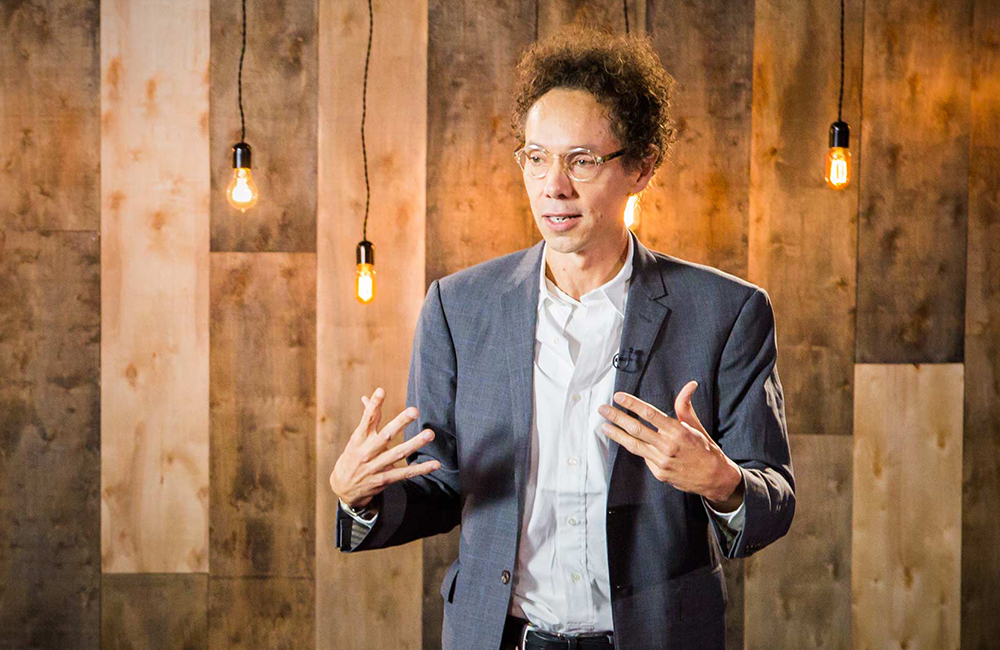
Thinking Small with Malcolm Gladwell | Page19

Malcolm-Gladwell-booksThinking big is oft touted as an asset, but what if the key to sustained success is actually focusing on the little things? Malcolm Gladwell thinks that, like house parties and good logos, smaller is actually mightier.

It’s in our Great Walls and Taj Mahals. It’s in our centuries of dynasties and towering mosque spires. It’s in our Land Rovers and our slogans (go big, or go home!). The quest for bigger and better in all forms is etched deep into man’s ambitions in ways that have been shaping progress since the dawn of time.

And, hey—going big has served us well as a species. It follows that there are hundreds of books that will school you on scaling up or on snagging an enormous customer base, or teach you how to broaden your skills to infinity and beyond. But let’s hit pause for just a second: what if going smaller were actually the next big thing?

Malcolm Gladwell, author of some of the last decade’s most influential nonfiction books, has found plenty of evidence that it’s the little things that count. We took a look at three of his bestsellers to show you how to use the might of the devil in the details.

Read More.

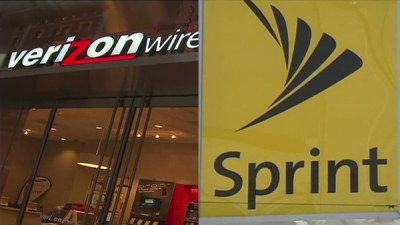
Does Sprint or Verizon owe you money? State settles ‘mobile cramming’ case with mobile carriers | Fox 59

INDIANAPOLIS (May 12, 2015) – The state resolved “cramming” cases against two major mobile phone carriers as part of a multi-state settlement with Sprint and Verizon.

The mobile carriers were accused of putting unauthorized charges on customers’ cell phone bills. The state announced a similar settlement last year with AT&T and T-Mobile. As a result of the latest settlement, an estimated 750,000 Hoosiers may be eligible for refunds.

Indiana is joined by the attorneys general of the other 49 states and the District of Columbia, the Consumer Financial Protection Bureau and the Federal Communications Commission (FCC).

Read More.

Verizon Trades Two Year Contracts for Monthly Billing | Small Biz Trends

Being locked in for two years was basically the norm for mobile contracts, but the changing landscape of the industry is forcing companies to reassess this model.

While T-Mobile and its brash CEO might have made the most noise with its Uncarrier marketing, others are following suit. Count Verizon as being the latest to do so.

Starting August 13, Verizon stopped subsidizing phones, and its newest price plan will kick in by offering four pricing tiers for data allocation:

Small: $30/month for 1GB of shareable data

Medium: $45/month for 3GB of shareable data

Large: $60/month for 6GB of shareable data

X-Large: $80/month for 12GB of shareable data

Read More.

5 Ways to Stop Embarrassing Yourself on LinkedIn | Entrepreneur

How exciting! You’ve just received a great introduction to a big potential client. And as you and your team work hard to whip up a stellar pitch, what do you think the potential client is doing?

She’s researching you, of course. And chances are, the first place she’ll go to learn more about your background, experience and personality is LinkedIn.

What’s she going to find when she pulls up your profile? An amateurish photo? Outdated information? Unpopular political views? A lack of references?

In business, it’s vital to focus on developing a quality LinkedIn profile and avoid making a poor first impression. Here are five ways to ensure you don’t embarrass yourself on this fast-growing and powerful platform:

Read More.

Is a $15 Minimum Wage Too High? | Bloomberg Business

As the proposed federal minimum wage goes up and up, economists support it less and less. In January 2014, seven Nobel laureates and eight ex-presidents of the American Economic Association signed a letter backing a federal minimum wage of $10.10 an hour by 2016, up from $7.25. They said it would “provide a much-needed boost” to low-income workers while causing “little or no” job loss. Fifteen dollars an hour is another story. None of those luminaries signed the letter in July that endorsed a Senate bill introduced by presidential candidate Bernie Sanders (D-Vt.) to raise the federal minimum to $15 an hour by 2020.

Regional economic differences are one reason a lot of economists are nervous about jumping to $15: A wage floor that’s right for New York or San Francisco could be too high for Brownsville, Texas; Gadsden, Ala.; or Ponce, Puerto Rico. In such places, $15 an hour “may have large negative employment effects,” Ronald Ehrenberg, a Cornell University labor economist, wrote in an e-mail. He was one of about 600 economists who signed the $10.10 letter last year. He says he wasn’t approached to sign the $15 letter but would have said no if asked.

Read More.