US Factory Output Drops in Latest Sign of Weak Growth | ABC News

downloadU.S. manufacturing production fell for the second straight month in September as factories cranked out fewer appliances, computers, and electronics.

Factory output declined 0.1 percent, the Federal Reserve said Friday, following a drop of 0.4 percent in August. Manufacturers also cut back on production of steel and other metals.

The decline suggests that a strong dollar, weak overseas economies, and cautious U.S. consumers are holding back factory output. Many companies are also focused on reducing stockpiles that were built up in the spring by cutting back on orders for new goods.

Overall industrial production, which includes mining and utilities, fell 0.2 percent, also its second straight decline. Mining output plunged 2 percent as energy companies sharply reduced oil and gas drilling. Utility output rose 1.3 percent.

Read More

VW to recall 8.5m diesel cars across Europe | The Guardian

Volkswagen is to recall 8.5m diesel cars across the European Union in the wake of the emissions scandal.

The full extent of the work required by the manufacturer to deal with the defeat devices in its diesel vehicles became apparent on Thursday after German authorities rejected its proposals for a voluntary scheme.

Germany’s Federal Motor Transport Authority ordered a compulsory recall of all the affected 2.4m Volkswagen cars in the country, triggering the EU-wide move by VW across 28 member states.

It means that all 1.2m vehicles affected by the scandal in the UK will also be formally recalled.

Volkswagen said it welcomed the German decision, which would “give customers clarity with regard to the continued unrestricted use of the vehicles”.

Read More

From Teens to Adults, Everyone’s Now Watching Online Video as Much as TV | Adweek

Globally, people are spending as much time watching online video as they spend watching TV, according to a new report from Millward Brown. That should bode well for brands trying to target cord-cutters or “cord-nevers,” but digital promos annoy many viewers.

For Millward Brown’s study, “AdReaction: Video Creative in a Digital World,” the research firm polled more than 13,500 multiscreen viewers—i.e., people who own a TV and either a smartphone or tablet—in 42 countries on what they think about video advertising.

The average consumer between the ages of 16 and 45 watches 204 minutes of video a day, split equally between TV and online. Forty-five minutes of the average online viewing time is done on a smartphone, while desktop accounts for 37 minutes and tablet for 20 minutes

Read More

The Biggest Beer Deal Ever Could Threaten Real Craft Brews | WIRED

IT’S BEEN A busy year for beer and things are coming to (ahem) a head this week.

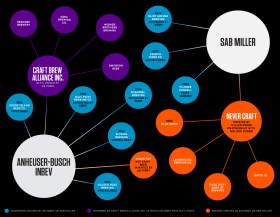
After months of dickering, the world’s largest beer maker, Anheuser-Busch InBev, is buying the world’s second-largest beer maker, SABMiller for about $104 billion. That’s greater than the GDP of Ecuador and the single biggest deal in the history of beer. Assuming the deal clears all the regulatory hurdles, the new company would own about one of every three beers in the world, not to mention fat stacks of capital and unprecedented access to supply and distribution chains.

And that’s making a lot of small-time brewers and craft beer purists very nervous.

Read More

Airlines told to advise passengers against packing extra batteries | Mashable

Lithium batteries and airplanes don’t get along very well.

The U.S. government is strongly urging airlines to tell passengers not to pack spare lithium batteries in checked luggage because they can ignite and fuel fires in baggage compartments.

Batteries have been the culprit in an increasing number of incidents. Most recently, an Alaska Airlines flight had to make an emergency landing Buffalo when a credit card reader began smoking.

Aircraft manufacturers have warned about large shipments of batteries in a plane’s cargo, but the Federal Aviation Administration’s warning takes it further.

Read More

Apple Could Pay Up To $862 Million After Losing Patent Lawsuit | Forbes

Apple AAPL latest hurdle in the world of patent disputes could blow a small hole in its $200 billion cash mountain.

A U.S. federal jury has ruled that Apple used technology owned by the licensing arm of the University of Wisconsin on some of the chips that found their way into recent iPads and iPhones.

The jury has yet to decide on damages but the University has been seeking as much as $862 million for patent infringement.

The University filed the patent in 1998, for technology that could enhance the efficiency of computer processors.

It sued Intel INTC for infringing on the same patent in 2008, and settled out of court with the company before it could go trial. Intel ended up paying the University a $110 million lump sum to license the patent, court documents show.

Read More

Ice Age Mammoth Bones Discovered on Michigan Farm | Live Science

Two Michigan farmers made an unexpected discovery in a wheat field last week: the ice-age bones of a mammoth that was likely slaughtered by ancient humans.

An excavation and analysis of the bones suggest they come from an adult male mammoth that had an unlucky end.

“We think that humans were here and may have butchered and stashed the meat [in a pond] so that they could come back later for it,” Daniel Fisher, a Universityof Michigan paleontologist who led the excavation, said in a statement. Once researchers date the bones, the discovery may help determine when early humans lived in the area, Fisher said.

Read More

Here’s What Living on Half Your Income Really Looks Like | The Simple Dollar

If you ask anyone who plans to retire early what their secret is, they’ll all say the same thing — it’s a high savings rate. To grow their nest eggs quickly enough — and big enough — to say goodbye to the working years ahead of schedule, they have to save as much as they can while they can.

For many would-be early retirees, the plan to get there involves saving 30%, 40%, or even 50% of their pretax income and living on the rest. While that sounds daunting, many individuals and couples are successfully pulling it off while living fairly normal or even luxurious lives. But how?

The first key to a high savings rate is an obvious one: To save a lot, you have to keep your spending levels in check. For most with a high savings rate, that means cooking most meals at home, steering clear of new and expensive housewares and gadgets, and driving old cars until they die — or even biking to work.

Read More

Should Your Company Require College Degrees When Hiring? | All Business

There has been talk about how the global economy has become too obsessed with college for years now. Students enter college, spend four years learning about something with little workplace value, and graduate with mountains of debt and a degree not worth the paper it is printed on.

And now one major British company has decided to really make that degree even less valuable. As the Huffington Post has reported, British accounting firm Ernst & Young has announced it will be removing the degree classification from its entry criteria. The company declared that there is “no evidence” success at university correlates with achievement in later life.

Should other companies follow the example of Ernst & Young, and has the college degree truly become something useless? The answer, like so many things, is “it depends.”

Read More

How This Founder Acquired Her Much-Bigger Competitor | Inc.com

Sometimes an app is just an app. But sometimes it’s a potentially huge business. That distinction isn’t always easy to spot; consider it a variation on “…another man’s treasure” for the phubbing age.

Kathryn Loewen, a former developer and software product manager, had racked up years of experience in financial services by the time she started business school at Royal Roads University in Victoria, British Columbia. When she graduated in 2013, she also had a head full of ideas, and methods for plugging them into business plans, and headed to her hometown of Vancouver.

Back home, she found herself in a good place. She had fellow developers to collaborate with in her home of Vancouver, and together they could build something, test it, and drop it if the app or software didn’t stick. But within months, one did. She’d been tinkering with Stripe, the Paypal-competing payment processor popular among startups. It appealed to her financial-service savvy. Along with another developer, she built an app onto its API that would allow business owners to monitor and manage their Stripe accounts on their Android devices. She called it Control.

Read More