Airbnb Is None Too Pleased About San Francisco’s New Crackdown | WIRED

AIRBNB IS SPEAKING out against tough new legislation in San Francisco that would require short-term rental sites to police their own listings for properties that violate city regulations.

This week, San Francisco’s Board of Supervisors voted 10-0 to toughen short-term rental laws already on the books. The city already requires hosts renting out their places on Airbnb to register with the city, though that’s proven difficult to enforce. But with a bulked-up progressive majority following the election of Supervisor Aaron Peskin, who campaigned on housing affordability, the board decided it needed to crack down harder. The new rules demand that Airbnb and sites like it only publish listings that include an official registration number that shows the property is officially approved by the city as a short-term rental. Sites that don’t comply could face fines of up to $1,000 daily for each listing in violation.

Read More

Sears May Sell Its Best-Known Brands|Bloomberg

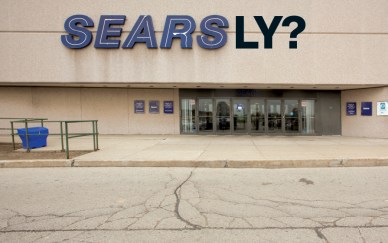
Once upon a time, Sears was the Amazon.com and Walmart of U.S. merchandising. Customers could order just about anything for delivery—even a kit to build a 10-room colonial-style house—from the Sears catalog, a compendium of the American dream with a reach into the rural parts of the country that helped make Sears, Roebuck America’s largest merchant. Sears helped create the shopping mall in the 1950s, working with developers to build the retail centers that grew with the exodus to the suburbs. And when customers needed financing, it created a massive credit arm that paved the way for the MasterCards and Visas of today.

“They stood like a colossus on top of the American retail market—bigger than the next four companies combined,” says Craig Johnson, president of consultant Customer Growth Partners. That was as recently as the 1980s. “Now they’re a 98-pound weakling.”

Read More

BuzzFeed Backs Out of ‘Significant’ Ad Deal With RNC Over Trump’s Rhetoric | Adweek

What’s worse for our nation’s health? Donald Trump or cigarettes?

They’re about equal, per an email from BuzzFeed CEO Jonah Peretti to his employees this morning. Peretti was explaining his decision to back out of advertising deal with the Republican National Committee, pointing to the GOP presumptive nominee’s hateful rhetoric about Muslims, Mexicans and others.

Politico obtained a copy of the email, where Peretti stated that earlier this spring that BuzzFeed and RNC inked a deal to “spend a significant amount on political advertisements slated to run during the fall election cycle.”

Read More

U.S. job creation weak, even as unemployment rate falls to 4.7% | CNN Money

U.S. unemployment fell to 4.7%, the lowest rate since 2007. But job creation was very weak.

The U.S. economy only added 38,000 jobs in May, according to the Labor Department. It was the worst monthly job gain since 2010.

It’s also well below April’s meager job gains of 123,000. Job creation in the last two months has been markedly below the average of 200,000 jobs created per month over the past couple years.

The drop in unemployment came as more disheartened Americans stopped looking for jobs and dropped out of the labor force in May.

‘It’s a pretty gloomy report, hard to find a silver lining in this one,” says Curt Long, chief economist at the National Association of Federal Credit Unions.

Read More

Japan babies cash incentivie | Business Insider

Japan’s nationwide fertility rate just hit its highest level in 21 years.

The total rate increased to 1.46 in 2015, slightly up from the previous rate of 1.42 in 2014, according to the health ministry.

The biggest contribution to the increase came from women aged 30 to 34, according to Bloomberg.

This is no doubt a good sign for a country struggling with a looming demographic crisis.

However, what’s particularly interesting about this spike in fertility is that there was a correlation with cash incentives for new parents.

Read More

Demanding That Nonprofits Not Pay For Overhead Is Preventing Them From Doing Good | Co.Exist

When foundations or individuals donate to an organization, they often expect their money is going to triage the issue—providing clean water, feeding children—and not to paying for office space or corporate retreats for nonprofit workers. To solve this, most foundations pay only up to 15% of any socially good group’s indirect costs, things like office space, salaries, or equipment.

But a new report from Bridgespan, a consulting firm for nonprofits and philanthropists, says this is incredibly damaging. The result is a “starvation cycle” in which foundations are crippling the outfits they’re trying to support. In the commercial world, investors have come to expect that companies in different spaces require different overhead. There is no boilerplate expense sheet. That’s a lesson nonprofit funders have failed to learn.

Read More

Cellphone radiation is still safer than viral science stories | Mashable

You are almost definitely slowly killing yourself.

Eating poorly, smoking, riding motorcycles, watching The Bachelor — they’re all statistically proven to shorten the average life span (except maybe that last one).

As for using your cellphone? Not so much. The World Health Organization has said that cellphone radiation is “possibly carcinogenic to humans,” putting it in the same category as drinking coffee. In other words, we have no proof of an established causal link, but we can’t rule it out either.

That kind delineation is quickly trampled when it comes to new studies, one of which came out Friday, resulting in the usual freak out.

Read More

Commuter Smart Jacket From Levi’s Introduced |Small Biz Trends

The barrier between us and the digital connectivity we need to work, play and live has been reduced by another factor with the announcement of the Levi’s Commuter Smart Jacket. So if you see someone walking down the street talking to themselves and swiping and tapping their clothes, no need for alarm, they could be wearing this Commuter smart jacket.

The new Levi’s Commuter smart jacket is fashioned in collaboration with Google’s Advanced Technology and Projects (ATAP) research along with Project Jacquard, which was created to embed technology in the clothes we wear.

Read More

The Importance of Manual Link Building: Why It Can’t Be Automated | HigherVisibility

There are certain goals that always seem to stay on the priority lists of brands and businesses. Drive traffic? Definitely. Grow the brand? A must. Develop relationships with consumers and other businesses? Absolutely. All of these factors are crucial to any given brand’s success and long-term achievement, and finding ways to address all of these goals is a necessity.

One of the most fundamental and widely performed strategies used to work on such goals is link building. A practice known to fuel site traffic, link building tends to be used by brands and businesses to leave a trail of bread crumbs across the internet leading back to their own page. While that’s not necessarily a bad way of looking at the SEO practice, it does take away from the emphasis that should be placed on the importance of manual link building with quality in mind.

Read More