Nintendo Won’t Allow Real Money Transaction in New Horizons | Digital Trends

Nintendo will start taking action against real-money transactions in Animal Crossing: New Horizons.

Nintendo said on Monday, June 15 that it will move to eliminate real-money transactions when players buy and sell villagers and other items in the game. In a statement to Japanese website J-Cast, Nintendo said that using real money to buy and sell virtual goods is a violation of its terms of service. The company didn’t divulge how it would handle incidents but said that it will evaluate each transaction on a “case by case basis.”
Read More

BP faces hit of up to $17.5bn as it forecasts lower oil prices | BBC News

BP has forecast lower oil prices for decades to come as governments speed up plans to cut carbon emissions in the wake of the coronavirus pandemic.

It has cut price forecasts by about 30%, and expects Brent crude to average $55 a barrel from now until 2050.

As a result, the oil giant says it will revise down the value of its assets by between $13bn and $17.5bn (£13.8bn).

BP said it would have to become a “leaner, faster-moving and lower-cost organization”.

Last week, the firm announced plans to cut 10,000 jobs following a global slump in demand for oil.

Read More

Where are all the robots? | TechCrunch

We were promised robots everywhere — fully autonomous robots that will drive our cars end-to-end, clean our dishes, drive our freight, make our food, pipette and do our lab work, write our legal documents, mow the lawn, balance our books and even clean our houses.

And yet instead of Terminator or WALL-E or HAL 9000 or R2-D2, all we got is Facebook serving us ads we don’t want to click on, Netflix recommending us another movie that we probably shouldn’t stay up to watch, and iRobot’s Roomba.

So what went wrong? Where are all the robots?

Read More

Oil is up $80 in seven weeks. The remarkable recovery could be too good to be true | CNN

The oil market has rapidly recovered from its darkest day ever. US crude topped $40 a barrel this week. That wouldn’t typically be notable — but right now, that marks an $80 leap from its unprecedented trip below zero just seven weeks ago, when it hit a low of -$40.32 a barrel on April 20. Meanwhile Brent crude, the world benchmark, has more than doubled since mid-April.

The remarkable oil recovery is being driven by hopes of a sharp rebound in the world economy from the coronavirus pandemic that crushed demand for gasoline, jet fuel and diesel.

The oil comeback also reflects enthusiasm for record-setting production cuts by OPEC, Russia and their allies, plus the sharp pullback in output from the United States, the world’s leading producer.

Read More

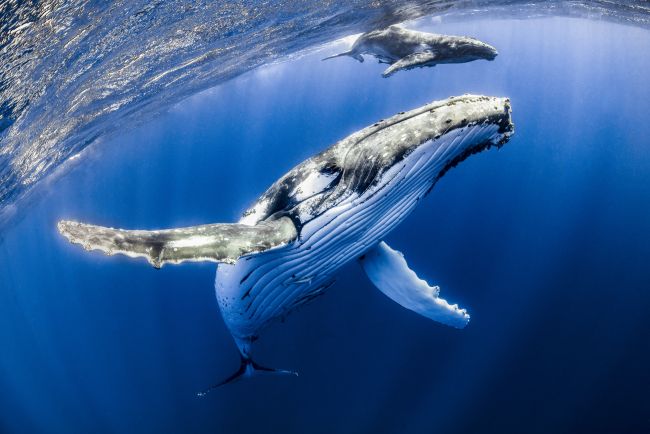
Under the sea: 50 breathtaking images from our oceans | Live Science

The most stunning sights from under the waves

The sea continues to be a source of great exploration and enchantment for many. With its charismatic (and sometimes elusive) wildlife, stunning plant life and even shipwrecks and underwater statues, there are so many wonders to appreciate under the waves. But you don’t have to be an experienced diver to take a look at these 50 amazing sights from our oceans — We’ve gathered them here for you.

Read More

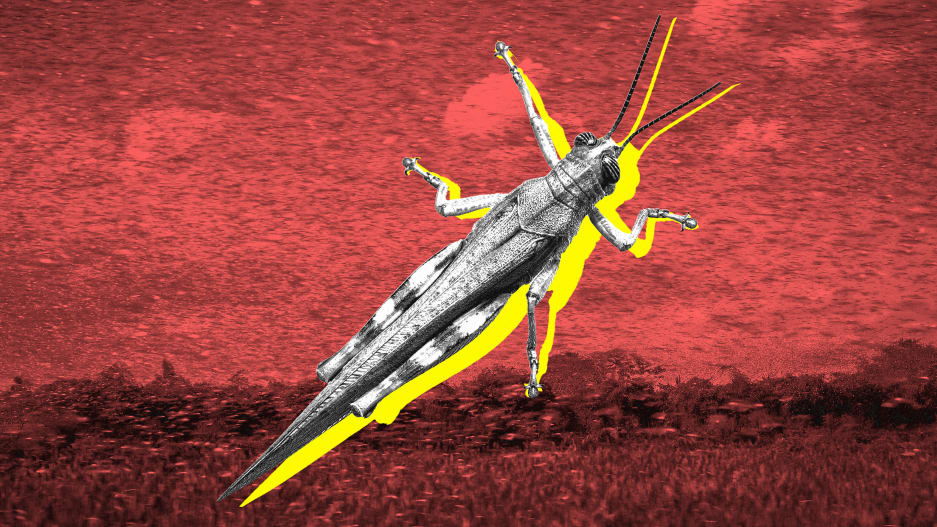
An enormous swarm of locusts could descend on East Africa | Fast Company

As COVID-19 cases grow in East Africa, massive swarms of locusts are also growing—with a new wave of breeding insects poised to put nearly five million people in the area at risk of hunger and famine.

The locust outbreak began last year, likely driven in part by the fact that climate change is causing heavy rainfall and warmer temperatures that help the insects thrive. But it could soon become much worse. By the middle of June, according to a new report from the International Rescue Committee, a new round of hatching could result in swarms that are 8,000 times larger than swarms earlier this year.

Read More

Kitty Hawk Has Scrapped One of Its Flying-car Projects | Digital Trends

Kitty Hawk is done with its Flyer single-person flying machine, saying this week that it’s learned all it can from the project.

Led by Google co-founder Larry Page and Sebastian Thrun, who helped to launch Google’s autonomous car unit (now Waymo), the California-based company said it will turn its attention to developing its more advanced — and more powerful — Heaviside electric aircraft.

Flyer first hit our radar in 2017, around the time that the idea of small “flying cars” for urban transportation really began to gain traction.

Read More

Coronavirus: ‘I may lose it all, but there’s no help for me’ | BBC News

Layla Barnes is one among many thousands of small business owners left financially and emotionally devastated by more than ten weeks of government-imposed lockdown.

She was forced to close her Doncaster-based beauty therapy and training business which was profitable in February before lockdown began.

Yet the government’s excluded Layla, 30, and her limited company from any form of crisis-related support, forcing her onto benefits of £408 per month.

Read More

University entrepreneurship — without the university | TechCrunch

Across the country, university campuses are in limbo.

The California State University system has committed to online classes in Fall 2020. Northeastern University is reopening as normal. UT Austin is taking a hybrid approach: in-person classes until Thanksgiving break, then online classes during flu season.

This presents a special set of circumstances for university entrepreneurs. The traditional resources and networks are nonoperational. But time and focus, historically the most scarce resources for ambitious students, is now at an all-time high.

Read More

Facebook and Twitter clash over fact-checking as Trump threats intensify | CNN

For years, Twitter (TWTR) and Facebook (FB) have enjoyed a healthy rivalry: They’ve competed for acquisitions, talent and advertising dollars, and sometimes gone so far as to copy each others’ features in the never-ending pursuit to grow their audiences.

But the clash between the two tech companies appeared to take on new life this week after Twitter’s decision to place fact-check labels on some of President Donald Trump’s tweets sparked a series of threats, including an imminent executive order regulating social media companies.

The CEOs of the two companies traded criticisms in public. Former employees posted their own jabs on social media. And some legislators were quick to highlight the differences between the approach Twitter and Facebook took, potentially only adding to the tensions.

Read More