These Shoes Are Knit From Recycled Water Bottles | Co.Exist

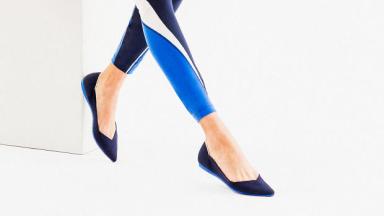
Two weeks ago, this new shoe was three plastic water bottles. After ground-up bottles are turned into recycled filament fiber and delivered to a factory, a San Francisco-based startup uses a proprietary process to 3D-knit the fiber into a seamless, essentially waste-free shoe. The knitting process takes just six minutes.

Rothy’s, the startup making the shoe, wanted to make better footwear than they saw on the market. But as they tried to figure out how to also make the shoe more sustainable, they realized that they could dramatically reduce the materials that are normally thrown out in construction.

Read More

Startups Are Giving Unwanted Foods New Life | Co.Exist 

Food waste isn’t a new problem. People have been grumbling about squandered produce for years. Now entrepreneurs are starting to do something about it: Recently we’ve come across several initiatives that attack the issue in new ways.

One of those is Cerplus, a marketplace for wasted food in the Bay Area. Set up by Zoe Wong in November 2015, it matches food that farmers and wholesalers can’t sell through conventional channels with buyers like restaurants and smoothie-makers. So far, about 16,000 pounds of zucchini, broccoli, strawberries, and the like, have been transacted through the system, she says.

Read More

UpLamp Turns Your Smartphone Into a Smart Gesture-Controlled Bedside Lamp | Cool Business Ideas

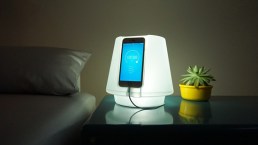
We use our smartphones for everything. From talking to texting to general surfing, our phones transform our lives into a connected universe of bliss. However, what if our smartphones could transform something as simple as a plastic shell, into a lamp? With UpLamp, the newest design from Product.

UpLamp uses your smartphone’s LED light to light up a plastic shell made of glowing resin, effectively turning your smartphone into a smart lamp. UpLamp comes with a companion app, enabling smart features such as:

Read More

The divorced couple who built a global shoe company | BBC News

Jodie Fox says that when she started a successful business with her then husband Michael, it was both “amazing and equally difficult”.

The Australian couple had set up their company, Shoes of Prey, in Sydney in 2009, three years after they had married in their early 20s.

Together with co-founder and old college friend Mike Knapp, they launched their e-commerce website that allows women to design their own shoes. The company then makes them at its factory in China, before mailing them out to anywhere in the world.

While the business is continuing to grow strongly, and so far more than six million shoes have been designed on its website, the Foxes’ marriage broke down under the strain of working together, and they divorced in 2012.

Read More

Notion’s Home Sensor Could Save America $8 Billion in Insurance Claims | Inc.com

Plenty of options exist when it comes to home security systems. But at least three things are true about most of them: They are expensive, require a contract, and are limited what they can detect via movement to trip an alarm.

That’s why Denver-based startup Notion created its home sensor: a non-intrusive, cookie-sized device that can be placed on any surface to detect changes in light, sound, and a variety of other elements. A set of the devices, when combined with a Wi-Fi-connected hub, offers traditional monitoring–movement, broken windows, opened doors–as well as the ability to notice subtler aberrations like temperature changes and water leaks. The system sends all of these alerts directly to your phone.

Read More

A Sofa That Never Gets Bored | Design Milk

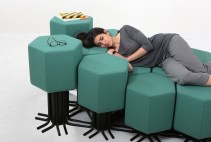
The internet of things is no longer limited to well, just the internet. It now includes furniture. In fact, the Lift-Bit (not to confused with Fitbit or other bits), is the “world’s first Internet-of-Things sofa.” First unveiled at this year’s Milan Design Week, the sofa was created by international design and innovation firm Carlo Ratti Associati with help from Vitra.

The Lift-Bit is a modular furniture system that transform from sofa, to chair, to bed, to chaise lounge… to whatever else your creativity dreams up. It consists of a cluster of bright green, upholstered stools which are motorized using a linear actuator. This means that the cushions on the stool can be raised or lowered. Furthermore, it can be controlled through gestures, or of course, a mobile app.

Read More

An Inside Look At Car Marketplace Shift And Its Plans For Major Growth, Starting With D.C. | TechCrunch

If you’ve ever tried to sell a used car you know it’s a process. You either haggle low-ball offers at the dealership or wade through Craigslist emails with the hope that a possible buyer actually shows up, wants your car and has cash.

Startups such as Beepi and Carvana attempt to take the pain out of the process by cutting out the dealer and helping you list online. Ebay motors originally started with this same idea, but dealers now utilize the service quite heavily.

Read More

Frenchman develops ‘cure’ for builder’s bum | The Local

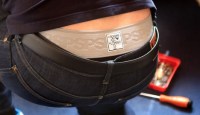
Builder’s crack, plumber’s bum, the coinslot, bottom cleavage…

No matter where you go in the world, there’s an expression for the unfortunate moment when a tradesman or woman bends down and reveals the top end of their backside.
In French, it’s called the plumber’s smile (sourire de plombier) or even the “mason’s line” (raie du maçon).

“I’m not changing the world… maybe just a bit. It’s not like I’ve found a cure for Aids – just for the builder’s crack.”

Read More

Made: Bloodroot Blades | Bloomberg Business

When was the last time you were cooking in your kitchen and you looked at the knife in your hand and wondered, “Where did this come from?”

Probably never. Right?

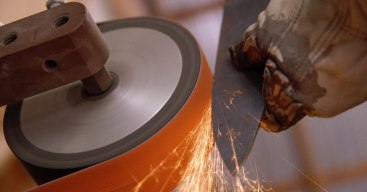
For David Van Wyk and Luke Snyder, the science-minded duo behind the knife company Bloodroot Blades, the source is half the point. They make gorgeous, custom blades for a global clientele at a lakeside shop in Arnoldsville, Ga. For them, the first step in the process is finding materials.

Read More