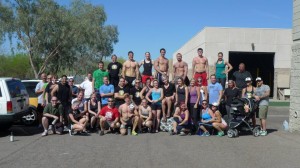
 CrossFit is a fitness lifestyle that has taken the world by storm over the last few years. In some ways, it’s a throwback to old-fashioned fitness, using moves that incorporate cardio activity with strength training moves like pull-ups and push-ups. From garage set-ups to larger spaces, CrossFit “boxes” as CrossFitters like to call them are popping up all over.The brand has grown exponentially, with no advertising. People are addicted.CrossFit is the perfect example of a stripped-to-the-bone strategy for cult branding
Category: Case Studies
eBay: We Tested Google Advertising & It Didn’t Pay | MarketingVOX
eBay has been one of the largest advertisers on Google, but that might not be the case for much longer. It decided to do an A-B split test to determine how many of those clicks they would have eventually seen even without those paid placements; even going so far as to go dark in 30 market areas to provide a control. In a study conducted with eBay Labs along including fancy degree holders from Berkeley and U. Chicago, it showed that it only made back about 25 cents on the dollar spent.
The study shows that brand ads – and by that they mean ads that focus on the brand names of the products to be theoretically purchased, rather than “branding” ads – can be efficiently effective for potential new users to the retailer, but tend to be unnecessary for those who are already familiar with the retailer. eBay, more than most, would suffer from a high familiarity ratio, thus making its relative efficiency low.
One thing the full version of the study appears to miss, however, is that very high clickthrough rate experienced by an ad due to a specific brand reference that is common to the search term may have another financial benefit to the advertiser: increasing the “quality score” of the ad campaign, and thus reducing the expense of other clicks in the campaign.
eBay bids on a universe of more than 170 million keywords. It spends more than $50 million a year on online advertising.
Million-Dollar Startup Secrets | AllBusiness.com
 Most small businesses never reach $1 million in annual sales. Instead, they struggle just to survive. Of businesses started in 2004, barely more than half — 56 percent — were still around in 2009, a study from the Ewing Marion Kauffman Foundation found.
In fact, cracking the $1 million barrier at any point in a company’s lifetime is a major achievement. U.S. Census data from 2007 shows that more than three-quarters of the country’s 6 million firms with employees made less than $1 million in revenue. And most solopreneur businesses don’t earn anywhere near that much: According to IRS data for 2008, the average solo business brought in less than $60,000.
Two Men and a Truck’s Bumpy Road to Franchise Success | Entrepreneur.com

All in the family: Brig Sorber and his mother, Mary Ellen Sheets.
Brig and Jon Sorber are definitely mama’s boys, at least when it comes to their moving franchise, Two Men and a Truck. During high school in the early 1980s, the brothers borrowed a 12-foot step van from their mother, Mary Ellen Sheets (she’d been using it in her spare time to buy furniture at auctions and estate sales). Once they had a set of wheels, they were able to do moves for small houses and apartments in the Lansing, Mich., area. But when they left for college, the brothers thought their days of wrestling couches were over.
Mama Sheets had other ideas. “She kept getting calls for jobs and asked if she could hire guys to keep the business going,” says Brig Sorber, now CEO of the franchise. “And she did. We’d jump back on the trucks during Christmas and summer vacations. One summer we came home and there was a brand-new truck in the driveway. We thought, Uh-oh, there goes all our beer money.”
In fact, that truck was their future. Over the next two decades, Sheets, who now serves on the board, and her boys built Two Men and a Truck into a 228-unit, nationwide franchise with more than 1,400 trucks. But unlike many successful franchises, which are created with franchising in mind from the start, the team behind Two Men and a Truck had to make the transition through trial and error.
How Blue Man Group learned to see green | money.cnn.com

Fortune — When the founders of Blue Man Group decided to get bald and blue, they had no idea that shooting goo out of their chests and teaching fractal geometry would turn into two decades of fun and a multimillion-dollar show business enterprise. Today an average of 60,000 people a week attend Blue Man Group performances in six cities around the world — not including the touring shows — at an average ticket price of $59, or roughly $3.54 million in revenue a week from sellouts. Co-founders Matt Goldman, 51, Phil Stanton, 52, and Chris Wink, 51, continue to write and produce the shows, perform for special events — and have no thoughts of retiring. Their story:
I started a business in paradise! | money.cnn.com

Zac Campbell was a partner in a Seattle-based interior design firm in 2001 when he took a vacation in Puerto Vallarta. The towns laid-back lifestyle, ocean views and adventurous spirit made it hard to leave. After some soul-searching, Campbell realized he wanted to return to two early passions: cooking and event planning. Growing up in Asia, hed often spend hours in the kitchen and loved helping friends and family plan parties, even starting an event-planning business in Tokyo at age 16.
Where to get startup cash now | money.cnn.com
Starting out, the three founders of The Extraordinaries didn’t have much cash or an idea that was fleshed out enough to approach investors with. To fund their site, which connects mobile phone users with quick “micro-volunteering” opportunities, they took a different tack and applied for social entrepreneurship grants and competitions.

Find out what your buyers are thinking | money.cnn.com

It’s business owner’s worst nightmare: Customers walk in the door and walk right back out.
For Twiddy & Company, a 95-person firm that connects vacation renters with beach houses in North Carolina’s Outer Banks, that meant customers clicking on their Web site and promptly abandoning it. “One day we said, ‘Our bounce rates are high. People are exiting our site, and that’s a metric expression of frustration,'” says Ross Twiddy, the company’s marketing director. “Wouldn’t it be nice to know what they were thinking?”
Hacker Spoofs Cell Phone Tower to Intercept Calls | Wired.com
 Just turning on the antennas caused two dozen phones in the room to connect to Paget’s tower. He then set it to spoof an AT&T tower to capture calls from customers of that carrier.“As far as your cell phones are concerned, I am now indistinguishable from AT&T,” he said. “Every AT&T cell phone in the room will gradually start handing over to my network.” Read More.
Hard Work’s Overrated, Maybe Detrimental. | Design & Innovation | Fast Company

A co-founder of Flickr argues that hard work often doesn’t amount to much–and neuroscience offers some backing for the claim.
Caterina Fake, who, with her husband Stewart Butterfield, founded Flickr, knows a thing or two about bliztkreig work schedules. But she points out that late nights are seldom very useful in the grand scheme of things. Hard work?
 Dispatches From The Front