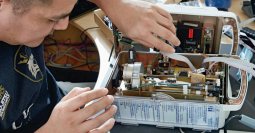
 But when he showed up, he was surprised to find himself in a conference room full of familiar faces. The Mayo Clinic had assembled an all-star team of about a dozen computer jocks, investigators from some of the biggest cybersecurity firms in the country, as well as the kind of hackers who draw crowds at conferences such as Black Hat and Def Con. The researchers split into teams, and hospital officials presented them with about 40 different medical devices. Do your worst, the researchers were instructed. Hack whatever you can.
Like the printers, copiers, and office telephones used across all industries, many medical devices today are networked, running standard operating systems and living on the Internet just as laptops and smartphones do. Like the rest of the Internet of Things—devices that range from cars to garden sprinklers—they communicate with servers, and many can be controlled remotely. As quickly became apparent to Rios and the others, hospital administrators have a lot of reasons to fear hackers. For a full week, the group spent their days looking for backdoors into magnetic resonance imaging scanners, ultrasound equipment, ventilators, electroconvulsive therapy machines, and dozens of other contraptions. The teams gathered each evening inside the hospital to trade casualty reports.
 Dispatches From The Front