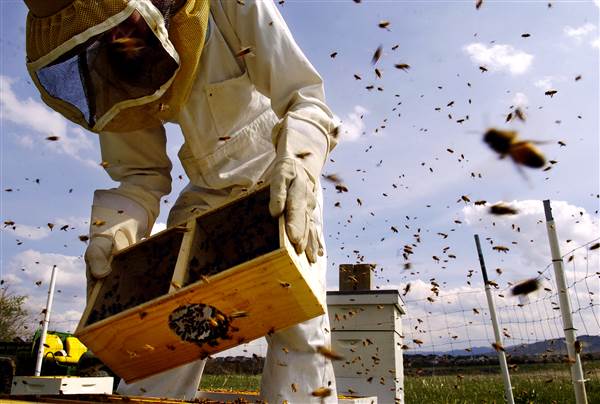
 The world’s bees are in big trouble — even more than you might have realized.
Last year the U.S. lost a mind-boggling 44 percent of its honeybee colonies. Certain bee species — including the rusty-patched bumblebee and Hawaiian yellow-faced bees — are on the brink of extinction. Even “Buzz the Bee” disappeared from Honey Nut Cheerios boxes earlier this month because General Mills decided removing the familiar mascot could help spotlight the problem.
A world without bees wouldn’t be pretty, and not just because we’d miss their buzzing on lazy summer afternoons. Bees play an indispensable role in pollination. About 75 percent of our major crops, including fruits, vegetables, nuts, and seeds, reproduce only with the help of bees and other pollinators.
 Dispatches From The Front