Full moons of 2025: When is the next full moon? | Live Science

September’s full moon, nicknamed the Corn Moon, rises on Sunday, Sept. 7. The moon turns full at precisely 2:09 p.m. EDT on Sunday. It will also appear bright and full on the days before and after the peak.

The September full moon gets its nickname from the corn that is commonly harvested this time of year in North America, according to Almanac. The name originated with native American tribes, but now enjoys widespread popularity.

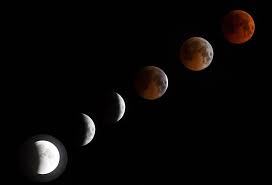
The full Corn Moon will experience the year’s second and final total lunar eclipse. Beginning at 11:28 a.m. EDT (15:28 UTC), Earth’s shadow will pass over the moon for about five hours, totally blocking the sun’s light for 82 minutes and turning the lunar surface red. The eclipse will be visible from Asia, Australia, and most of Europe and Africa. It will not be visible from North or South America.

Source: Full moons of 2025: When is the next full moon? | Live Science
The 2019 ‘Super Blood Wolf Moon’ Total Lunar Eclipse Does Affect Earth, But Not Like You’ve Heard | Forbes

In less than two weeks, the moon will turn blood red for a short period and things may seemĀ  a little weird, but they couldn’t be more normal. After all, we’ve seen this twice in just the last twelve months.

And yet there’s long been anxiety over total lunar eclipses, also referred to as ‘blood moons’ for the reddish hue that the shadow of the Earth casts on the full moon during the not-really-that-rare event (it happens about every one to three years on average). Often thought of as a bad omen by various prognosticators of assorted religious, conspiratorial and otherwise paranoid stripes, it’s sometimes claimed that a lunar eclipse can “trigger” natural disasters like earthquakes and volcanic eruptions.

Read More

Why Does the Moon Turn Red During a Total Lunar Eclipse? | Live Science

An oversized ruby-colored sphere rising in the sky as a total lunar eclipse turns the normally pallid moon scarlet is enough to make some people swoon. And perhaps with good reason, as the fiery glow is the most dramatic of the three types of lunar eclipses (the other two are called partial and penumbral).

In addition, perfection is a must: A total lunar eclipse happens only when the sun, Earth and moon are perfectly lined up.

So when the moon tiptoes into the outer portion of Earth’s shadow, becoming totally bathed in the darkest part of that shadow, why isn’t the result a “lights out” for the sky? Why instead does the moon become engulfed in a light-orange to blood-red glow?

Read More