Although it initially wasn’t predicted to occur until next year, the sun may have already entered the most active and dangerous phase of its roughly 11-year solar cycle, known as solar maximum, a leading expert told Live Science. But we won’t know for sure until long after the sun starts to calm down again over the next few years.
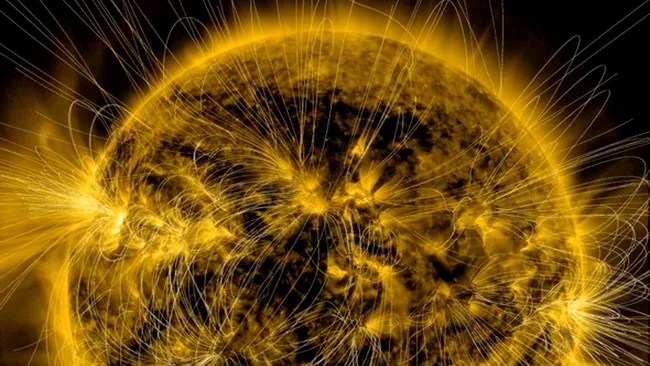 During solar maximum, the number of dark-colored sunspots peppering the sun’s surface increases significantly. As a result, they spit out more frequent and more powerful solar storms, some of which can smash into Earth, causing radio blackouts and stunning auroras.
This activity spike is caused by the sun’s magnetic field lines gradually becoming more tangled. But at some point during solar maximum, these magnetic-field lines snap, resulting in the total reversal of the star’s magnetic poles — where the magnetic south and north poles swap places. After this, the sun begins to calm down and eventually reaches solar minimum, when sunspots and solar storms disappear almost completely before the next cycle begins.

 Dispatches From The Front