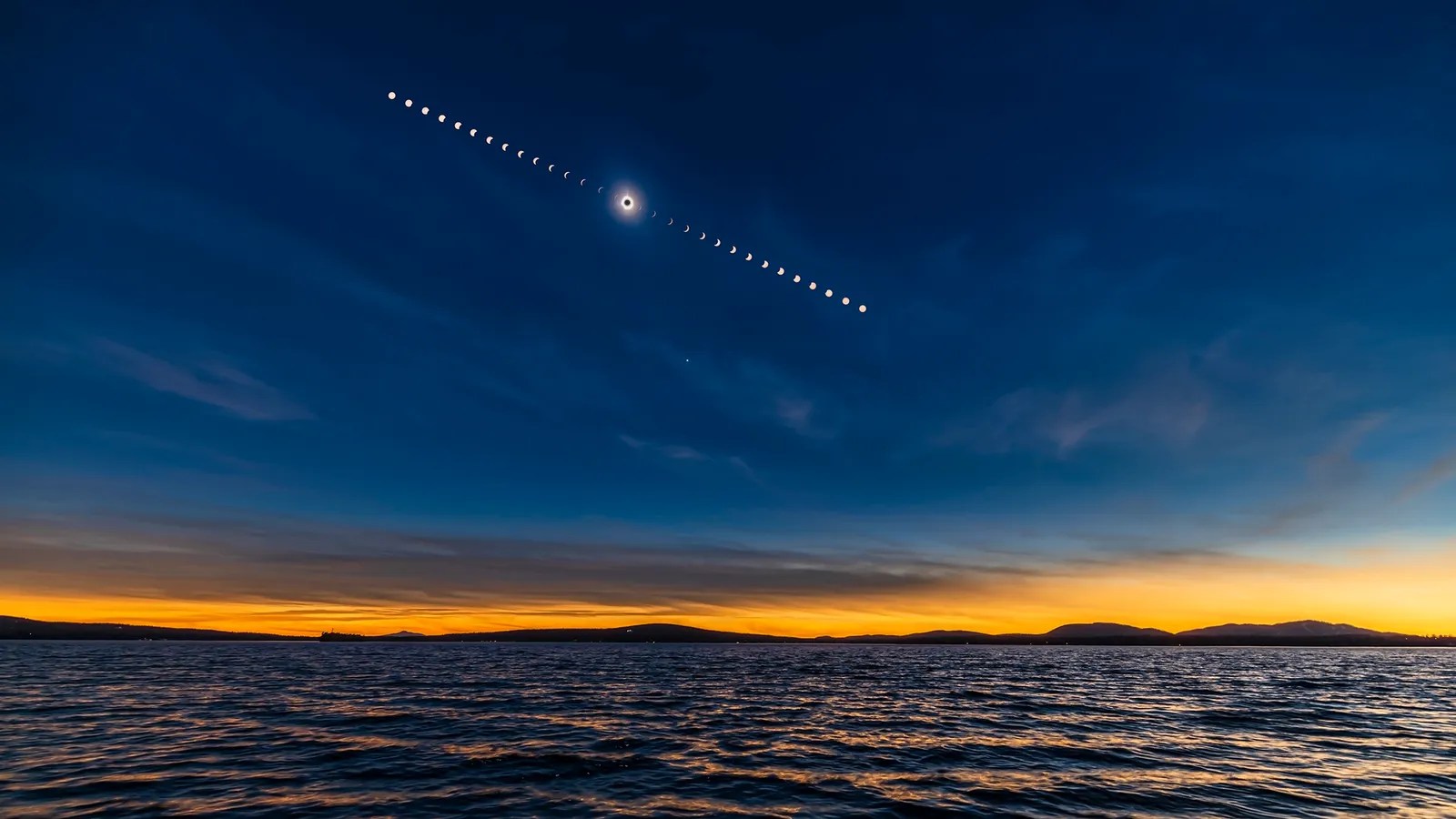
Total eclipse, shooting stars, and the Milky Way: Why Aug. 12 could be the greatest single day and night for skywatching for years | Live Science

Skywatchers across North America and Europe should mark Wednesday, Aug. 12 on their calendars. From a daytime solar eclipse to the peak of the Perseid meteor shower beneath a moonless sky, the date offers an exceptionally rare combination of celestial events within a 24-hour period. Add brilliant Venus and the glowing band of the Milky Way after sunset, and the result is a full day of astronomy that could become one of the standout skywatching opportunities of the year.

The first spectacle arrives during daylight as the moon partially covers the sun across Alaska, eastern Canada and parts of the northeastern U.S. A dramatic total solar eclipse will be visible along a narrow path stretching across eastern Greenland, western Iceland and northern Spain — and that’s where eclipse chasers will be. However, about 779 million people in North America, Europe and North Africa will see at least a 10% partial eclipse, according to Time and Date.
Read More

Christmas Day Sees The Third, Final And Most Dangerous Solar Eclipse Of 2019 | Forbes

In 2019, Christmas comes a little late in the day for nature lovers, sky-watchers and astronomers as the decade’s final solar eclipse rips across the globe.

Unlike the events of August 21, 2017’s “Great American Eclipse”, this one won’t be visible from North America, and nor will it be as impressive as that day’s total solar eclipse.

Read More

Do Other Planets Have Solar Eclipses? | Live Science

As Earthlings, we have the privilege of ooohing and aaahing at total solar eclipses, those dazzling celestial events in which the moon blocks the sun’s light from hitting our planet. But is Earth the only world in our solar system that experiences this spectacular phenomenon?

The answer is no. Total solar eclipses can happen on other planets too, as long as they have moons that are big enough to cover the sun’s disk from the planet’s perspective and orbit the planet on the same plane as the sun, astronomers told Live Science.

Read More

Dos and don’ts for watching today’s eclipse | USA Today

WHEN TO WATCH

New York City: The eclipse starts at 5:49 p.m. ET. The eclipse will still be going on as the sun sets at 6:03 p.m. ET.

Washington: The eclipse starts at 5:52 p.m. ET. The eclipse will still be going on as the sun sets at 6:17 p.m. ET.

Chicago: The eclipse starts at 4:36 p.m. CT. The eclipse will be at its maximum at 5:43 p.m. CT and the sun will set while still in eclipse.

Denver: The eclipse starts at 3:18 p.m. MT. The eclipse will be at its maximum at 4:35 p.m. MT and will end at 5:44 p.m. MDT.

Los Angeles: The eclipse will start at 2:08 p.m. PT. The eclipse will be at its maximum at 3:28 p.m. and will end at 4:40 p.m. PT.

Read More.

How to Watch the Partial Solar Eclipse on Thursday | Mashable

Millions of people across North America could have a chance to observe a partial solar eclipse next week, weather permitting. Although the Oct. 23 partial solar eclipse may not be as spectacular as a total eclipse, it is still a beautiful and interesting event to witness. The sight of the moon gradually moving across the face of the sun fills most people with awe.

The best views of the eclipse will be in the north, in Alaska and the Canadian arctic, but everyone in North America should see some of it, except in the extreme northeast of the continent. In eastern North America, the eclipse will only be visible near or at sunset, so a low western horizon is essential. Venus is very close to the eclipsed sun, but you will probably need to block the sun from view to spot it.

Read More.