
Tag: social networking
The Case for Handcrafted Social Media (Or Why You Should Stop Auto-Updating Your Feeds) | Fast Company
The Golden Rule of social networks is “you get what you give.” Writing updates that suit the medium will yield a stronger community and better conversations than just broadcasting one-to-many headlines.

Facebooking at Work? You May Be Putting Your Company at Risk | Fast Company
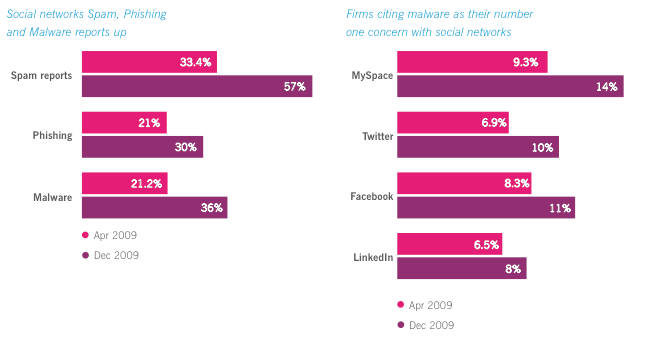
72% of firms believe their employees’ activities on social networking sites could endanger their business’s security. Other data backs up that fear: The number of businesses that were targets for spam increased from 33.4% in April 2009 to 57% in December, a dramatic increase in such a short time period.
Facebook’s Zuckerberg Says The Age of Privacy is Over
 Do you want to make your life more open to everyone in the world, or do you want privacy?
As with the economy, we are at a crossroads, the subject this time is about what it means to be a person in the digital age.
This is Very Important
Facebook allows everyday people to share the minutiae of their daily lives with trusted friends and family, to easily distribute photos and videos – if you use it regularly you know how it has made a very real impact on families and social groups that used to communicate very infrequently.
… 350 million people signed up for Facebook under the belief their information could be shared just between trusted friends. Now the company says that’s old news, that people are changing. I don’t believe it.
Facebook Turns to the Crowd to Monitor the Crowdies | Technomix | Fast Company
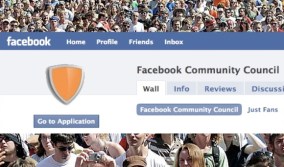 Facebook has begun testing a system that’s in vogue at the moment: Using its own users as a data-crunching system. Nothing terribly new there–except that Facebook’s using its crowd to actually moderate the rest of the crowd and stamp out the nasty bits, which is a whole new ethically-intriguing level
It’s called the “Facebook Community Council” and according to the group’s motto it exists to “harness the power and intelligence of Facebook users to support us in keeping Facebook a trusted and vibrant community.” This all sounds very lofty, very un-dictatorial and much more hippyish, power-to-the-people than Facebook sometimes seems, with moves like its blanket decisions on user-privacy.
User Backlash Forces Facebook Privacy Tweaks, Again | Technomix | Fast Company
Facebook’s privacy policy and their sharp treatment of it’s nearly half billion users is creating a huge backlash as the company attempts to push more and more private data into the public eye. I know I’m getting tired of dealing the daily interface changes, how about you?
Read the article about the partial security roll back and how Mark Zuckerberg’s personal information got out into the open here.
To Sell or Not to Sell: Silicon Valley Acquisitions Market Heats Up | Fast Company
Yet the history of small Internet companies being snapped up by large ones isn’t pretty. Just in the past few months, eBay has had to unload both StumbleUpon (the Web recommendations engine it bought in 2007 for $75 million) as well as the Internet-phone service Skype (purchased in 2005 for $3.1 billion), each for a loss. Yahoo is looking to rid itself of several properties, including Zimbra, the email company it snapped up in 2007 for $350 million. FeedBurner, Jaiku, and Dodgeball are only a few of the startups languishing in obscurity under the Googleplex.
How Rapleaf Is Data-Mining Your Friend Lists to Predict Your Credit Risk | Fast Company
Get ready for this. You’re being ev aluated, no, judged by the company you keep on social networking sites. Using public data, new firms are making some pretty sweeping judgments about you based on what you freely post on sites like MySpace, Twitter and Facebook.
70% of U.S. consumers claiming they “definitely would not” allow advertisers to track their online behavior–even if they remained anonymous–its unlikely consumers will react favorably to businesses monitoring and ranking their social “footprints.” According to the CDT’s Dempsey, further oversight is inevitable, and will likely lead to more transparency. Ultimately, however, Dempsey believes consumers get what they pay for.
“Social networking is part of the advertising-supported Internet,” he says. “It’s one of the free services we all enjoy. Now people are becoming aware there is a cost.”
Facebook Hijackers Speak Out About… School Project? | And How | Fast Company
“When you’re admin of a group, you can basically do anything you want with it,” the group’s Web page states. “You can change it’s name, and the groups members won’t even get a notification of it. You can send mails to all members and edit info.” An evildoer could seize a widowed group (such as the hypothetical group “Sweet Valley High LoOoOoVeS Robert Pattison,” for instance) and change the name to something offensive (like “The Coalition for Pedophile’s Rights”), thereby damaging the image of the group members.

.
Think You’re Pissed at Facebook and Twitter? | TechWatch | Fast Company
If you think the combined stuttering of Twitter, Facebook, and LiveJournal this morning–which has been attributed to several DDOS attacks–were rough for you, well, try dipping into the shoes of the developers who make software based on Facebook and Twitter APIs.
 Dispatches From The Front