Ann Arbor is reinventing the power company | Fast Company

Most new renewable energy projects take the form of massive wind or solar farms. Ann Arbor, Michigan, is trying something different: a new city-owned utility is building a local power network within city limits, made up of solar microgrids and geothermal energy installed at homes and businesses.

“They’re creating a whole new model of energy delivery for a city,” says Mike Shriberg, a professor at University of Michigan’s School for Environment and Sustainability who lives in Ann Arbor.

The new utility won’t replace the area’s existing power company, DTE Energy. But it will help the city move much faster toward zero-carbon power.
Read More

Ultra Thin Coating For Solar Panels | Cool Business Ideas 

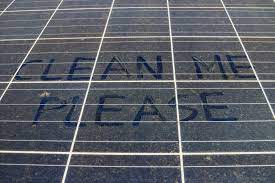
Solar panels can’t operate efficiently if they’re caked in dirt, but cleaning them regularly can become a time-consuming process. Engineers in Germany have now developed an ultra-thin coating that can make solar panels and other surfaces self-cleaning.

Solar is the biggest source of renewable energy, and it’s growing quickly. But as you could imagine, it’s not feasible to send someone out with a squeegee to clean millions of solar panels in each park. Having them clean themselves would be ideal – and now researchers at the Fraunhofer Institute in Germany have made strides towards that concept.

The team created a coating that changes its response to water based on the time of day, allowing it to shed any buildup of dust and dirt fairly quickly. The key ingredient is titanium oxide, which in its normal state repels water, forming drops that easily roll off. When the titanium oxide is exposed to UV light, however, it changes state to become highly water-attracting, which keeps the surface wet with a thin layer of water.

Read More

TS Conductor redesigns power lines to make the electric grid more efficient | Fast Company

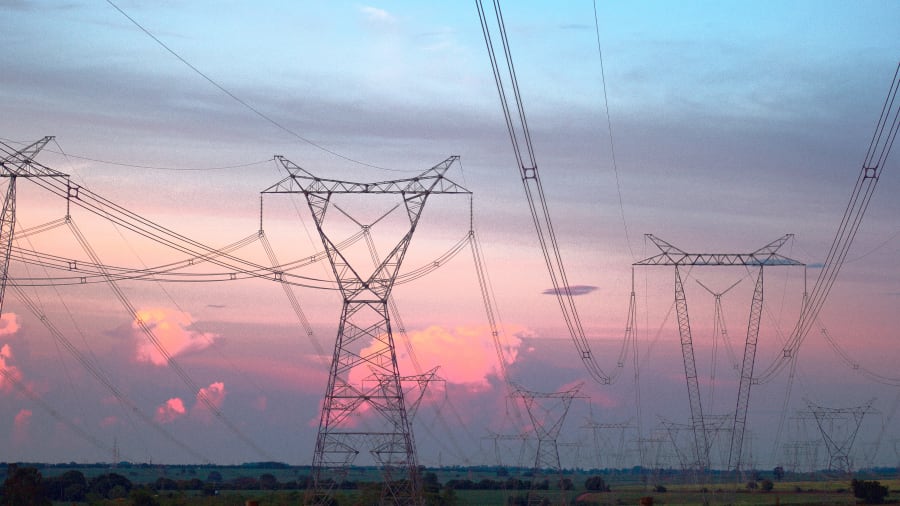
Though the use of renewable energy is growing—in 2020, wind, solar, and other sources of renewable electricity accounted for nearly 20% of electricity generation in the U.S., up 90% from the year 2000—the basic infrastructure of the grid itself has been slower to change. Almost all overhead electricity lines use the same basic, inefficient design that’s been in use since 1908. The technology isn’t a good fit to accommodate the shift to renewables.

“You may have an existing grid, but if you put in over 500 megawatts of wind because you build a new wind farm, and you connect it to the grid, the grid itself may not be able to absorb that electricity,” says Herve Touati, chief strategy officer for TS Conductor, a startup making high-efficiency conductors for the electricity grid. “So you need to increase the capacity of the grid.”

Read More

This luxury yacht runs on 100% renewable energy | Inhabitat

For those who enjoy yachting, there’s nothing better than long stretches of propulsion across the water while you take in the sea and scenery. Except perhaps if you get to experience the newest Sunreef 80 Eco, an electric luxury ride that’s silent and sustainable.

Sunreef Yachts developed a thin, highly efficient solar cell system that mounts completely flush to all surfaces of the boat, including masts, hull sides and bimini tops. The expected capacity of the system is 34 kWp energy, which is stored in ultralight lithium batteries until needed.

Read More

Solar & Wind Reach a Big Renewables Turning Point : BNEF | Bloomberg Business

Wind power is now the cheapest electricity to produce in both Germany and the U.K., even without government subsidies, according to a new analysis by Bloomberg New Energy Finance (BNEF). It’s the first time that threshold has been crossed by a G7 economy.

But that’s less interesting than what just happened in the U.S.

To appreciate what’s going on there, you need to understand the capacity factor. That’s the percentage of a power plant’s maximum potential that’s actually achieved over time.

Consider a solar project. The sun doesn’t shine at night and, even during the day, varies in brightness with the weather and the seasons. So a project that can crank out 100 megawatt hours of electricity during the sunniest part of the day might produce just 20 percent of that when averaged out over a year. That gives it a 20 percent capacity factor.

Read More

Amazon Vows to Run on 100 Percent Renewable Energy | WIRED

Apple made the pledge. So did Google and Facebook. But Amazon stayed silent.

Over the past few years, Apple, Google, and Facebook pledged to run their online empires on renewable energy, and considering how large these empires have become—how many data centers and machines are now required to keep them going—this was a vital thing. But despite pressure from the likes of Greenpeace, the environmental activism organization, the other big internet name, Amazon, didn’t budge.

That all changed on Wednesday. With a post on its website, Amazon’s cloud computing division—Amazon Web Services—said it has a “long-term commitment to achieve 100 percent renewable energy usage for our global infrastructure footprint.”

Read More.