What is quantum computing, and why does Trump care? | Mashable

It’s been a week since President Trump signed an executive order directing a whole-of-government push on quantum computing — funding it, securing its supply chains, building its workforce, and making sure adversaries like China don’t get there first.

This marks a significant federal commitment to a technology that is either the next great computing revolution or the most expensive science experiment in history, depending on the expert opinion. But one thing it can do: replace AI as the carrier of long-term hopes for the tech industry. This would be the right moment for a switch, as the vibe shifts on AI itself: models are more expensive to train, returns are harder to demonstrate. Investors who have sent AI stock soaring may soon be looking for the next big thing to believe in.
Read More

History of computers: Timeline of key events & technological breakthroughs | Live Science

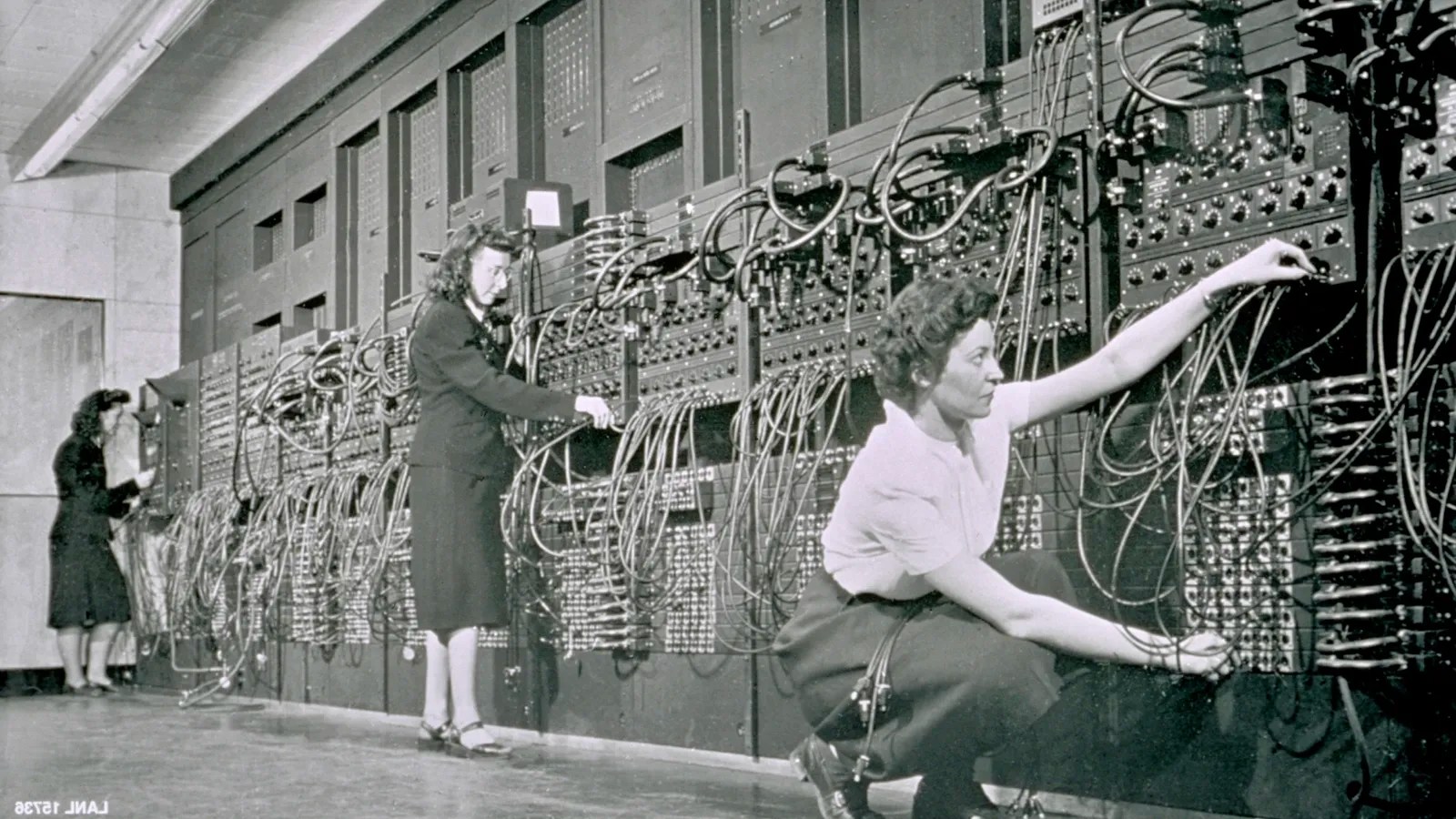
The history of computers is fascinating because it’s also the history of the world. Join us on a whirlwind tour of the great technological breakthroughs of the past few centuries, from Ada Lovelace to Alan Turing. Then we’ll bring you bang up to date, explaining the influence of Bill Gates and Steve Jobs, right up to the current state of play with regard to artificial intelligence (AI) and quantum computing.

We’ll also bust a few myths along the way. Who really created the first computer? Was it John Mauchly with ENIAC? Alan Turing with his theoretical Turing Machine? Konrad Zuse with the Z3? Or could it actually be Charles Babbage with his Difference and Analytical Engines?

We’re keen to redress any gender imbalances, too. While the history of computing has been dominated by men (again, reflecting world history), many important contributions have also come from women. Not least Ada Lovelace, who some consider the first programmer, and the computer pioneer Grace Hopper.

Read More

Quantum Computing Is Real, and D-Wave Just Open-Sourced It | WIRED

QUANTUM COMPUTING IS real. But it’s also hard. So hard that only a few developers, usually trained in quantum physics, advanced mathematics, or most likely both, can actually work with the few quantum computers that exist. Now D-Wave, the Canadian company behind the quantum computer that Google and NASA have been testing since 2013, wants to make quantum computing a bit easier through the power of open source software.

Traditional computers store information in “bits,” which can represent either a “1” or a “0.” Quantum computing takes advantage of quantum particles in a strange state called “superposition,” meaning that the particle is spinning in two directions at once. Researchers have learned to take advantage of these particles to create what they call “qubits,” which can represent both a 1 and a 0 at the same time. By stringing qubits together, companies like D-Wave hope to create computers that are exponentially faster than today’s machines.

Read More