NASA astronaut is hoping for a smoother ride home than 22 years ago | Digital Trends

NASA astronaut Don Pettit is just a couple of days away from returning to Earth on a Russian Soyuz spacecraft after a seven-month stay at the International Space Station, making it the perfect time to revisit his astonishing account of his first Soyuz homecoming in 2003.

In the article, Pettit describes in vivid detail the extraordinary experience of hurtling through Earth’s atmosphere at five miles a second, and how malfunctions with Soyuz led to the flight home becoming a kind of test landing for a future crewed mission to Mars.

Just ahead of the spacecraft’s high-speed entry into Earth’s atmosphere 22 years ago, it became apparent to Pettit and his two crewmates — Ken Bowersox and Nikolai Budarin — that the Soyuz was experiencing issues with its guidance system, causing the capsule to switch from a controlled, gentle entry to a much steeper and rougher “ballistic” entry.
Read More

February is ‘a month of bright planets,’ NASA says in new skywatching update | Digital Trends

The moon has “many engagements” with the planets in February, NASA said in its monthly update on what to look out for in the night sky.

Throughout February, so long as clear nights prevail, you’ll be able to see the moon in the night sky along with many of our solar system’s planets.

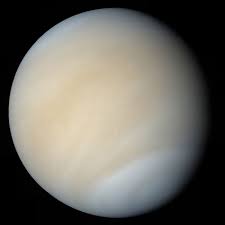
The easiest to spot is Venus, looking brilliant in the west after sunset. “February is a month for love, so what better time to spotlight Venus, which is associated with the Roman goddess of love?” NASA said in its latest skywatching video (above).

Read More

NASA wants to know how much life it’s venting into space | Mashable

Astronauts will wriggle into their spacesuits next week to swab outside the International Space Station and see if the lab orbiting 250 miles above Earth is releasing microorganisms into space.

The experiment will focus on collecting samples of bacteria and fungi near vents. NASA wants to know whether germs can survive the harsh environment and, if so, how far they travel. The specimens will be frozen and taken back to Earth for analysis.

Despite the U.S. space agency’s stringent spacecraft cleaning process, hardy microscopic lifeforms can’t be totally removed from instruments bound for space. Furthermore, people carry veritable ecosystems of life on their skin and in their bodies when they go to space. Humans can’t help but spread this stuff — a point John Grunsfeld, NASA’s former chief scientist, emphasized in 2015.

Read More

Watch this stunning aurora captured from space | Digital Trends

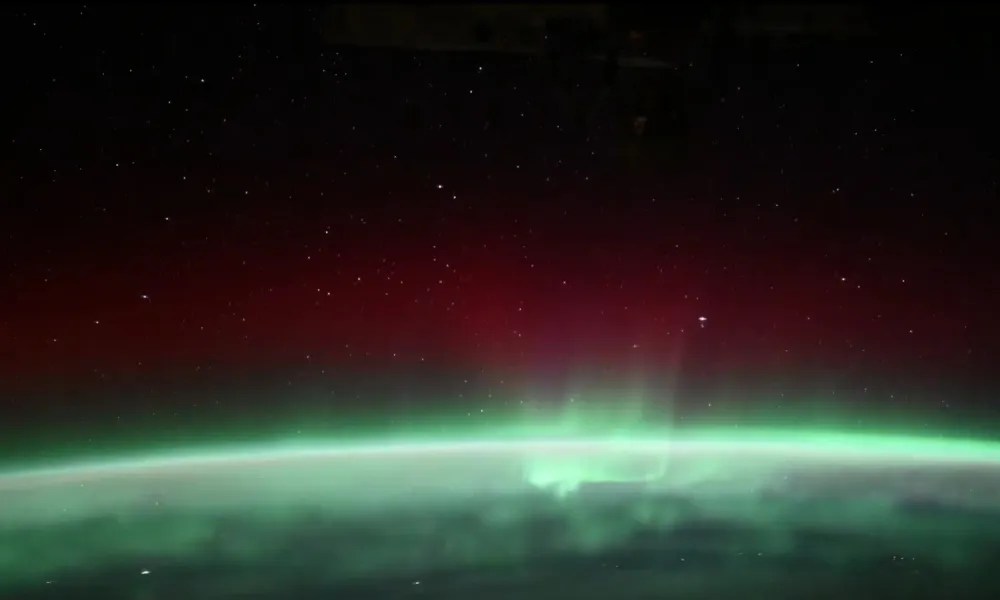
Stunning footage from the International Space Station (ISS) shows a glorious-looking aurora shimmering above our planet.

Captured last month and shared by the ISS on X over the weekend, the footage (below) begins with a faint green tinge on Earth’s horizon as seen from the space station some 257 miles up. But as the video continues, the green tinge develops into something far more spectacular, all against a gorgeous star-filled backdrop.

“The International Space Station soars above an aurora blanketing the Earth underneath a starry sky before orbiting into a sunrise 257 miles above Quebec, Canada, on October 30, 2024,” NASA said in a message accompanying the 60-second video.

Read More

Starliner astronauts arrive at launchpad for first crewed flight | Digital Trends

NASA astronauts Butch Wilmore and Suni Williams have arrived at the Starliner spacecraft that will take them to the International Space Station (ISS) in the first flight for the crew capsule.

A ULA Atlas V rocket will carry the Boeing-made Starliner and the two astronauts to orbit in a launch from the Kennedy Space Center in Florida that’s scheduled for 10:34 p.m. ET tonight.

Digital Trends has full details on how to watch a live stream showing the launch buildup and the early stages of the mission.

Read More

The moon is shrinking, causing landslides and moonquakes exactly where NASA wants to build its 1st lunar colony | Live Science

When plotting sites for crewed lunar landings — ranging from the forthcoming Artemis missions to eventual lasting moon settlements — mission planners must account for tons of lunar parameters. For instance,  the shape of the terrain could make or break a mission and a possible high volume of buried water could make one spot much more tantalizing than its drier counterpart. But now, geologists suggest it’s also important to keep moonquakes and lunar landslides in mind.

As the scientists emphasize, this is no longer an academic question. Researchers examining the moon’s south polar region — which sits near the planned landing side of Artemis 3, set to touch down in 2026 — have identified fault lines whose slips triggered a major moonquake about 50 years ago.

Read More

Osiris-Rex: Nasa confirms return of asteroid Bennu samples | BBC News

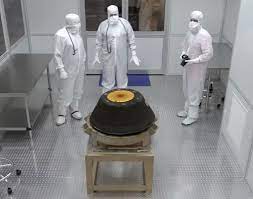
Dusty samples from the “most dangerous known rock in the Solar System” have been brought to Earth.

The American space agency NASA landed the materials in a capsule that came down in the West Desert of Utah state.

The samples had been scooped up from the surface of asteroid Bennu in 2020 by the Osiris-Rex spacecraft.

NASA wants to learn more about the mountainous object, not least because it has an outside chance of hitting our planet in the next 300 years.

But more than this, the samples are likely to provide fresh insights into the formation of the Solar System 4.6 billion years ago and possibly even how life got started on our world.

Read More

NASA’s Curiosity rover snaps extremely detailed ‘postcard’ of Martian landscape after waking up from a ‘brain-boosting nap | Live Science

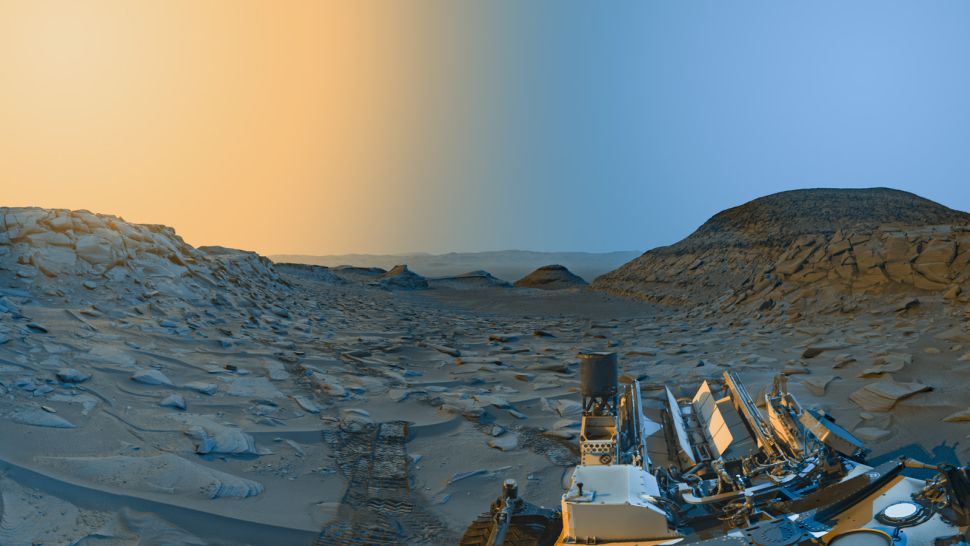
NASA’s Curiosity rover recently snapped a stunningly detailed “postcard” of the Martian landscape, showing the sunlight shifting between morning and afternoon. The wandering robot beamed the picturesque scene back to Earth shortly after waking up from a “brain boosting nap.”

The rover captured the memento April 8, or Sol 3,794 (Martian days) of its mission, shortly before leaving the Marker Band Valley, a region where it discovered signs of an ancient lake in 2022. The photoshoot was one of the first actions Curiosity completed after hibernating for a software update between April 3 and April 7, which included 180 individual upgrades — the most important of which will allow the rover to process images of its surroundings faster and reduce wear on its tires, which will help it to move much quicker across the Martian landscape, Live Science’s sister site Space.com reported.

Read More

NASA will attempt a moon launch in November. So will someone else. | Mashable

November could be a hectic month for launches to the moon.

Yes, that’s “launches,” plural.

If there were any skepticism on whether the world has entered a new space race, the dueling lunar-bound liftoffs coming next month could be the smoking gun. After NASA waived-off two launch attempts in late August and early September — followed by a delay courtesy of Hurricane Ian — the U.S. space agency will try again to send up its first Artemis mission on Nov. 14, with backup dates of Nov. 16 and 19.

Read More

NASA will smash its DART spacecraft into an asteroid on Monday. Here’s how to watch. | Live Science

NASA’s Double Asteroid Redirection Test (DART) spacecraft is set to slam into an asteroid on Monday (Sept. 26), in the first ever test of humanity’s ability to deflect life-threatening space rocks before they collide with Earth.

The 1,210-pound (550 kilograms) DART craft, a squat cube-shaped probe consisting of sensors, an antenna, an ion thruster and two 28-foot-long (8.5 meters) solar arrays, will smash into the asteroid Dimorphos while traveling at roughly 13,420 mph (21,160 km/h).

Read More