Olive Garden is raising its wages. That’s not the full story | CNN

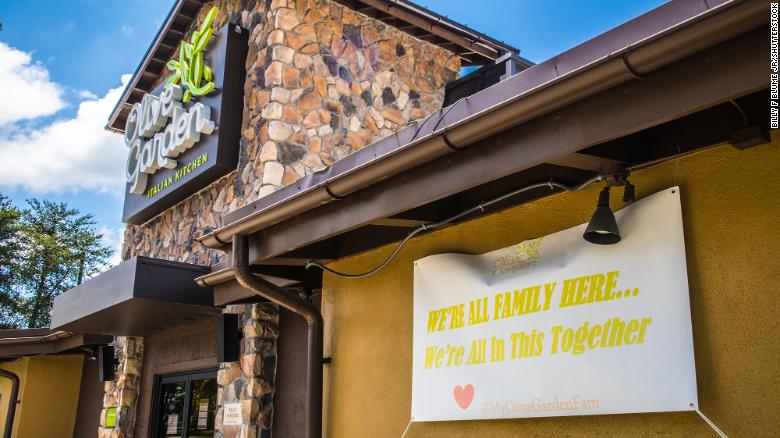
The company that owns Olive Garden is raising wages in a bid to attract workers. But the move doesn’t go far enough to satisfy critics of a practice common in the restaurant industry.

Currently at Darden Restaurants (DRI), which owns Longhorn Steakhouse, Cheddar’s Scratch Kitchen and other chains in addition to Olive Garden, all employees are entitled to at least the federal minimum wage of $7.25 or state minimum wage.

But not all of their wages have to come from the company. In many states, employers pay tipped workers a sub-minimum wage floor, which amounts to $2.13 at the federal level and is higher in some states. Customers pay the rest in tips. If those tips don’t bring employees up to the minimum wage, companies like Darden are required to make up the difference.

Read More

Remember That Company With the $70K Minimum Wage? Here’s How It’s Doing Now | Inc.com

Remember how five years ago, Dan Price, the CEO of Seattle-based payment processing company Gravity Payments, raised all of his 120 employees’ salary to at least $70,000 a year, taking a huge pay cut to make it happen?

A media firestorm resulted, including here in Inc.com, much of it focused on negative blowback from the decision, including executive resignations, sniping from local startups, and a lawsuit from Price’s co-founder (also his brother). Rush Limbaugh called Price “a communist.” All in all, the coverage painted a messier picture than a simple feel-good story of a generous CEO doing good by his employees.

Read More

Seattle’s $15 An Hour: Measure The Unemployment Effects And There They Are | Forbes

downloadWe do keep being told this most delightful story: that raising the price of something isn’t going to change demand for that same thing that has just risen in price. This does rather contradict most of what we know about economics and the price system: demand curves do slope downwards after all.

True, there is one well known exception, what is called a Giffen Good (the definition of which is a good where the demand curve does not slope downwards). The only proven examples of this are wheat noodles in North China and rice in South China. But the general point is accepted that it probably applies to the subsistence carbohydrate in subsistence economies. People are living so close to the starvation line that when the price of the basic foodstuff goes up they have to cut their expenditures on other foods (possibly, little tasties or sauces to get that basic glop down) and increase their demand for that basic subsistence food in order to stay alive. They’re limited by the fact that they already live so close to the 2,000 or 3,000 calories a day needed to keep going. So, this might also apply to tortillas in the poorer parts of Mexico, or mealie meal in sub-Saharan Africa and so on.

Read More.

Is It Time For Companies To Pay For Not Paying Enough? The “Walmart Tax” Gains Momentum | Co.Exist

downloadMaking minimum wage dooms you to a life of hardship and toil. We in the U.S. have accepted or ignored this situation for a long time, while companies make billions of dollars by paying their workers less than enough to survive. But a national discussion about income inequality and the wave of worker protests for livable wages has brought attention to the issue. And now some policymakers want to add to the debate by focusing not just on the poor living conditions that result from low wages, but on the billions of dollars that the low-wage service economy costs every single taxpayer, as we pay for things like food stamps and health care for workers whose companies don’t pay them enough to live on.

Every year, U.S. taxpayers pay $153 billion in public assistance to working families, according to a recent study conducted by the University of California’s Berkeley Center for Labor Research and Education. This is more than the annual budgets of the U.S. Department of Education and Health and Human Services combined.

Paying low-wage employees more by raising the minimum wage—$15 an hour is what “livable” wage advocates are fighting for—is likely the most direct solution. But barring this, a few Connecticut lawmakers want to be the first in the nation to end what they see as essentially a massive payout to the Walmarts and McDonald’s of their state.

Read More.

Here’s America’s New Minimum Wage Map | Bloomberg Business

images (1)Seattle’s new minimum wage law takes effect today, the first stage of an extended ramp-up that will see all business in the city paying $15 an hour by 2021. Workers at large businesses will see an increase today to $11, from Washington’s state minimum wage of $9.47, already the highest in the nation.

This map shows the up-to-date status of the minimum wage across the country.

See Map.

Trying to Understand the Impact of Minimum Wage Hikes on Small Businesses | NYTimes.com

Does the battle over the minimum wage pit employees against small-business owners? That was the notion put forth on the Real Clear Politics website recently. In an essay titled “Living the Wage? Try Living the Small Business,” Tom Bevan, a co-founder of the site, ridiculed Democratic politicians who had embarked on an effort to understand how people subsist on minimum wage.

Several officials, including Jan Schakowsky, a congresswoman from Illinois, signed up for a week-long challenge called Live the Wage. For that week, they attempted to spend just $77, which is the effective take-home pay for someone making minimum wage, according to the advocates who want to raise it. Mr. Bevan called this effort “a gimmick cooked up by the progressives at Americans United for Change.”

Read More.

What stumps Warren Buffett? Minimum wage | money.cnn.com

Should the federal minimum wage be raised? It’s a tough question, even for business magnate Warren Buffett.

“I thought about it for 50 years and I just don’t know the answer on it,” Buffett told CNN Wednesday. “In economics you always have to say ‘and then what?’ And the real question is are more people going to be better off if it is raised,” he said.

Buffett also said that the current federal minimum of $7.25 is not a living wage. If raising it didn’t hurt employment he’d want it up significantly higher. “You do lose some employment as you increase the minimum wage, if you didn’t I would be for having it $15 an hour,” he said.

Many states and cities have recently raised their minimum wage rate above the federal minimum and President Obama is pushing for Congress to raise the nationwide rate to $10.10 an hour.

Read More.