Meta Ray-Ban Display glasses put a screen on your face without looking dorky | Digital Trends

Meta has finally lifted the covers from its screen-equipped AI smart glasses, the Meta Ray-Ban Display. The new smart glasses start at $799, and come with the glasses and the wrist-worn Meta Neural Band in the retail package. They will be available starting September 30 via Best Buy, LensCrafters, Sunglass Hut, Ray-Ban Stores, and Verizon stores in the US, followed by international sales next year.

What’s the big draw?

The most notable element of the new Meta glasses is the in-lens display, which allows users to see a preview of the media captured by the onboard camera, handle calls, see translated text, and interact with Meta AI. The whole experience runs standalone on the full-color, high-resolution panel that is placed on the right lens.

Read More

Lawyer argues Meta can’t be held liable for gunmaker’s Instagram posts in Uvalde families’ lawsuit | CNN Business

A lawsuit filed by families of the Uvalde school shooting victims alleging Instagram allowed gun manufacturers to promote firearms to minors should be thrown out, lawyers for Meta, Instagram’s parent company, argued Tuesday.

Nineteen children and two teachers were killed in the May 2022 shooting at Robb Elementary School in Uvalde, Texas.

The families sued Meta in Los Angeles in May 2024, saying the social media platform failed to enforce its own rules forbidding firearms advertisements aimed at minors.

Read More

Threads is testing spoiler text, Zuckerberg says | TechCrunch

Threads, Meta’s microblogging platform, is testing spoiler text, according to a post from Meta CEO Mark Zuckerberg.

Spoiler text refers to words (or images) that are grayed out in a post and only become readable if you manually click to see them. As the name suggests, spoiler text is often used on platforms like Discord or Reddit to help people communicate about new movies, TV shows, or books without accidentally revealing plot points and twists for people who aren’t caught up.

Read More

Meta Announces Changes to Facebook Live Video Storage Policy | Small Biz Trends

Meta is updating its Facebook Live video storage policy, limiting the availability of live broadcasts to 30 days before automatic deletion. The change, which takes effect on February 19, will align Facebook’s storage policies with industry standards and streamline how live video content is managed on the platform.

New 30-Day Limit for Live Videos

Under the updated policy, new live broadcast videos can be replayed, downloaded, or shared for 30 days before they are automatically removed from Facebook. Previously, live videos were stored indefinitely.

Additionally, all live videos older than 30 days will be deleted in phases over the coming months. Meta will notify users before deletion, giving them 90 days to download, transfer, or repurpose their content. Users will receive these notifications via email and in the app.

Read More

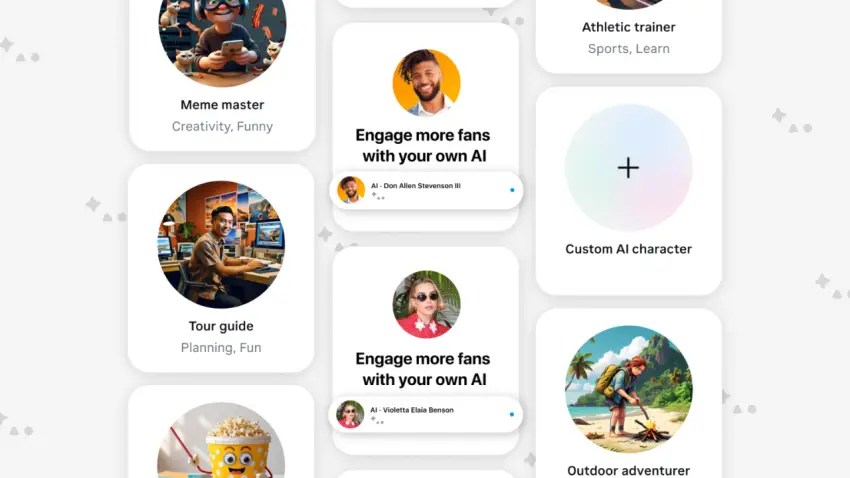
Meta Launches AI Studio for Custom AI Creation |Small Business Trends

Meta has announced the rollout of AI Studio, a new platform that allows users to create, share, and discover AI characters without the need for technical skills. AI Studio, built with Llama 3.1, offers users the opportunity to design AI characters that can entertain, provide advice, generate memes, and much more.

Create AI Characters Based on Your Interests

With AI Studio, anyone can create AI characters at ai.meta.com/ai-studio or within the Instagram app. Users can utilize a variety of prompt templates or start from scratch to design AIs tailored to their interests, whether it’s cooking, generating Instagram captions, or making friends laugh with memes. These AI characters can be kept private or shared with followers and friends, and can also be made available for discovery and interaction on Instagram, Messenger, WhatsApp, and the web.

Read More

End-to-End Encrypted Instagram and Messenger Chats: Why It Took Meta 7 Years | WIRED

Since 2016, the social behemoth now known as Meta has been working to deploy end-to-end encryption in its communication apps. CEO Mark Zuckerberg even promised in 2019 that the data privacy protection would roll out by default across all of the company’s chat apps. In practice, though, it was a wildly ambitious goal fraught with technical and political challenges, and Meta has only been able to move toward it in gradual, incremental steps. But this week the company is finally starting its full rollout.

“It’s been a wild ride,” says Jon Millican, a software engineer within Meta’s messenger privacy team. “I suspect this is the first time that something’s been end-to-end encrypted with all of the constraints that we’re working with. It’s not just that we’re migrating people’s data, but it’s actually that we’re having to fundamentally change a bunch of the assumptions that they work with when they’re using the product.”

Read More

Report: Meta Employees Mandated Back Into Office | Entrepreneur

Last month, a leaked memo detailed Meta’s updated return to office policy, with some employees being asked to return three days a week with a mandate for accountability.

Now, those changes have reportedly gone into effect.

“We believe that distributed work will continue to be important in the future, particularly as our technology improves,” a spokesperson for Meta told CNBC in a statement. “In the near term, our in-person focus is designed to support a strong, valuable experience for our people who have chosen to work from the office, and we’re being thoughtful and intentional about where we invest in remote work.”

Read More

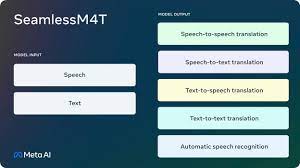
Meta releases SeamlessM4T AI model for text and speech translation | Mashable

Meta’s latest AI output is a major advancement for real-time text and speech translation.

On Tuesday, the company released SeamlessM4T: a multimodal model that translates text to speech and vice versa. Meta claims SeamlessM4T is “the first all-in-one multilingual multimodal AI translation and transcription model,” meaning it is uniquely able to translate and transcribe languages at the same time. SeamlessM4T can translate speech-to-text, speech-to-speech, text-to-speech, and text-to-text inputs for up to 100 languages. Translations for speech-to-speech and text-to-speech translations outputs support 35 languages.

Read More

No, Threads didn’t rate limit like Twitter. Here’s what Meta did. | Mashable

It seemed like exactly the type of juicy hypocrisy that the internet lives for.

On Monday, Instagram head Adam Mosseri announced that in order to tackle the spam problem on its new Twitter competitor, Threads, the company was going to introduce tighter rate limits on the platform.

Sounds familiar? That’s because rate limits were one of the controversial decisions implemented by Elon Musk on Twitter in early July that resulted in massive backlash against the platform. Users were finding themselves blocked from seeing content on Twitter due to daily rate limiting, after viewing a certain number of tweets.

But, as it turns out, no, Threads did not deploy the same controversial rate limits on its platform that Twitter did. Threads instead strengthened the same type of rate limits present on most all social media platforms, limits that even Twitter used long before Musk even acquired the company.

Read More

Threads: Meta sets out planned new features | BBC News

Threads is looking into adding an alternative home feed, of only posts, in chronological order, from the people each individual user follows, according to Instagram boss Adam Mosseri.

It currently shows a mix of recommended content and posts from those followed.

Threads was billed as an “initial version” at launch and the company has signalled more features are to come.

But a planned system to make Threads compatible with some other apps, such as Mastodon, has met with resistance.

Instagram, which is owned by Meta, built the Threads app.

Read More