NASA wants to know how much life it’s venting into space | Mashable

Astronauts will wriggle into their spacesuits next week to swab outside the International Space Station and see if the lab orbiting 250 miles above Earth is releasing microorganisms into space.

The experiment will focus on collecting samples of bacteria and fungi near vents. NASA wants to know whether germs can survive the harsh environment and, if so, how far they travel. The specimens will be frozen and taken back to Earth for analysis.

Despite the U.S. space agency’s stringent spacecraft cleaning process, hardy microscopic lifeforms can’t be totally removed from instruments bound for space. Furthermore, people carry veritable ecosystems of life on their skin and in their bodies when they go to space. Humans can’t help but spread this stuff — a point John Grunsfeld, NASA’s former chief scientist, emphasized in 2015.
Read More

Watch this stunning aurora captured from space | Digital Trends

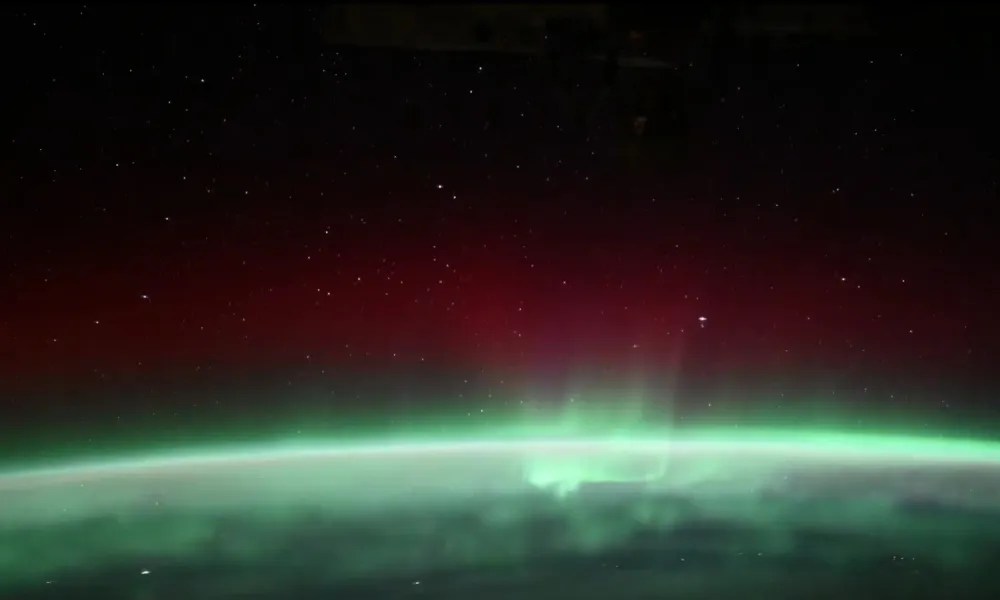
Stunning footage from the International Space Station (ISS) shows a glorious-looking aurora shimmering above our planet.

Captured last month and shared by the ISS on X over the weekend, the footage (below) begins with a faint green tinge on Earth’s horizon as seen from the space station some 257 miles up. But as the video continues, the green tinge develops into something far more spectacular, all against a gorgeous star-filled backdrop.

“The International Space Station soars above an aurora blanketing the Earth underneath a starry sky before orbiting into a sunrise 257 miles above Quebec, Canada, on October 30, 2024,” NASA said in a message accompanying the 60-second video.

Read More

All the science that’s launching to the space station today | Digital Trends

Today, Saturday November 26, an uncrewed SpaceX Dragon craft will be launching to the International Space Station. Packed inside the Dragon, which will be launched by a Falcon 9 rocket, will be a pair of new solar arrays for the space station, called International Space Station Roll Out Solar Arrays or iROSAs, as well as a wide range of science experiments and technology demonstrations.

Also included in the delivery will be an experiment to grow a crop of dwarf tomatoes. Growing food on the space station has been a topic of research because it will be necessary to grow food for longer crewed space missions, such as those planned to visit Mars, so that astronauts can eat something fresh. There is also a psychological component to growing and eating your own food that is beneficial for astronauts. Many of the foods grown on the ISS to date have been leafy greens (though there have also been experiments into growing chiles, radishes, and more), so the new experiment, called VEG-05, will test out growing tomatoes, including investigating how light and fertilizer affect their growth.

Read More