SpaceX just achieved another first with its Falcon 9 rocket | Digital Trends

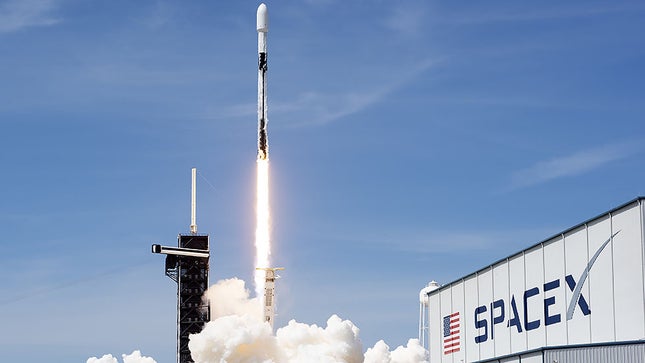
SpaceX undertook a Falcon 9 mission with a difference on Tuesday night, landing the booster in a different country from which it was launched. The spaceflight company shared footage of the feat on social media site X.

Up to now, SpaceX has always landed the returning Falcon 9 booster back at the launch site in Florida or California, or on a droneship off the East or West Coast, but this time it touched down on a droneship off the coast of The Bahamas, some 420 miles southeast of the launch site at Cape Canaveral, Florida — completing its first-ever international voyage.

Read More

SpaceX Falcon 9 rocket grounded for 2nd time in 2 months following explosive landing failure | Live Science

The U.S. Federal Aviation Administration (FAA) grounded SpaceX’s Falcon 9 rocket on Wednesday (Aug 28), following a failed landing attempt that left the spacecraft toppled over in flames.

The reusable rocket booster had just completed its record-breaking 23rd mission, successfully launching 21 Starlink satellites into low Earth orbit before touching down on a drone ship in the Atlantic Ocean roughly nine minutes later, according to Live Science’s sister site Space.com. However, immediately upon landing, the rocket tipped over, bursting into flames.

No injuries or public property damage were reported in connection with the failed landing.

Read More

All the science that’s launching to the space station today | Digital Trends

Today, Saturday November 26, an uncrewed SpaceX Dragon craft will be launching to the International Space Station. Packed inside the Dragon, which will be launched by a Falcon 9 rocket, will be a pair of new solar arrays for the space station, called International Space Station Roll Out Solar Arrays or iROSAs, as well as a wide range of science experiments and technology demonstrations.

Also included in the delivery will be an experiment to grow a crop of dwarf tomatoes. Growing food on the space station has been a topic of research because it will be necessary to grow food for longer crewed space missions, such as those planned to visit Mars, so that astronauts can eat something fresh. There is also a psychological component to growing and eating your own food that is beneficial for astronauts. Many of the foods grown on the ISS to date have been leafy greens (though there have also been experiments into growing chiles, radishes, and more), so the new experiment, called VEG-05, will test out growing tomatoes, including investigating how light and fertilizer affect their growth.

Read More

The top 15 events that happened in space in 2016 | TechCrunch

2016 was a big year for research and discovery in space. The year started off with Caltech astronomers picking up the presence of a ninth planet while researchers at LIGO were detecting gravitational waves for the first time. NASA’s Juno spacecraft finally arrived in orbit around Jupiter, and astronomers found the closest exoplanet to Earth. Blue Origin showed off their suborbital rocket reusability skills and Elon Musk revealed a plan to colonize Mars. Not to mention the huge developments for SpaceX, which successfully landed a Falcon 9 rocket on a drone ship in the ocean for the first time, but then suffered a devastating explosion later in the year. These are the top events for space in 2016.

Read More