 Facebook’s code from one that is easier for developers to write to one that runs more energy efficiently, and it cuts the energy used by its servers by 50 percent.
Tag: Facebook
The Seven Deadly Sins of Social Media | Fast Company
 Posting on someone’s wall with a seven-line signature, mass-inviting people to every event (even if the event is local and the person is not even in the same country), to tagging people in articles that they are not even mentioned in just to get them to read it. There is a special vein in my forehead that you can clearly see when these things occur.
Facebook Whisperer Speaks, Why Facebook Threatened to Sue Him | Fast Company

There’s a massive blind spot about the social component in our lives, and that’s where this data helps. On Facebook, you’re essentially voting all the time on your profile and nobody yet has the ability to make those votes count.
The State of the Internet | Fast Company

For example, there are about 740 million Internet users in Asia alone; Facebook serves 6 million page views per minute, requiring 30,000 servers; and there are 148,000 new zombie computers created each day by hackers using botnets:
Thousands Of MySpace Sex Offender Refugees Found On Facebook
MySpace is in the spotlight today because it revealed that 90,000 registered sex offenders have been kicked off its site in the past two years. But where did all of those sex offenders go? Some evidence suggests that a portion of them are now on Facebook.
The Case for Handcrafted Social Media (Or Why You Should Stop Auto-Updating Your Feeds) | Fast Company
The Golden Rule of social networks is “you get what you give.” Writing updates that suit the medium will yield a stronger community and better conversations than just broadcasting one-to-many headlines.

Facebooking at Work? You May Be Putting Your Company at Risk | Fast Company
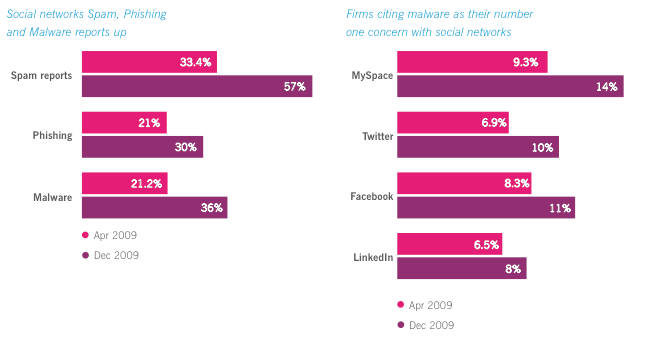
72% of firms believe their employees’ activities on social networking sites could endanger their business’s security. Other data backs up that fear: The number of businesses that were targets for spam increased from 33.4% in April 2009 to 57% in December, a dramatic increase in such a short time period.
Facebook’s Zuckerberg Says The Age of Privacy is Over
 Do you want to make your life more open to everyone in the world, or do you want privacy?
As with the economy, we are at a crossroads, the subject this time is about what it means to be a person in the digital age.
This is Very Important
Facebook allows everyday people to share the minutiae of their daily lives with trusted friends and family, to easily distribute photos and videos – if you use it regularly you know how it has made a very real impact on families and social groups that used to communicate very infrequently.
… 350 million people signed up for Facebook under the belief their information could be shared just between trusted friends. Now the company says that’s old news, that people are changing. I don’t believe it.
Bloggers Debate Usefulness of Facebook Bra Status Update | Sphere News
Logging on to the world’s most popular social network beginning midweek, it was common to see status updates from women users that read a variety of colors, from black to white, pink, red, nude or, more cryptically, “none.” What could the girls be up to this time? male users collectively wondered. That’s because, as is often the case with women’s wares in real life, they simply weren’t in the loop.

Facebook Turns to the Crowd to Monitor the Crowdies | Technomix | Fast Company
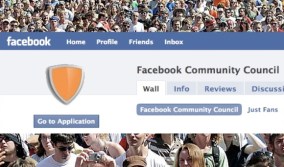 Facebook has begun testing a system that’s in vogue at the moment: Using its own users as a data-crunching system. Nothing terribly new there–except that Facebook’s using its crowd to actually moderate the rest of the crowd and stamp out the nasty bits, which is a whole new ethically-intriguing level
It’s called the “Facebook Community Council” and according to the group’s motto it exists to “harness the power and intelligence of Facebook users to support us in keeping Facebook a trusted and vibrant community.” This all sounds very lofty, very un-dictatorial and much more hippyish, power-to-the-people than Facebook sometimes seems, with moves like its blanket decisions on user-privacy.
 Dispatches From The Front